
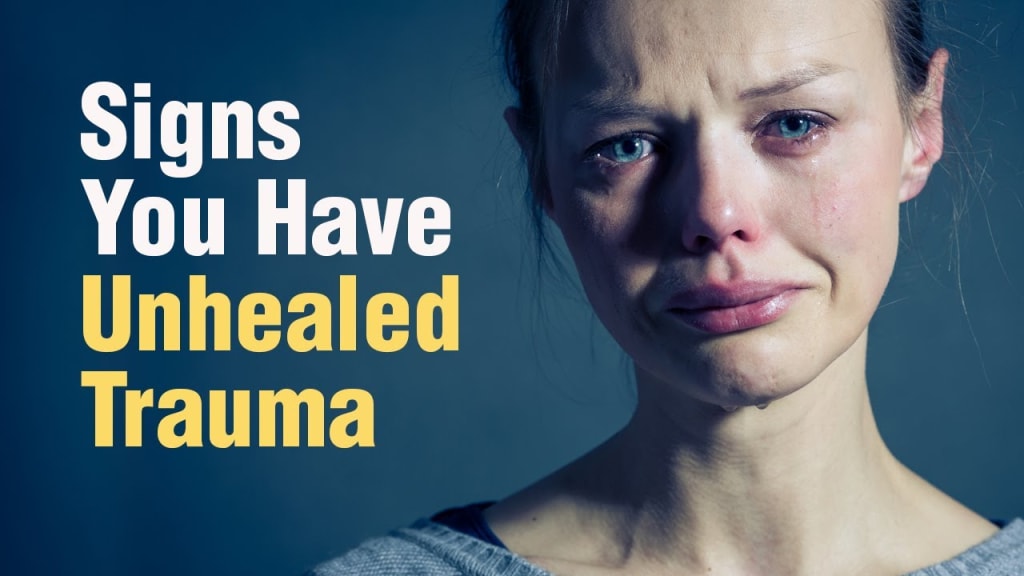
11 Signs You Have Unhealed Trauma
Almost everyone experiences trauma in one way or another throughout their lives. The deep distress from trauma can happen at any age and last for years to come. It severely impacts mental health - especially if that pain was experienced during childhood or adolescence. Even though we might be aware that certain events in our lives were traumatizing, we rarely do the heavy lifting to heal from traumatic events. Why is that? Often, painful emotions like grief, guilt, sadness, or betrayal are too much for our minds to bear at the time. Instead of processing, we bury those thoughts and feelings into our subconscious mind - where they wreak havoc. When we neglect our trauma, we enable it to stealthily destroy our lives. Trauma is never healed by accident

11 Signs You Have Unhealed Trauma
Almost everyone experiences trauma in one way or another throughout their lives. The deep distress from trauma can happen at any age and last for years to come. It severely impacts mental health - especially if that pain was experienced during childhood or adolescence. Even though we might be aware that certain events in our lives were traumatizing, we rarely do the heavy lifting to heal from traumatic events. Why is that? Often, painful emotions like grief, guilt, sadness, or betrayal are too much for our minds to bear at the time. Instead of processing, we bury those thoughts and feelings into our subconscious mind - where they wreak havoc. When we neglect our trauma, we enable it to stealthily destroy our lives. Trauma is never healed by accident. Your mind can only be restored through intentional actions and thoughts. If you think you’ve healed from your trauma - or that your experiences weren’t that traumatizing - check out these signs of unhealed trauma.
Number 1 - Negative Self-Image There are many different kinds of trauma, and even then, each individual experience will be different. However, most of the time trauma lowers our self-esteem. Especially when trauma is rooted in the early years of life, the victim may question their self-worth. Being treated as if you’re not a human being with value, makes you think you don’t have value. Studies have shown that if you have PTSD, you’re more likely to have very low self-esteem and feelings of worthlessness Whether you experienced neglect, abandonment, violence, or something else: ask yourself what you think about who you are. When you look at yourself in the mirror, how do you feel? And why?
Number 2 - Putting Up Walls When you feel sad, disappointed or upset, do you take time to feel - to process¬¬¬¬ - your emotions? Do you cry, journal, exercise, spend time alone, or vent in another healthy way? If the answer is no - or if you’re thinking “I never feel that way,” you probably shut yourself in - and others out. Building a wall is a common trauma response - expressing your feelings in the past, likely resulted in a build-up of negative emotions from not having the support you needed. These walls usually look like silence, anger, or fear. The worst part of putting up these walls is that they separate you from yourself, your emotions, and other people. You fail to understand your identity, how you feel, and what matters to you. You can’t just shut out sadness. When you shut out the negative emotions, you also lose your capacity for joy. You shut out pleasure, happiness, and comfort. You become apathetic - not caring about anyone or anything. If you want to heal from this emotional numbness - and your trauma - you’ll need to learn healthy coping mechanisms and ways to process your emotions safely.
Number 3 - Suspicious of Positive Changes When something great comes into your life - a job promotion, a love interest, plain good luck - do you hesitate? Do you live the mantra ‘good things don’t last?’ If you resist positive change, it could be a result of your traumatic experiences. We learn to expect what we experience - that’s human nature. It could also be a result of your low self-esteem. If you feel like you’re not good enough, then you’ll think that you don’t deserve positivity or happiness. You might feel guilt or shame for being rewarded. If you feel undeserving, guilty, or shameful when good things happen in your life - you’re probably still suffering from unhealed trauma.
Number 4 - Struggle to Ask for Help Do you find it impossible to talk to others about your feelings? If the answer is yes - or if you’ve never shared your trauma with someone else, it could be a sign that you struggle to ask for help. Even with the small tasks in your life, do you feel resistant to ask for help? That refusal to rely on others could stem from your past mistreatment. Maybe you’re afraid of rejection, disappointment, or judgment. Are you afraid of appearing weak or scared that you won’t receive the help you desperately need?
Number 5 - Fear of Failure Fear of failure is commonplace, even in those who haven’t been through intense trauma. But when that fear becomes so strong that it prevents you from trying new things, learning new skills, or going to new places, it could be an unhealthy sign of your unhealed trauma. Success is the art of failing and trying again. If you’re so afraid of failure that you miss opportunities, stunt creativity, and grow insecurities, your situation won’t improve on its own. Unresolved trauma can make you believe that you’ll never be the best, you’re not good enough, and you’ll always be a failure - none of which are true.
Number 6 - Fear of Success On the other hand, repressed trauma causes a fear of success. This one might sound strange - but listen. Fear of success is associated with trauma that involves abandonment during youth. It causes you to hold yourself back from achieving something you want. It doesn’t stem from a fear of not getting it - it stems from a fear that you might get it and then lose it. This trauma response can sabotage your chances for success - before you even begin.
Number 7 - Overplanning How do you feel when things don’t go the way you want them to? It can be frustrating. But do you let that emotion present itself and pass - or do you hold onto it? Sometimes after trauma, a sense of control becomes very important to the victim. After all, we lose complete control in these scenarios. If you find yourself planning excessively, it could be a sign that you’re terrified of feeling helpless, and ultimately vulnerable. Constant worry, overplanning, and micromanaging are all signs that you distrust the world and yourself - and they’re often symptoms of underlying trauma.
Number 8 - Inability to Focus Trauma changes our psychology by changing the physiology of our brains. Difficulty concentrating and memory loss are measurable side effects of traumatic experiences. Don’t blame yourself if you experience unexplainable blackouts or difficulty maintaining a clear train of thought. It could be your mind’s way of telling you that it needs help.
Number 9 - Hurting Yourself Or Others Trauma makes our emotions and behaviors go haywire. We act sad when we’re happy. We act angry when we’re sad. And when emotions get intense, the behavior intensifies as well. If you lash out at others, push people away, or isolate yourself during difficult times when you need support, it could be from your trauma. You may unintentionally make your mental struggle worse and harm yourself emotionally. In removing yourself, you can also hurt the people who love you. Sometimes this emotional pain boils over and you might hurt yourself or others physically. The results of trauma - oversensitivity, volatility, and anger - can make it easy for things to escalate out of control. If you lose your temper often, think about how it might relate to your trauma.
Number 10 - Depression and Anxiety Trauma can trigger feelings of depression and anxiety in victims - even if that trauma happened a very long time ago. If you always feel on edge, you might suffer from chronic anxiety - it manifests as an intense, excessive worried feeling. Anxiety can cause you to panic about everyday situations. Your heart races, you feel faint, and you wish you could disappear. Depression manifests as overwhelming sadness. Do you cry a lot for no reason, or over small things? This deep sadness can be painful and impact your thought processes and your behavior. Living with anxiety and depression is not easy - and neither is living with unhealed trauma. Unfortunately, they often appear together, creating an unstable mental state filled with uncertainly and chaos.
Number 11 - Undiagnosable Physical Pain Stress impacts the physical body in many different ways - none of which are beneficial to our health. Even if you can’t remember what happened to traumatize you, your physical body responds to the stress of that trauma. It carries it with you. The pain in your psyche needs to be released one way or another. It may manifest as unexplainable and chronic chest pains, digestive problems, headaches, or muscle fatigue. These symptoms might be the underlying cause of another illness - but if your doctors can’t identify the source, it could be a result of your unhealed trauma. Do you experience any of these signs of unhealed trauma?
If you do, know that you can process your trauma. You can overcome each and every one of these challenges. You can be healthy, happy, and fulfilled. Millions of people across the globe have already healed themselves - and now it’s your turn. First, identify your problems. Then, seek out the solutions. You’ll need the support of close family and friends. A professional therapist can teach you coping mechanisms proven to aid in the healing process. You can shed what no longer serves you little by little, every day - until the weight has been lifted off your shoulders. When you make room for acceptance and healing, you will experience self-love, bravery, and a sense of wholeness that will change your life.
About the Creator
Keep reading
More stories from Space Online and writers in Motivation and other communities.
10 Types of Depressive Disorders You Need To Know
Types of Depression - The 10 Most Common Depressive Disorders We all feel upset or unmotivated sometimes, but depression is more than just feeling low. It's a serious condition that alters our moods and changes our thoughts, feelings, and behaviors. Depression is often used as an 'umbrella term' for a variety of disorders - some of which are the result of dysfunctions of the brain's chemical structure, and others, a result of certain life events or situations. So it's important to understand that while some symptoms associated with various depressive disorders overlap, there are some key distinctions. Thus, learning more about the different types of depression is a big step toward recognition and healing. Here are the ten most common depressive disorders you should know about:
By Space Online3 years ago in Motivation
Change Your Day, Not Your Life
We often wake up with the heavy feeling that something in our life needs to change. We think we need a new job, a new city, new people, or a completely new life. But what if the real transformation doesn’t require such dramatic shifts? What if the secret to a better life is simply changing one ordinary day?
By Zakir Ullah6 days ago in Motivation



Comments
There are no comments for this story
Be the first to respond and start the conversation.