


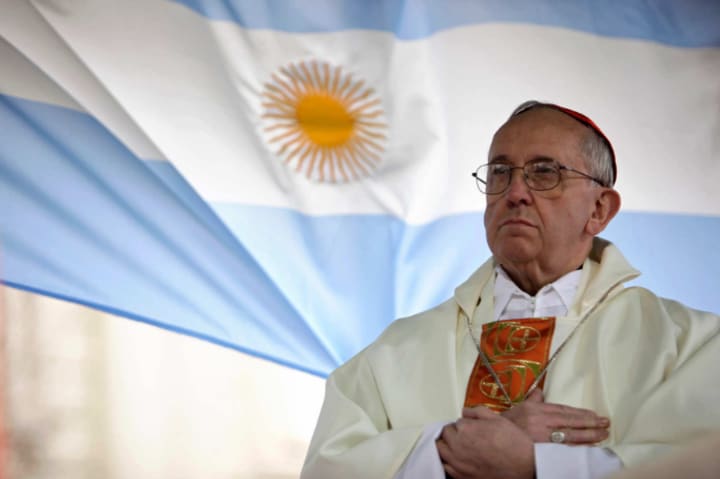
Pope Francis broke new ground in March 2013. He became the first Latin American pontiff to lead the Catholic Church in almost 1,300 years. His biography tells the story of an unmatched experience from his modest roots as Jorge Mario Bergoglio, the son of Italian immigrants in Buenos Aires, Argentina.
His unique position as the first Jesuit pope and the first to take the name Francis reshaped the scene of papal leadership through his steadfast dedication to simplicity and social justice. The decision to reside in a Vatican guesthouse instead of the traditional papal apartments demonstrated his commitment to papal humility. His leadership emphasized advocacy for the marginalized. He addressed climate change through his landmark encyclical “Laudato Si'” and worked to modernize the Catholic Church’s approach to modern challenges.
This Argentine cardinal’s remarkable path led him to become one of today’s most influential religious leaders. His early life and service to others profoundly shaped his transformative papacy.
The Making of a Spiritual Leader
Vatican City wasn’t where the story of a future pope began. The bustling neighborhood of Flores, Buenos Aires shaped Jorge Mario Bergoglio’s early years. He came into the world on December 17, 1936, the eldest of five children born to Italian immigrants. His father Mario Giuseppe Bergoglio worked as an accountant for the railways, while his mother Regina María Sivori dedicated herself to raising their family. They had escaped Benito Mussolini’s totalitarian regime in the 1920s to build a better life across the Atlantic.
Jorge flourished in his tight-knit community, embracing both his Argentine surroundings and Italian roots. His academic excellence shone through despite modest circumstances. Maria, his only surviving sibling, remembers her brother’s “infectious smile and great sense of humor”. These formative years shaped his balanced outlook on life – enjoying simple pleasures without excess or compromising values.
Bergoglio’s education started at the Salesians of Don Bosco school in Ramos Mejía. He then attended Escuela Técnica Industrial Nº 27 Hipólito Yrigoyen, earning a chemical technician’s diploma. A brief stint in food processing and at Hickethier-Bachmann Laboratory followed before his life changed dramatically.
A severe health crisis struck when he turned 21. Doctors removed part of his right lung due to severe pneumonia. This close call with death became a defining moment in his spiritual path. His Catholic upbringing took on deeper meaning after a profound confession experience while heading to celebrate Spring Day.
The election of Cardinal Jorge Bergoglio started a papacy filled with groundbreaking firsts. His appearance on St. Peter’s Basilica’s balcony on March 13, 2013, showed everyone this pope would take a different path than those before him.
First Jesuit and Latin American pope
The white smoke rising from the Sistine Chapel marked several historic moments. Pope Francis became the first Jesuit to lead the Catholic Church. This breakthrough happened after five rounds of voting across two days. His spiritual foundation came from Ignatian principles.
He became the first pope from the Americas and Southern Hemisphere, which brought a big change to church leadership. Hispanic Catholics worldwide felt connected to his love for soccer and Spanish-speaking background. His election highlighted Latin America’s growing role in the Catholic Church, where about 28% of the world’s Catholics live.
Pope Francis stands out as the first pope born and raised outside Europe since Gregory III, an 8th-century Syrian pope. This fundamental change showed how the church’s future lies more in the “New World” Americas than “Old World” Europe.
Living outside the Apostolic Palace
Pope Francis’s choice of home showed his break from tradition clearly. The papal apartments stood ready after renovations, yet he became the first pope in 110 years to live elsewhere. He chose the Domus Sanctae Marthae (House of St. Martha), a Vatican guesthouse built in 1996.
He explained his unique choice: “The residence in the Apostolic Palace is… large and made with good taste, but not luxurious…. It is large, but the entrance is narrow. Only one person at a time can get in and I cannot live alone. I must live my life with others”. This move let him stay close to both permanent residents and Vatican visitors.
Speaking to students from Jesuit-run schools, he explained more: “For me, it’s a personality problem: that’s all. I need to live among people, and if I lived alone, maybe a little isolated, it wouldn’t do me any good”. His preference matched his Jesuit background and desire to stay connected with everyday people.
Pope Francis changed many papal customs beyond his living choice. He picked simple cars for travel. Sometimes he went shopping in Rome, which helped break down walls between the papacy and people.
His simple style showed right from the start. He wore black shoes instead of the traditional red Prada shoes other popes wore when he first greeted the world in 2013. This small detail showed he rejected luxury and welcomed humility.
He changed funeral traditions by a lot. He picked a simpler wooden coffin with zinc lining over the traditional triple coffin made of cypress, lead, and oak. The practice of displaying the pope’s body on a raised platform in St. Peter’s Basilica ended too.
The Basilica of St. Mary Major in Rome will be his final resting place. This makes him the first pope in more than a century to be buried outside the Vatican. Only six other popes rest there. He picked this church because of his “very strong connection” to it, visiting hundreds of times during his papacy.
These changes showed his vision that people should see the pope as “a shepherd and disciple of Christ and not of a powerful man of this world”. His thoughtful choices made the papacy more available and humble than ever before.
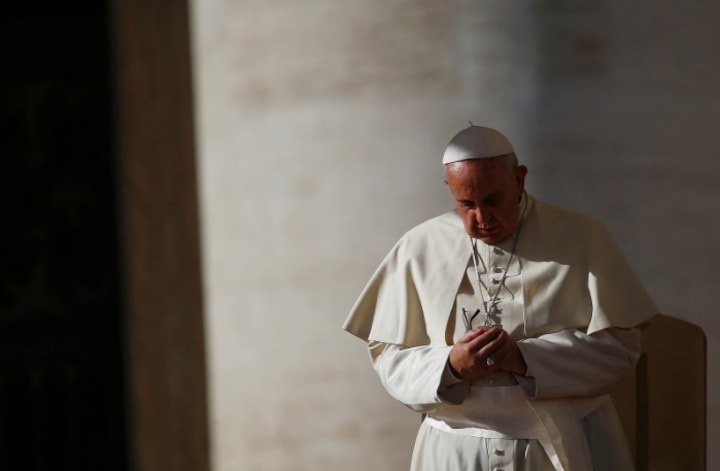
Pope Francis has always put the marginalized at the heart of his ministry. This dedication has made him a powerful voice for those who cannot speak for themselves. His actions go beyond words and challenge global power structures and economic systems.
Support for the poor and refugees
“How I would love a Church that is poor and for the poor.” These words marked the start of Francis’s papacy. His first major trip outside Rome took him to Lampedusa. There he honored thousands who lost their lives crossing the Mediterranean. He celebrated Mass using an altar built from pieces of migrant boats and spoke against the “globalization of indifference” toward people escaping violence and poverty.
His solution to the refugee crisis is simple: “to welcome, to protect, to promote, and to integrate”. When he wrote to U.S. bishops in 2025, he criticized mass deportation programs. “The legitimate regulation of migration must never undermine the essential dignity of the person”. He stressed that “Christians know very well that it is only by affirming the infinite dignity of all that our own identity as persons and as communities reaches its maturity”.
Two major encyclicals define Francis’s environmental teaching: “Laudato Si” (2015) and “Laudato Deum” (2023). His view on climate justice connects environmental concerns with poverty. He argues for “integral human development” that looks beyond just economic growth.
“Solving climate change means protecting the planet and vulnerable people,” he stated firmly. We must hear “both the cry of the earth and the cry of the poor”. He called out wealthy nations that pollute the most. Americans produce about seven times more greenhouse gasses per person than people in poor countries.
His environmental work has created real change. Catholic bishops helped stop oil drilling in Ecuador’s Yasuní National Park, an Amazon rainforest and UNESCO Biosphere Reserve.
Francis speaks clearly about wealth gaps: “While the income of a minority is increasing exponentially, that of the majority is crumbling”. This imbalance stems from “ideologies which uphold the absolute autonomy of markets and financial speculation”.
The Pope makes several strong points about economics:
Earth has enough resources to end poverty
Tax breaks for the wealthy create “structures of sin”
The world’s 50 richest people own about $2.20 trillion—enough to fund healthcare and education for every poor child globally
“We are not condemned to global inequality,” Francis stated. He believes we can overcome poverty through economic systems that help those left behind. He wants concrete solutions: social protection, universal basic income, healthcare for all, and universal education. These are what he calls fundamental “economic rights”.
His push for economic fairness includes environmental concerns. “Social inequality and environmental degradation go hand in hand and have the same root”. He reminds us that economic systems must reflect moral values, questioning the idea that profit should be business’s main goal.
Francis emphasizes that true faith must lead to real charity. He warns that “if prayer does not translate into concrete action, it is in vain; indeed, faith by itself, if it has no works, is dead”.
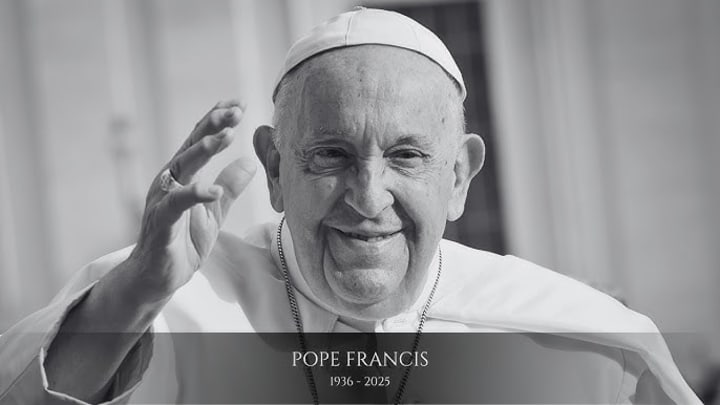
Q1. What makes Pope Francis unique among previous popes? Pope Francis is the first Latin American pope, the first Jesuit pope, and the first to choose the name Francis. He’s also known for his humble lifestyle, living in a Vatican guesthouse instead of the traditional papal apartments.
Q2. How has Pope Francis addressed climate change? Pope Francis has made climate justice a central part of his teachings, issuing encyclicals like “Laudato Si” that connect environmental concerns with poverty. He advocates for “integral human development” that balances economic growth with environmental protection.
Q3. What is Pope Francis’s stance on interfaith dialog? Pope Francis has been a strong proponent of interfaith dialog, particularly with Muslims and Jews. He has made historic visits to predominantly Muslim countries and signed important declarations promoting religious tolerance and cooperation.
Q4. How has Pope Francis approached LGBTQ+ issues in the Church? While maintaining traditional Catholic doctrine on marriage, Pope Francis has adopted a more pastoral approach to LGBTQ+ issues. He has advocated for civil union laws to protect same-sex couples legally and allowed for non-ritualized blessings for individuals in same-sex unions.
Q5. What is Pope Francis’s legacy beyond the Catholic Church? Pope Francis has emerged as a global moral authority, influencing issues beyond religion such as climate activism, migrant rights, and social justice. His leadership has been praised by world leaders and faith communities alike for its emphasis on compassion, humility, and spiritual courage.
About the Creator
Peter Ahn
DoggyZine.com provides unique articles. Health, Behavior, Life Style, Nutrition, Toys and Training for dog owners.
Real Lottery Winners’ Dream Moments Revealed
The day after having a good dream, people say, “I should buy a lottery ticket.” Are dreams really related to winning the lottery? According to a survey of 122 winners who bought lottery tickets based on their dreams, 24 people said they saw their late parents or grandparents in their dreams and 21 winners said they had a pig dream. In addition, many people had dreams related to maggots, feces, fire, and animals. It’s hard to say that an ancestor’s dream is a lucky dream. It is said that it is a dream that tells the descendants that good things will happen only when they appear with a friendly and bright smile. Below you will find a collection of dreams real lottery winners dreamed a day before they purchased lotto.
By Peter Ahn11 months ago in Motivation
The Wolf of Wall Street: The True Story So Wild Hollywood Barely Changed It
When The Wolf of Wall Street premiered in 2013, audiences quickly realized they were watching something different from a typical Hollywood drama. The film was loud, chaotic, outrageous, and often shocking. Directed by Martin Scorsese and starring Leonardo DiCaprio, the movie tells the story of Jordan Belfort, a stockbroker whose rise to wealth and power became one of the most infamous financial scandals in modern American history.
By Lukáš Hrdličkaabout 15 hours ago in Men
Gangs of New York: The Violent Story Behind the Birth of Modern Manhattan
When Gangs of New York premiered in 2002, audiences were transported to a New York City that few had ever imagined. Directed by Martin Scorsese, the film is an epic historical drama portraying a city in chaos, where gangs fought for control and every street corner held danger. With its mix of political intrigue, revenge, and raw violence, the movie offers a window into a period that shaped modern Manhattan.
By Lukáš Hrdličkaabout 15 hours ago in Men



Comments
There are no comments for this story
Be the first to respond and start the conversation.