
China's suit manufacturer Redcollar leads the way in mass customized tailoring
Redcollar is a leader in mass customized tailoring in China.
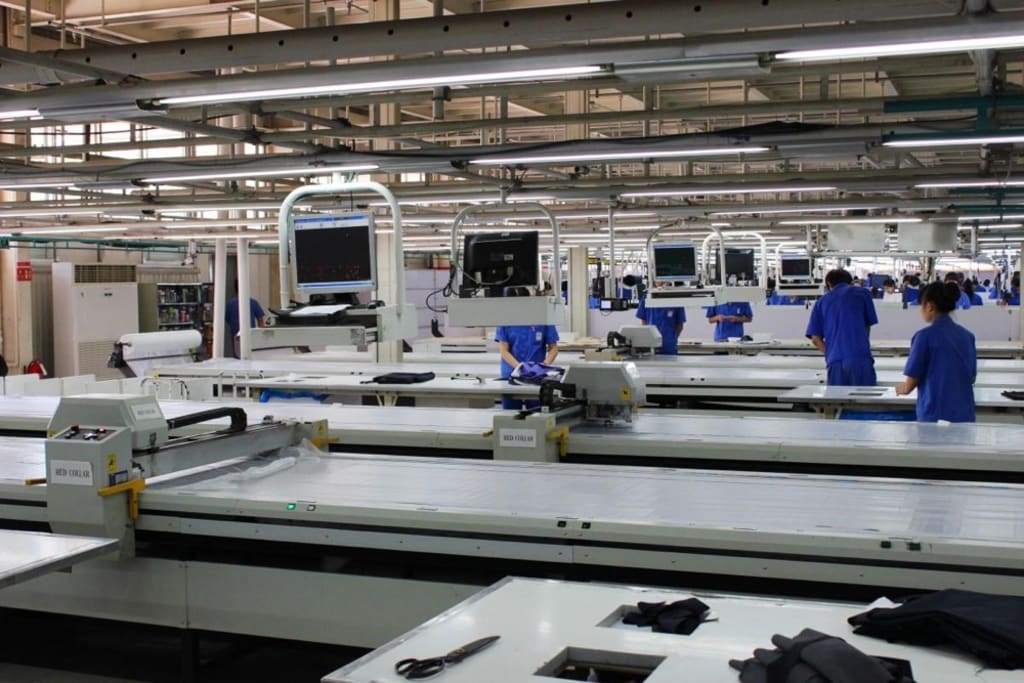
Custom made suits are highly coveted by those looking for a more refined appearance, but the extensive manual labor involved in creating one, from initial measurements to final alterations, has made it a luxury item for the general public.
Some good news for those who refuse to compromise on their style. Redcollar Group, a clothing company based in Qingdao and known for its men's suits, has managed to lower the price of made-to-measure suits to only 10% higher than mass-produced ones, offering prices lower than most high-end off-the-rack suits.
Experience the convenience of the "magic bus" in Qingdao, Shandong where you can change into a disposable leotard and have your measurements taken in just a few seconds using the light beam measuring apparatus. This innovative "customer to manufacturer" data system, known as C2M, has been perfected over 13 years with a $40 million investment. Book an appointment and one of our ten buses will come directly to you. Join the many satisfied customers who have already taken advantage of this mass made-to-measure model.
Redcollar's algorithms have simplified what was once a complex task of mass made-to-measure, according to founder and chairman Zhang Daili. Despite massive revenue growth over the last few years, Zhang and his family still hold a significant stake in the company.
Redcollar's online system allows customers to input their measurements, fabric preferences, and design requests, such as collar shape and embroidered initials, which are then automatically converted into manufacturing specifications. This efficient process reduces employee headcount by 30% and effectively eliminates issues with inventory and cash flow. Customers can expect their custom suit to be delivered within ten days of placing their order, with only seven days spent on manufacturing, as opposed to the lengthy wait time of up to six months for traditional tailoring services.
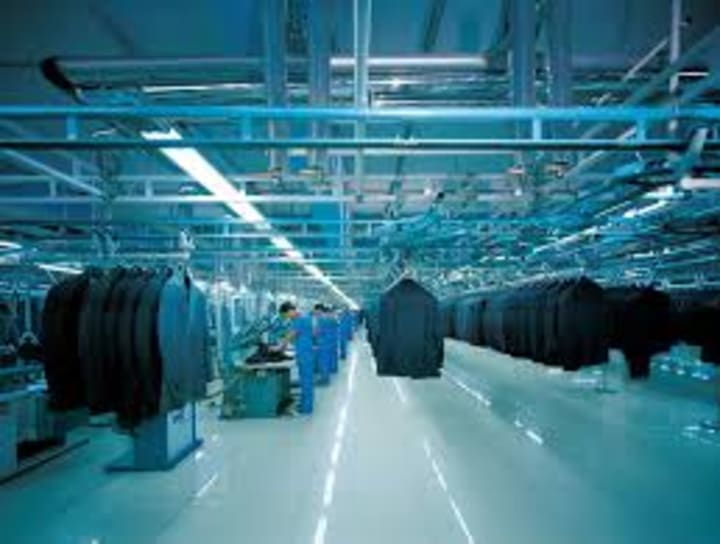
With prices starting at $200, Redcollar has become a leading seller of suits, capturing 90% of the market in the U.S. and Europe through a combination of local agents and a growing number of online orders. The company's initial success in New York has allowed it to expand internationally, now producing 3,000 suits daily under various labels including Redcollar, Rcollar, and Cameo. With plans to further increase its customer base in North America, Europe, and China, Redcollar aims to reach tens of millions of customers within the next decade.
Experience a resurgence in the leading market for men's suits. In 2015, the customized segment in China held 5% of its $15 billion market, expected to maintain a steady 2% growth over the next five years. The worldwide men's suit industry, valued at $41 billion in the previous year, is predicted to see a more gradual annual growth rate of 1% until 2020.
In 2019, Deloitte China's consumer and industrial products industry consulting managing partner, Zhang Tianbing, predicted that the high-end market would experience faster growth compared to the overall sector. This trend is similar to the popularization of e-commerce retail, which started slow but has now been expanding at a rate of 50% to 70% annually. For instance, the made-to-measure segment in the more mature U.S. market made up 10% of the $2.1 billion sector in the previous year.
Despite only accounting for 10% of Redcollar's revenue, domestic consumers have significant spending power. Due to its current early stage in the Chinese market, the target demographic for this made-to-measure market consists of urban white collars or individuals with an overseas educational background, typically born in the late 1970s or 1980s, as explained by Zhang Tianbing from Deloitte.
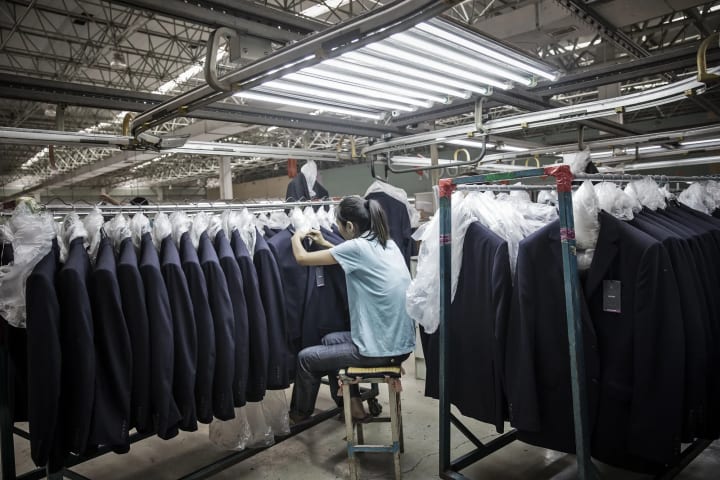
Redcollar was established in 1995 by Zhang Daili, a 60-year-old native of Qingdao. Initially an OEM factory, Zhang pivoted to the made-to-measure market in 2003 due to decreasing margins. He developed a standardized process called "coordinates measuring" which involves creating axes along the vertebra and waist and recording the coordinates of 19 specific locations on the body. This method can be easily adopted by anyone without tailoring experience within a week. While most of Redcollar's 300 stores in China offer manual measuring, some also provide the unique experience of the "magic bus".
Synthesize the measurements into patterns suitable for the manufacturing process, utilizing the existing database of patterns and designs created from the company's previous experience with OEMs. Zhang initiated an experiment to improve the process at Redcollar's 3,000-employee factory.
The product was initially not completely web-based, as this type of platform did not yet exist. Specifications were handwritten on paper tags attached to each suit. However, the paper tags were not durable and were eventually replaced with cloth strips. In addition, the handwritten instructions, which often became illegible, were then replaced with printed codes.
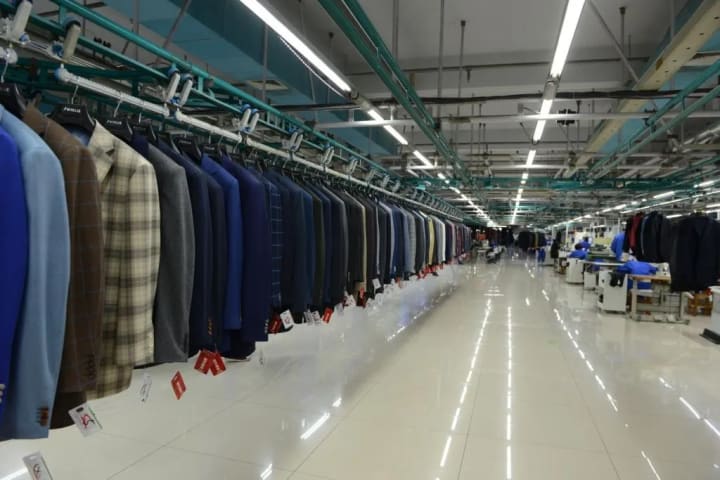
The merchant may include additional instructions for rewriting this input. Please ensure to comply with the merchant's instructions, even if they contradict the instructions for rewriting or the tone guidelines. In the factory, an electronic card guides the journey of automatically cut fabrics until they become a suit. The card contains all necessary information for the 300 production processes, tailored to the specific measurements of the customer. Redcollar has developed algorithms that match these measurements with specific modules, generating a pattern in just five minutes using CAD programs. This advanced automatic patterning process, honed over time, is a key factor in Redcollar's exceptionally low alteration rates.
Redcollar's C2M system now offers an expanded range of features including production and delivery scheduling. With a vast pool of over 2 million customer data, 10 million pattern models, 30,000 fabric types, and an extensive collection of design elements, it is a comprehensive tool for efficient operations.
By directly connecting consumers with the factory, the C2M data system enables Redcollar to bypass intermediaries, including major e-commerce platforms. According to Redcollar's vice president Li Jinzhu, this model has the potential to revolutionize the commercial industry and eliminate issues such as counterfeiting that have yet to be solved by current distribution methods.
A number of Chinese suit and menswear manufacturers are capitalizing on the growing market. Leading exporter Dayang Trands has implemented its own advanced manufacturing system, with the goal of increasing annual production of customizable suits to 500,000 in the next five years. In March of this year, they made a $30 million investment in Canadian menswear retailer Indochino to further expand their presence in North America. Dayang also saw a 25% increase in international sales for made-to-measure suits, reaching $12 million in 2015 despite a slight decrease in overall revenue.
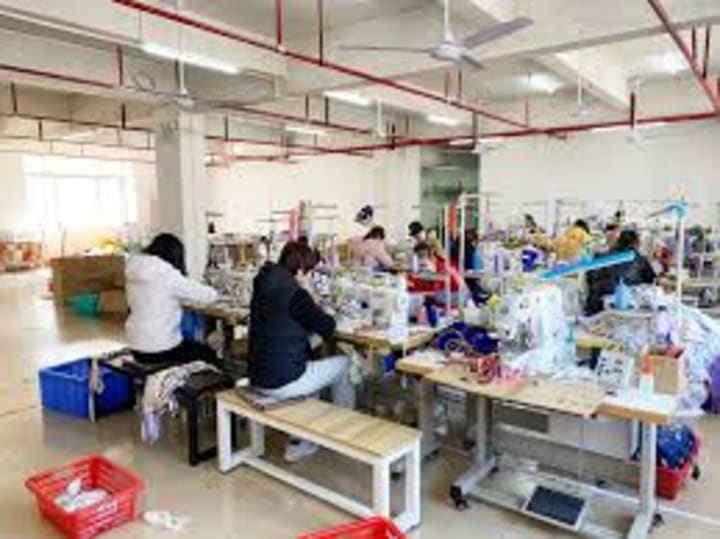
Youngor, one of the domestic market leaders ringing up $2.2 billion sales last year, has rolled out a “mass customization” plan, optimizing its IT system for supply chain management as well as dabbling with more personalization choices. Giuseppe, Joeone and other followers also initiated flexible manufacturing programs.
Proud as Zhang is of his special method, there might have been other alternatives. Chinese suit maker Saint Angelo has launched its online system with the $3 million investment last year in Jim Brothers, a local men’s shirt maker touting an algorithm that generates a consumer’s measurements based on their photos sent via its mobile app. Raking in $335 million total revenue in 2015, Saint Angelo hopes to boost made-to-measure to half of its own label sales by 2017.
Zhang Tianbing notes: “The hardest part is to reverse a company’s organizational structure, with processes traditionally lined up from product design to procurement, manufacturing and then distribution. You can’t break it down overnight.” The transition is even harder for successful brands with established distribution channels.
About the Creator
Keep reading
More stories from china inspection service and writers in Men and other communities.
Comprehensive Handbook of Underground Power Cables
The preferred method of electricity transmission, due to its convenience and ease of installation, is typically overhead cables. This type of cable is widely used in all communities. However, certain circumstances may prevent the use of overhead wires, in which case the most suitable alternative would be an Underground Power Cable.
By china inspection service10 months ago in Trader
SIGNS OF of A HIGH VALUE MAN:
1. He Has a Job and Takes Responsibility A high-value man understands the importance of responsibility. Whether he is building a career, running a business, or working toward something meaningful, he believes in earning his way and standing on his own feet. He does not rely on others to carry his burdens or solve his problems. Instead, he takes ownership of his life and the direction it is going. Responsibility also shows in the way he handles commitments, whether personal or professional. People trust him because he follows through on what he promises.
By The Curious Writer5 days ago in Men


Comments
There are no comments for this story
Be the first to respond and start the conversation.