
The Ontology of Love within the Context of Romantic Relationships
Exploring the Foundations of Trust Respect and Growth in Romantic Relationships

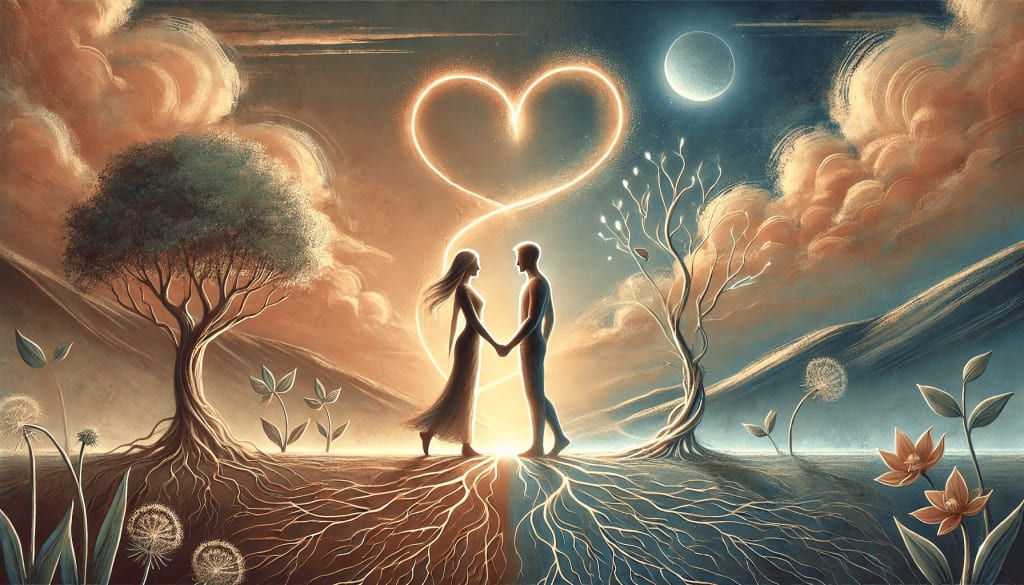
Love, as such an intricate and complex phenomenon, occupies such a central space in human experience. While so ordinary and ubiquitous, its real nature remains a mystery, especially in romantic relationships. Scholars and practitioners alike have been trying to define the boundaries of love, which, by its very nature, is constantly in flux with the unfolding of time, psychological, and relational changes. In its essence, love is a relationship that moves beyond fleeting emotions or whimsical infatuations to encompass a deep and lasting connection founded on trust, respect, and selflessness. This relational model is mutualistic, requiring both the ability to give and the ability to receive, and it provides the foundation for healthy relational functioning. An advanced understanding of the ontology of love helps individuals and pairs build relationships marked by resilience, emotional depth, and lasting satisfaction.
Conceptualizing love in romantic relationships
In the relational model, love transcends mere physical attraction or fleeting emotional infatuation. It involves an integration of acceptance, advocacy, and an inner desire for the complete well-being of one's partner. The ability to truly love requires that one see and accept one's partner in his or her totality, which includes strengths and weaknesses, aspirations and idiosyncrasies, without feeling the urge to control or make an ideal. This paradigm of unconditional acceptance promotes a culture of psychological safety and mutual respect that aids in the progress of the relational dyad.
Unlike the reductionism that popular media often typesets in real-life love, real love is imperfect and requires a sustained, repetitive effort. In reality, love doesn't demarcate its boundaries by the perpetual felicity or corny notion of compatibility, but it is actually defined by a successful cooperation to build a mutually growing but individualistic relationship. By nature, love is a dynamic concept that changes according to the flow of life, deepening as the couple faces the ups and downs of existence together.
Constituent elements of love in relationships
It involves exploring the very essential elements that come together to create and support this phenomenon of love:
Trust: The Epistemic Foundation
Trust is the foundation of any significant relational construct. Lack of trust creates insecurity, suspicion, and relational entropy. Trust involves complete confidence in the truthfulness of the intentions of one's partner, along with full belief in a commitment for mutual welfare. Trust does not develop overnight or unilaterally; it builds upon iterative processes through genuine transparency, integrity, and reliability.
Communication: The Dialogic Imperative
Effective communication is one of the absolute necessities of maintaining and developing relations. The absence of dialogic transparency hampers relational development. Ideal communication includes both effective verbal communication as well as silent non-verbal messages, for example, nodding gestures or empathic responses. Such interchanges of words develop emotional intimacy so that both feel truly seen, heard, and appreciated.
Respect: The Ethos of Relational Integrity
Respect entails a profound valuation of one’s partner as a distinct and autonomous individual. It necessitates the acknowledgment and validation of their perspectives, emotions, and existential experiences. During moments of discord, respect ensures the preservation of relational dignity, mitigating adversarial tendencies and reinforcing the dyadic bond. Mutual respect is integral to the creation of a relational milieu conducive to authentic expression and collaborative problem-solving.
Altruism: The Dialectic of Self and Other
Love is inherently altruistic, that is, it tends to be other-centered, such that one's partner's needs are prioritized alongside or above one's own. This is not the same as self-abnegation but rather a dynamic balance in which both partners are satisfied. Altruism, whether in everyday acts of care or heroic acts in times of crisis, captures the very spirit of relational commitment and empathy.
Intimacy: The Two Dimensions
Intimacy is a complex construct with both emotional and physical components. Emotional intimacy requires the openness of fears, aspirations, and vulnerabilities, hence bringing about profound psychological connection. Physical intimacy reinforces the relational bond by touching and showing affection. The two dimensions of intimacy are symbiotic, thus strengthening the cohesion and depth of the relational dyad together.
Commitment: The Temporal Continuum
Authentic love requires a long-term and active commitment to the relational construct. Such commitment goes beyond temporary difficulties, emphasizing persistence and prioritizing the dyadic relationship. It involves an unrelenting commitment to the development of the relationship through adaptive strategies, mutual accountability, and a shared vision for the relational future.
Differentiating Love from Infatuation
The conflation of love with infatuation forms a dominant misconception that makes obscure the delicate lines of differentiation between these two phenomena. Infatuation is ephemeral, shallow, and is based upon physical attraction or the newness of relational situations. Love, however, is the form of a sustainable and deep bond that is rooted in shared experience, trust, and intellectual concurrence.
Infatuation frequently leads to idealization, where the partner is perceived in a light of unrealistic perfection. Love, though, finds its basis in an acceptance of the multifaceted human nature of the partner and all his strengths and weaknesses. A subtle distinction between this is crucial for nurturing relationships that are real and long-lasting.
Fostering Love Within Relational Constructs
Love, as an evolving phenomenon, necessitates intentional cultivation. Strategies for nurturing love include:
Culti vating Gratitude
Expressions of thanks - oral expressions and behavioral gestures- bolster relational positivity and reciprocity. Gratitude emphasizes the worth of one's partner; hence, it births a relational ethos of mutual appreciation and respect.
Prioritize quality engagement
In the zeitgeist of perpetual busyness that characterizes the contemporary era, intentional engagement with one's partner is paramount. Such engagement may include shared experiential activities, dialogic exchanges free from distractions, or intentional moments of intimacy. The qualitative dimensions of these interactions supersede their quantitative frequency.
Practise Empathy
An empathic effort requires an active and conscious attempt to experience and relate with one's partner's feelings and thought states. Such empathic attunement creates a mental climate of psychological safety and mutual validation.
Navigating Conflicts Constructively
An indispensable characteristic of relationships, conflict requires to be navigated constructively. This means actively listening, using de-escalation techniques, and problem-solving frameworks in cooperation with the other. Constructive conflict resolution is an important building block of relational resilience.
Continuing Romantic Gestures
Perpetuation of romantic gestures in the form of quotidian affirmations or grand overtures enlivens the relational dynamic. This is because it reiterates the relational bond and maintains the emotional and affective dimensions of love.
Encouraging individual and relational growth
Relational health is dependent on the simultaneous development of both partners as individuals and as a dyadic unit. Encouraging personal aspirations and celebrating individual accomplishments contributes to the relational dynamic, underscoring its mutually enriching potential.
Challenges in maintaining love
The praxis of love is not without its challenges. Circumstantial or interpersonal relational adversities require adaptive strategies and mutual commitment. Some common challenges include the tension between individuality and togetherness, as well as the propensity for relational complacency.
The balance between autonomy and relational integration must be maintained. Partners need to respect their individuality while contributing to the relational construct. In addition, complacency must be addressed through continuous intentionality, so that relational vitality and passion are constantly fostered.
Love as a teleological journey.
The very meaning of love does not lie in an idealized state of relations but in embracing the dynamic and constantly evolving trajectory. Love is a teleological journey in which the partners together share the existential vicissitudes of life and forge a bond characterized by mutuality, resilience, and profundity.
The truth of the matter is that love is a decision to see good in one's partner, forgive him or her for their misdoings, and continue growing together. In fact, love becomes the embracing of imperfection and the affirmation of the good hidden in relational co-creation. With this truer essence of love, a couple or any person can pass through the various barriers created by false constructs, enabling relationships that become both transformational and sustainable.
About the Creator
Ratnadeep Mandrekar
Voical's writing talks about love, vulnerability, and unspoken connections and calls the reader to ponder those quiet moments that speak volumes about the depth of beauty in human relationships and the power of empathy.
Keep reading
More stories from Ratnadeep Mandrekar and writers in Marriage and other communities.
Second Chances Romance: An Academic Study on the Resilience and Redemption of Love
Romantic stories have been interesting to humankind for as long as anyone can remember, but the genre of second chances romance has a special charm. This literary and cinematic phenomenon plunges into deeper themes, such as redemption, personal transformation, and how love, in fact, never grows old. Through remembering, reliving, and repositioning past relationships, the second chances romance becomes a reflexive glance at the intricate play of human bonding and emotional endurance.
By Ratnadeep Mandrekar12 months ago in Marriage
Mother’s Day Jewelry: Timeless Gifts That Celebrate Love and Appreciation
Mother’s Day jewelry is one of the most heartfelt ways to express love, appreciation, and respect for mothers. Unlike ordinary gifts, jewelry holds emotional value and becomes a lasting reminder of special moments. From elegant gemstone rings to delicate necklaces and timeless bracelets, Mother’s Day jewelry beautifully symbolizes the unconditional bond between a mother and her family.
By Margaret Johnson6 days ago in Marriage



Comments
There are no comments for this story
Be the first to respond and start the conversation.