
Qabool Hai: A Love Written First
A Journey of Love Beyond the Vows
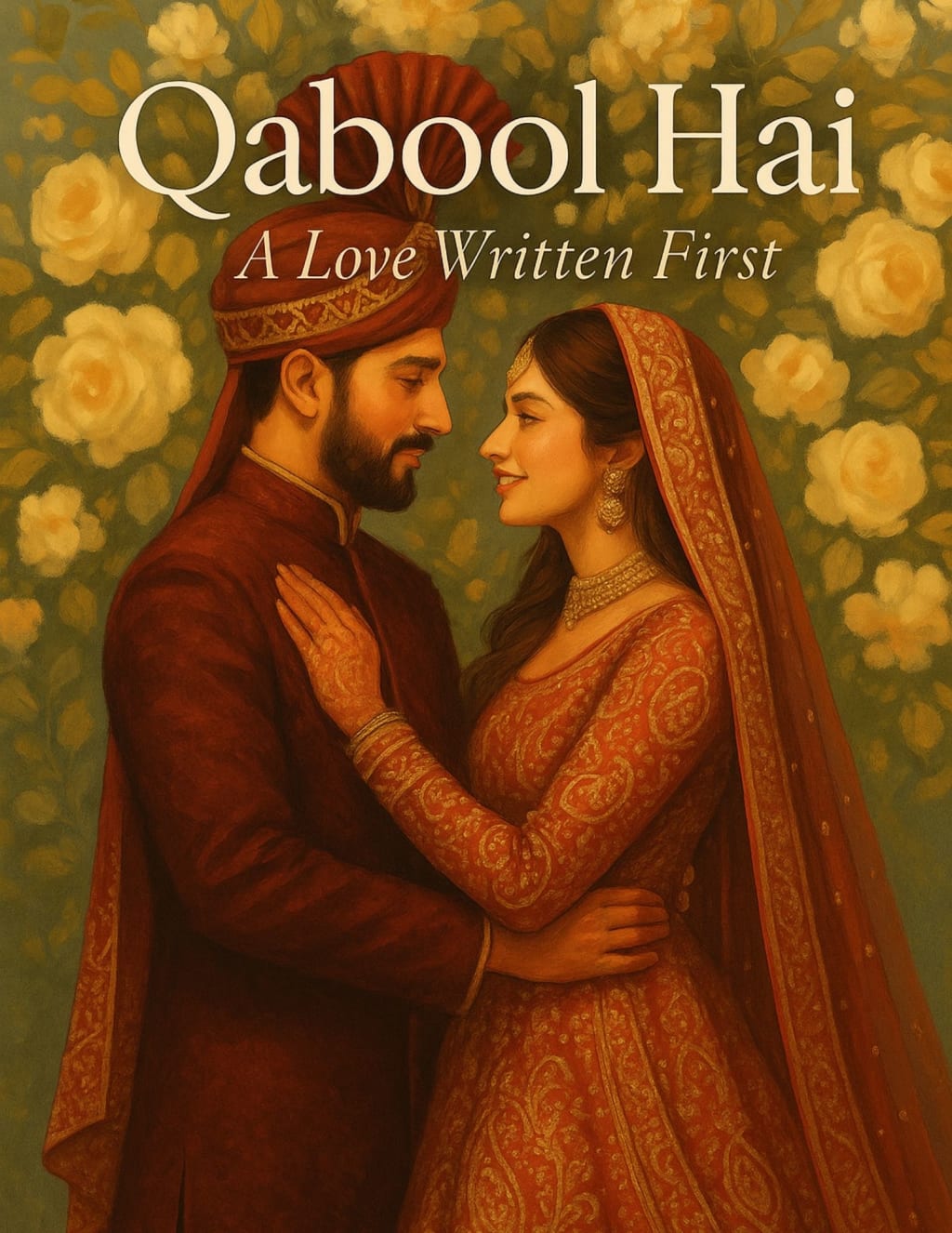
Disclaimer: This story is based off my personal story and written with the help of AI to correct any grammatical errors.
Love Said, ‘‘Will You?’
It started like a fever dream.
One minute, Rania was finalizing details for a girls’ trip to Chicago—group chats buzzing, outfit links flying back and forth—and the next, she was staring at her sister across the room, processing a question that would change the course of her life.
“Would you marry him?” her sister asked.
She blinked. “Who?”
Her sister said a name: Aayan.
Her mind jumped to a familiar face—one of their cousins. But no, her sister corrected her quickly. Not that cousin. Aayan was actually her cousin’s cousin—technically still extended family, but a stranger in all the ways that mattered.
She didn’t say yes. Not right away.
She laughed it off at first. Then thought about it more than she expected to. She told her mom and sister the only way she’d consider it was if she got permission to go on the girls’ trip. It felt like a ridiculous bargain to be making in the same breath as a potential marriage. But somehow, it made sense to her. A gesture of freedom before a commitment that would shape her forever.
The trip never happened.
But the yes did.
What followed wasn’t a whirlwind. It was slower, more deliberate—a series of quiet steps that led toward something neither of them fully understood yet.
Her mother spoke with her father. Her parents, in turn, contacted her chachi—their sister-in-law in Pakistan. Rania didn’t know this at the time, but while she was scrolling through travel itineraries and flight options, her parents were laying the first bricks of a new path for her.
It all felt surreal.
Her chachi, loving and trusted, brought up the proposal with her own brother—Aayan’s father. He listened, asked a few questions, then passed the matter to Aayan.
And he said yes.
Simple. Decisive.
He didn’t ask for time. He didn’t delay. He gave his consent quietly, as though some part of him already knew.
Meanwhile, both families began their own subtle investigations. Background checks disguised as family calls. Character references hidden in tea-time conversations. Everyone wanted to know who the other really was—not just on paper, but in spirit.
In the middle of all this, Rania and Aayan didn’t speak—not yet. But across oceans, their names had been spoken aloud together. Their photos had been exchanged through a cousin acting as a bridge. And something intangible had begun to stir in the silence between them.
One night, while scrolling through her phone, Rania opened the photo of Aayan that her cousin had sent. She studied it for a long moment. There was something open about his face. Something kind.
It made her pause.
The message arrived one quiet evening in early September.
Rania was at her sisters house in the U.S., the late summer air still warm, the day fading into quiet. Across the world in Pakistan, the sun was already up, casting light on conversations that were happening without her.
For weeks now, the rishta (proposal) had been discussed between families across time zones—between WhatsApp calls, photo exchanges, and voice notes. Her parents had spoken to her chachi in Pakistan. Her chachu (paternal uncle) had asked his nephew, Aayan, the same question Rania had already answered with a tentative yes. But it all still felt distant—an arrangement unfolding on another continent.
Until her phone buzzed.
She glanced at the screen. A message from an unknown number.
“Assalam Alaikum. How are you?
Our parents are talking about our rishta.
I wanted to get your consent.
You don’t have any issue with this?”
Aayan’s words were straightforward, respectful—marked with a tone of sincerity that caught her off guard.
She sat with it for a moment, letting the reality settle: this wasn’t just a conversation between families anymore. This was her life. And here was the person it might soon belong to, asking for her voice in it.
She responded:
“Walaikum Assalam. I’m okay, thank you.
No, I don’t have an issue. I appreciate you asking.”
Simple. Honest. The first bridge across oceans.
What followed was a cautious but growing exchange of messages. Despite the literal distance—thousands of miles, eleven time zones—they started to meet each other in the quiet spaces of their phones. In short texts and gentle questions. In the kindness of being asked, not assumed.
The oceans between them were real. But so was the beginning.
And Rania, for the first time, felt it in her bones:
This love wasn’t rushed. It was written—long before either of them had opened that message.
Where Love Learned to Wait
They didn’t speak on the phone.
They hadn’t even seen each other.
But something unspoken had begun to unfold — one message at a time.
After that first Instagram text, the conversation between Rania and Aayan found a quiet rhythm of its own. Sometimes they chatted on Instagram, other times they’d switch to WhatsApp. The platform didn’t matter — the connection did.
There were no video calls, no voice notes. Just text. Typed words. Timed replies. Careful punctuation.
A soft thread of conversation stretched across continents.
They talked about small things — where they grew up, what their daily routines looked like, how their families worked. She was cautious, but curious. He was respectful, measured, always waiting for her comfort to lead the way.
Every now and then, one of them would disappear into their day — busy with family obligations, time zone gaps, or simple nerves. But they always returned. A “Salaam” from him. A thoughtful reply from her.
They were strangers, still. But the kind who were beginning to know each other.
Sometimes, she would reread their old messages, wondering who this man truly was. Wondering what his voice sounded like. What his laugh might feel like in real time. What kind of future they were texting toward.
Still, they stayed where they were — in between knowing and guessing, hoping and waiting. A modern love story unfolding in quiet, unseen spaces.
No pictures. No calls. No declarations.
Just the slow, steady warmth of something that had been written long before either of them ever pressed “send.”
______
Just days after their rishta had been finalized, Rania was in a car with her sister and brother-in-law when a sudden crash threw their world off balance. The impact left her brother-in-law with a broken leg, her sister and nephews traumatized, and Rania with a deep, gaping wound on her shin. Pain and shock settled in, physical and emotional.
During her recovery, she shared a picture of her injury on Instagram— raw and real, a glimpse into her vulnerability.
When Aayan saw the photo, he immediately reached out:
“Are you and your family okay? I saw your picture—please let me know you’re safe.”
It was a small message, but it meant the world to her.
She hadn’t told him all the details yet, but this simple act of concern was comforting. His words were gentle, never intrusive, quietly present as she navigated healing.
The days blurred together in a quiet rhythm of healing and responsibility as R started her new job at the county health department. The wound on her shin was still raw, the pain still very real, but she pushed through. There wasn’t room to slow down—she was saving for her wedding, each paycheck another step toward the life waiting on the other side of vows.
Her parents had initially hoped for a December Nikah (Islamic Wedding Ceremony). But Aayan had asked for something else.
He didn’t want to just sign a paper and go their separate ways again. He wanted the rukhsati—the moment she would come home with him —to happen alongside the nikah. He didn’t want to let her go once she was his.
They still hadn’t met. Hadn’t spoken. Hadn’t heard each other’s voices. But something had taken root—growing quietly in the shared spaces between words.
Their texting was gentle and sporadic. Once a week, sometimes twice. Some days they barely said anything meaningful. Other days, a sentence would linger—soft flirtation hidden in emojis and half- sentences.
On her birthday, he sent a sweet, simple message. She did the same on his. No grand declarations. Just quiet acknowledgment, a shared sense of presence.
As the weeks passed, they started talking more about the wedding. What kind of venue. What sort of decor. What colors, what traditions. It was strange, planning a day so intimate with someone who still felt like a stranger. And yet, with every message, he felt a little less unfamiliar.
Then came Ramadan.
They didn’t text much, but every few days, one would check in on the other. A simple “How’s your fast going?” or “Did you make dua today?” Their conversations felt sacred during those weeks—touched by the stillness of the month.
Midway through Ramadan, both families began discussing wedding dates in earnest. The wedding talk filled the air—across continents, across households. Even in their quiet chats, the excitement was starting to show.
Then April came. Eid arrived with soft celebration. They sent each other Eid Mubarak messages—and for the first time, they exchanged photos. Rania, in her dark blue maxi dress, shyly picked her favorite shot. Aayan, in a traditional kurta, smiled into the camera.
And then came something unexpected.
A voice note.
Rania’s phone buzzed, and there it was. She hesitated before playing it. But when she finally pressed play, the sound of his voice—gentle, warm, undeniably real—filled her ears.
“Eid Mubarak. May Allah always keep you happy.” Her breath caught.
It wasn’t just what he said—it was the way he said it. Soft and sincere. A voice she could place now with the words she had come to know.
For the first time, he wasn’t just a name on a screen.
He was real. He had a voice.
And somehow, it sounded like home.
The Love That Honored Her Voice
The weeks after Eid unfolded like pages turning in a well-worn book— steady, familiar, and full of quiet anticipation.
Wedding preparations picked up pace. Calls were exchanged between continents, WhatsApp groups were created, and family members bounced ideas around like confetti. Fabric samples, venue suggestions, dates—every detail seemed to be up for discussion.
But what Rania didn’t expect was how, at every crossroad, Aayan always turned to her.
“Do you like this date?”
“Are you okay with this color?”
“What do you want to wear for the reception?”
His messages came gently, never demanding, always thoughtful. In a culture where brides were often expected to go along with family decisions, His insistence on her voice being heard felt radical. And grounding. He didn’t just want her to say yes once. He wanted her to say yes to every part of the journey.
And she did. Again and again.
Because with each question he asked and every small decision he honored her opinion on, Rania felt her heart draw closer to him. Her affection began as a ripple—curious, hesitant—but it had swelled into something more: longing.
She thought about him in the quiet in-between moments—while commuting to work, while sipping chai in the late evenings, while icing her healing leg. The pain still lingered, but the ache had shifted. It wasn’t just physical anymore. It was the ache of missing someone you had never even met.
He made her feel chosen.
Not just because of a family arrangement. Not because of tradition or convenience. But because he wanted her.
And now, she wanted him too. More than anything.
—————
As October arrived in a flurry of golden leaves and crisp air, Rania’s pre- wedding celebrations in America began to bloom. Even though Aayan was still a world away in Pakistan, the joy that surrounded her made the distance feel softer, almost bearable.
The festivities began with a Dua-e-Khair, a small, intimate prayer gathering hosted not at Rania’s house, but by her best friend’s mother—an auntie who had loved Rania like her own for years. Her home was warmly lit, the living room rearranged to accommodate floor seating with cushions and low trays of dates, sweets, and tea. The scent of freshly baked treats and rosewater filled the air, and verses of the Qur’an echoed softly, enveloping the gathering in a sacred hush.
She sat quietly, wearing a modest outfit in pastel hues, her hands folded in her lap as her friends and their mothers offered prayers for her new life —prayers for love, for happiness, for a marriage built on faith and kindness. She smiled through misty eyes, feeling the weight of their blessings settle gently over her heart.
Then came the dholkis.
Two nights of vibrant music, henna-stained hands, and dance routines that had been secretly rehearsed in basements and living rooms. Rania’s house became a hub of excitement, her friends flowing in and out with outfits in hand and laughter trailing behind them.
On the night of her final dholki, Rania wore an orange sharara that shimmered beneath fairy lights. Her hair curled softly at the ends, and a delicate dupatta was pinned to her head. She stepped onto the small stage set up in the living room, greeted by applause, cheers, and teasing chants from her friends.
They danced. They sang. They cried. It was magic.
Later that night, long after the music had faded and the guests had gone home, Rania looked at herself in the mirror and smiled. She took a few quick selfies—nothing posed or perfect—and sent them to her fiance.
His replies came instantly.
“You look beautiful.”
“That color was made for you.” “I wish I could’ve been there.”
And just like that, with a few simple words from across the ocean, Rania felt seen. Loved. Cherished.
Love’s Quiet Journey Home
Exactly one week after the final dholki, Rania found herself at the airport, surrounded by suitcases, farewell hugs, and whispered duas. Her family was traveling with her, but she felt the gravity of the moment settle on her shoulders alone.
This wasn’t just another trip to Pakistan.
This was the last time she would land in Lahore as a single woman.
As the plane took off, she looked out the window, her breath catching slightly. Everything she knew was about to shift. The little girl who used to race through her nani’s courtyard barefoot, who grew up between two worlds—one rooted in the soil of America, the other blooming in the warmth of Pakistan—was coming home for the final time as herself.
Soon, she’d return as someone’s wife.
The flight was long, but her mind was restless. She thought of the weeks ahead—the wedding, the ceremonies, the faces that would greet her. She imagined seeing A for the first time. Would it be awkward? Would it feel natural, like their hearts already knew what to do?
As the plane began its descent, she whispered a quiet prayer. That everything would go smoothly. That her heart would be at peace. That she would be enough.
And as the wheels touched down on Pakistani soil, a strange calm settled over her. She had stepped into the next chapter of her life—and there was no turning back.
The moment her plane landed in Lahore, her phone buzzed.
“Let me be the first to welcome you to Pakistan.”
The message from Aayan appeared like a warm hand reaching out through the screen.
Though they still hadn’t met face-to-face, he was there with her—virtually —every step of the way. He texted her updates, asked how the flight had gone, and made sure she felt settled. His messages were steady and reassuring, and even through the exhaustion of travel, Rania smiled at her phone more than once.
But something tugged at her heart. Aayan was sick.
He didn’t make a big deal out of it, but she could tell from the tone of his messages that he was struggling. He admitted he had caught a bad fever and was trying everything to recover in time for the wedding. She worried quietly, praying he’d feel better soon.
Two days after arriving, Rania's nerves hit a new peak. That afternoon, Aayan’s parents and sisters were coming to visit. But this visit wasn’t just about courtesy—it was one of the first real steps toward blending two families. Earlier that day, his family had gone to meet his younger brother’s soon-to-be wife, and now it was her turn.
Rania sat quietly in the drawing room, heart fluttering. Though she had met his parents before during her childhood visits to Daska, it had been over fifteen years since then. His sisters, whom she was seeing for the first time as adults, were polite but mostly quiet. The room buzzed with soft conversation and a few smiles passed across the space. She responded kindly but cautiously, unsure of how to fully step into her role as the bride-to-be.
Despite her quiet nature, Aayan's family saw in her what he already knew— grace, warmth, and sincerity. By the end of the visit, they had gifted her with money and a wrapped present—symbols of welcome, approval, and affection.
The days that followed blurred into a haze of music, mehndi, and movement. The couple still hadn’t met—but their conversations became more frequent, more thoughtful. Each message felt like a gentle promise, building the bridge between their two lives.
They texted late into the night, sharing little things: “Are you ready for all of this?”
“I keep wondering what it’ll be like to finally see you.” “It’s so close now.”
And then they’d fall quiet again, each resting in the comfort of knowing the other was thinking of them too.
That week, Rania's cousin’s wedding filled her schedule. The house was alive —full of vibrant clothes, the scent of cooked spices, and the sound of overlapping voices. Yet even in the chaos, he stayed on her mind. He was still recovering, doing everything he could to be ready for their big day. That worried her more than she admitted.
Where Love Stained Her Skin
On the morning of her Mehndi, Rania woke with a heavy head and a raw throat—nazla zukhaam, a gift from the clash between America’s crisp autumn and Lahore’s lingering heat. The house was silent, still wrapped in subah ki thakan, but her mind was already racing. It was 7 AM, and she hadn’t slept much.
Outside, the air hung warm—not loo-hot, but thick and still. She rose quietly, each movement careful, almost reverent. This wasn’t just a day— it was us ki mehndi. A day she had dreamed about in scattered flashes for years.
Nerves fluttered in her stomach, stealing her appetite. Dil bechain tha. She waited by the door, dupatta in hand, for her cousin to arrive and take her to the salon.
There, the transformation began.
She stepped into her peela gharara, a designer piece that looked like sunlight stitched in silk. The kameez brushed her knees, its sleeves and neckline kissed with zari ka kaam and delicate sitare. The gharara shimmered under the weight of its beading, each step a soft rustle of fabric and grace.
She had two dupattas—one, a plain yellow edged with sonaari kinari; the other, teal, embroidered along its shorter sides. Once her floral jewelry was placed and her hair curled softly, the teal dupatta was draped and pinned on her head, while the yellow one rested on her shoulder and wrapped around her arm. The teal flowed like a veil of peacock feathers, and somehow, the whole look whispered, yeh din tumhara hai.
And then—her hands. Her mehndi had darkened overnight into deep maroon, staining her palms with soft, intricate patterns. On one palm, in delicate script, it read:
“Qabool Hai.”
On the other, lovingly drawn in swirls of henna: “A ki Zawja.”
The words were quiet declarations—both promise and prayer.
When she was ready, she called her cousin to pick her up—on his motorcycle. Allah khair kare, she muttered, smiling despite herself.
As they zipped through the bustling streets of Lahore, her heavy gharara fluttered dangerously close to the chain. A stranger waved them down just in time, saving the day with a quiet, “Bhai, sambhal ke.” Rania laughed, half in shock, half in relief. Her bridal look almost became breaking news.
At her cousin’s house, she was welcomed with warm hugs and excited chatter. Her Thai—her father’s elder brother’s wife—hugged her tightly, saying, “Mashallah, meri beti dulhan ban gayi hai!” Her cousins, two of whom were preparing for their own weddings just days away, squealed at the sight of her.
At the hall, they were still stringing up lights and placing gulab ke phool on tables when Rania arrived for her shoot. She stepped onto the stage, her bangles jingling, her smile steady. The camera clicked, and she posed like she had practiced in her mirror—alone, with family, with strangers who suddenly felt like lifelong relatives. Everyone wanted a photo with the dulhan.
That night, back at home, she lay in bed scrolling through photos. Then, she messaged Aayan. She sent him a picture of herself as bride and he complimented her.
They texted until 3 AM—about his brother’s shaadi, about her crazy day, about how unreal it all felt.
“Kal tum samne hogi,” he wrote.
“Main sochta hoon, woh lamha kaisa hoga jab pehli dafa tum meri nazar ke samne aogi.”
Even with a cold, aching feet, and a heart full of jitters, she smiled into the darkness.
Love was closer now.
And that night, mohabbat wore marigold—and wrote its vow across her hands.
The Day Love Said Qabool Hai
Rania woke up on the morning of her wedding day feeling unwell. Her stomach was unsettled, and her body heavy with exhaustion. The weight of the day ahead pressed down on her, but what hurt most was the quiet ache in her heart—knowing she would soon be leaving her family. While the house still slept, she shed a few silent tears, letting herself feel the sorrow of goodbye in the privacy of that early morning stillness.
As noon approached, she pushed herself to get ready, managing her nausea while preparing for the long day ahead. By 1 PM, she was seated at the salon, waiting for her turn with a quiet resolve. An assistant gently helped her into the top of her bridal outfit and guided her to the hair styling station. Rania described the kind of hairstyle she wanted, carefully selecting the placement of flowers to match her vision.
Soon after, she was led to the back room to meet the makeup artist. Her skin, still tired from the previous day, hadn’t held the makeup well, and the artist explained gently what had gone wrong—and how they would make sure everything lasted this time. Bit by bit, the transformation began. Once the makeup was complete, she stepped back into the dressing area and put on the heavily embellished skirt, the lehenga, completing her look with statement jewelry. Her hair was swept into a sleek bun adorned with a ring of fresh white flowers.
The entire process took nearly six hours.
Once she was ready, she sat patiently, her mother and sister still getting dressed. Draped in her designer two-piece bridal dress from the 2024 couture collection, she waited with her dupatta gracefully placed over her head—the front longer than the back—symbolizing elegance and modesty. Though physically drained, she sat quietly, collecting herself for the evening to come.
When her family finally arrived at the wedding hall, the festivities began with a family photoshoot, followed by Rania's solo bridal shoot. The photographer teased her gently, calling out her impatience with a smile that eased some of her nerves.
Backstage, the nikah (marriage contract) was signed—first by Rania in her bridal suite, then by Aayan, who was already waiting on stage. Originally, the plan had been for them to first see each other on stage, but the family decided last minute that they should walk in together—unintentionally stealing the moment Rania had envisioned.
And yet, in that instant when they stood across from each other—two strangers bound now by vows—they truly saw each other for the first time.
Aayan looked at Rania with a quiet smile and said, “Hi.”
Rania responded shyly, her eyes meeting his just for a moment.
“You doing okay?” he asked gently, aware she hadn’t been feeling well. She nodded, still finding her voice.
Noticing her discomfort, Rhersister quickly stepped in, asking her now brother-in-law to return to the stage so her sister could have her own moment. And she did. Rania walked down the aisle with her parents on either side, the song “Dekha Tenu” playing softly in the background. The lyrics echoed the truth of that moment—they were seeing each other for the very first time.
When she reached the stage, she placed her hand in Aayan’s. Together, they stepped up under the lights—now husband and wife. The photoshoot that followed was admittedly a little awkward, but it was just what they needed to break the ice. Smiles turned into shared laughs, and slowly, they began to relax.
As the evening continued, they sat side by side on stage, feeding each other small bites, exchanging soft conversation. Aayan introduced Rania to each of his family members, his tone filled with pride, while she offered polite smiles and quiet responses.
After the customs and formalities had ended, it was time—the moment of farewell. With tearful hugs, Rania said goodbye to the world she had always known and turned toward the one waiting for her, beside Aayan.
She wasn’t just leaving her home.
She was stepping into her future—with him.
The wedding had just concluded, and the newlywed were on their way to his home to begin their new life together. The drive from the venue to the house was about two hours. Though it had been a long and emotional day, Aayan and the driver made a quick stop for chai at a roadside stall. Throughout the ride, he kept checking in on his new wife, asking if she was comfortable or needed anything. Rania, feeling shy but full of affection, kept stealing glances at her new husband with love in her eyes.
In the backseat beside Rania sat his sister-in-law on one side and his pregnant cousin on the other. The cousin had dozed off, likely exhausted from the day’s events. Despite her initial shyness, she and the sister-in-law quickly clicked, joking and laughing as though they were old friends catching up. Eventually, she leaned in and asked her sister-in-law to request Aayan to stop at a bathroom.
At the next stop, Aayan gently helped Rania out of the car. His cousin and sister-in- law accompanied her to the bathroom. As they stepped inside, two middle- aged women were exiting. Seeing Rania in her wedding attire, they stopped her and asked if she had just gotten married. When she nodded, they smiled and asked, “Who was that man helping you just now?”
“That’s my husband,” Rania replied softly.
The women beamed and offered their blessings before continuing on their way.
After this brief pause, the group resumed their journey and headed straight to Daska, where his family had recently moved. A had arranged for one of his brothers to bring a motorcycle so he could drive her home directly from the main road, sparing her a walk. Upon arrival, his mother performed a traditional custom, applying oil to the door hinges for blessings. As the couple entered the home, his sisters showered them with flower petals.
At first, Aayan and Rania sat in the drawing room, waiting for the rest of the family to arrive. But Rani, already feeling unwell since the start of the wedding, didn’t have the energy to participate in the remaining customs. When the photographer arrived, the couple went upstairs for a brief photoshoot, which lasted about ten minutes. Afterward, she told him that she didn’t want to go back downstairs—she was simply too tired. He understood completely and supported her decision.
Their bedroom had been beautifully decorated. Fresh flowers adorned the nightstands and dressing table, and a makeshift canopy of blooms hung over the bed. A satin comforter added a luxurious touch. Rania was asked to sit in the center of the bed. As she did, nerves fluttered in her stomach—after all, she had only just met Aayan the day before.
One by one, family members visited the room. First came hiss mother, who gave Rania some quiet advice, and a few essentials. Then came their shared aunt, offering warm guidance and kind words. Once everyone had left, he locked the door. Finally, they were alone.
He sat beside her and gently asked her to scoot a little closer. He hugged her and softly asked if he could kiss her. When she gave her consent, they shared their first kiss—tender and full of emotion. Aayan kissed her lips, then her forehead. Holding her hands in his, he admired the intricate henna—his name hidden in one palm, and the words qabool hai (“I do”) in the other. He kissed her hands with reverence.
Then, he brought out a gift he had kept for this night—anklets he had bought months earlier. He gently placed them on her ankles. The two embraced again, kissing with a sense of deep connection and love. Rania mentioned she wanted to remove her heavy jewelry and bridal dress. Once she was just in her bridal top and leggings, they continued to kiss, lost in each other as if the world had melted away.
As the night passed, dawn began to break. By 5:30 AM, the couple were lying in each other’s arms, holding each other close. Aayan whispered, “Will you always stay with me?”
Without hesitation, Rania answered, “Yes.”
She had found the love of her life. And with that, the couple finally drifted into peaceful sleep.
The Morning Love Spoke Softly
Aayan and Rania woke to the soft stillness of a fall morning, the air cool and crisp, sunlight slanting through the curtains in golden lines. It was just past 10 a.m., and everything around them felt hushed, suspended in the quiet intimacy of their first full day as husband and wife.
Still nestled in the warmth of their shared space, they took turns showering and getting ready, moving slowly, deliberately—relishing the peace. The scent of roses still lingered faintly from the night before, mixing with the earthy aroma of fall air drifting in from a slightly cracked window.
Soon, their aunt knocked gently and stepped into the room with a warm, knowing smile. She asked if everything was okay, then offered Rania some soft advice in the tone only a loving elder could use. Though she was still worn from the emotional whirlwind of the previous days, she listened quietly, grateful but too tired to fully dress up as expected. She chose something simple, her natural beauty carrying through the calmness of her demeanor. Aayan, watching her from across the room, thought she looked perfect.
A few moments after the aunt left, there was another knock. This time it was Aayan’s brother, holding a box in his hand. “You forgot this last night,” he said with a teasing grin as he handed it over. Aayan took it and brought it over to Rania, his expression softening.
Inside was a bridal gift—an elegant ring and a necklace set Aayan had chosen for her before the wedding. Without a word, he took her hand and slipped the ring onto her finger. Then, stepping behind her, he gently fastened the necklace around her neck, his fingers brushing her skin in a way that made her breath catch. They both smiled, then laughed quietly at the way the moment had been delayed, but somehow made sweeter by its imperfection.
Later, they made their way downstairs, where the family was gathered for breakfast. The room was lively with conversation and the sounds of clinking cups and plates. They joined in quietly, sitting side by side, blending into the rhythm of the morning. They didn’t feed each other or put on a show of affection—just exchanged quiet smiles, their connection speaking louder than any gesture.
The rest of the family chatted and laughed, already beginning to plan the day ahead, but Aayan and Rania remained in their own quiet world. There was a peacefulness between them—unspoken, strong, and full of promise.
— Following the Reception —
That evening, after the reception, the couple left with her cousin and his family to make the journey from Daska to Lahore. The road was wrapped in dense autumn fog, the kind that made every headlight glow softly and turned the world outside into a blur of shadows and silence.
By the time they arrived at Rania's cousin’s home, the hour was late and the house was dim. Tradition dictated that the bride and groom spend the night at the bride’s family home—usually sleeping in separate rooms—but this night was different. Rania's aunt, whose home it was, had returned with them. She quietly arranged a makeshift bed for the newlyweds in one of the rooms and gave them privacy.
Her youngest son was already asleep in the same room, bundled up on the far side. It meant the newlywed had to be discreet—but that didn’t stop the softness between them from unfolding.
He kissed her gently, his hand brushing her cheek, then her waist, pulling her closer. She responded with a smile, returning his kiss. One led to another —slow, lingering, affectionate. They took turns lying against one another, kisses deepening, touches becoming more familiar. It was unhurried, full of warmth, the kind of closeness that didn’t need to rush toward anything more.
At one point, Rania rested on top of Aayan, her face nestled into the curve of his neck, her heartbeat quick against his chest. She whispered, “What are you doing?”
A smiled, holding her close. “Loving you,” he replied, his voice low and honest.
Her heart swelled. “I love you, Jaan,” she murmured.
He looked into her eyes and said, “I love you too.” Then he kissed her again—slow and sure—like sealing a vow meant only for the two of them.
About the Creator
Ruhma Hanif
I write stories about things that have happened in my personal life using my heritage and ethnicity to bring those stories to life.
Keep reading
More stories from writers in Marriage and other communities.
Marriage 2.0: How Couples Are Rewriting Love in 2026
Marriage in 2026 no longer looks like it did a decade ago. The institution hasn’t disappeared, but it has evolved quietly, deeply, and intentionally. Today’s couples are not abandoning marriage; they are upgrading it. Welcome to Marriage 2.0, where love is no longer defined by roles, control, or silent sacrifice, but by awareness, partnership, and emotional maturity.
By Sathish Kumar 4 days ago in Marriage



Comments
There are no comments for this story
Be the first to respond and start the conversation.