
How to Spot a Real Moonstone Bracelet: Tips & Tricks!
Spotting Fake Moonstone: Key Signs of a Real Gemstone


Moonstone, known for its ethereal glow and spiritual properties, has become a popular choice for jewelry lovers. With its unique play of light, moonstone captures attention and evokes a sense of wonder. However, as with many gemstones, there are plenty of imitations and fake stones on the market, making it essential to know how to spot a real moonstone bracelet. In this guide, we’ll cover key tips and tricks for identifying genuine moonstones so you can invest in a beautiful, authentic piece of jewelry.
What is Moonstone?
Moonstone is a type of feldspar mineral that displays an optical phenomenon known as adularescence. This effect occurs when light interacts with thin layers of minerals within the stone, creating a glowing sheen that shifts as the stone moves. Its soft, shimmering glow is often compared to the moon’s reflection on water, which is how the stone earned its name.
Moonstone has long been prized for its metaphysical properties. Associated with intuition, inner clarity, and emotional balance, it is often referred to as the "stone of new beginnings." Whether you’re drawn to its beauty or its spiritual significance, a real moonstone bracelet can be a valuable addition to your collection.
Why It’s Important to Spot a Real Moonstone Bracelet
With the growing popularity of moonstone, many synthetic and fake versions have entered the market. Unfortunately, these imitations often lack the qualities that make real moonstones so special, including thier unique adularescence and spiritual properties. Spotting a real moonstone bracelet ensures that you are getting the value, beauty, and energy that this gemstone is known for.
Wearing a fake moonstone may not only disappoint you aesthetically but could also prevent you from experiencing the full benefits of this powerful stone. Authentic moonstones are not only rare but are also believed to enhance emotional healing and intuition. When you invest in a genuine moonstone, you are not just buying a piece of jewelry but a meaningful accessory that can enhance your well-being.
1. Check for Adularescence (The Moonstone Glow)
What is Adularescence?
The hallmark feature of moonstone is its adularescence, which is a soft, glowing light that moves across the stone's surface as it is tilted. This glow is caused by light scattering between the layers of feldspar within the stone.
How to Spot It:
- Hold the moonstone under a light source and gently move it around. A real moonstone will display a glowing sheen, typically in blue, white, or rainbow hues. The light will seem to dance across the stone, shifting as you change the angle.
- Fake moonstones or synthetic imitations may appear dull and lack the fluid, glowing quality of real moonstone. If the stone looks flat or overly transparent, it might not be genuine.
Pro Tip:
The intensity and color of adularescence vary depending on the quality of the moonstone. Higher-quality stones will have a stronger glow, while lower-quality stones may display a faint or uneven sheen.
2. Examine the Color and Clarity
Natural Moonstone Colors:
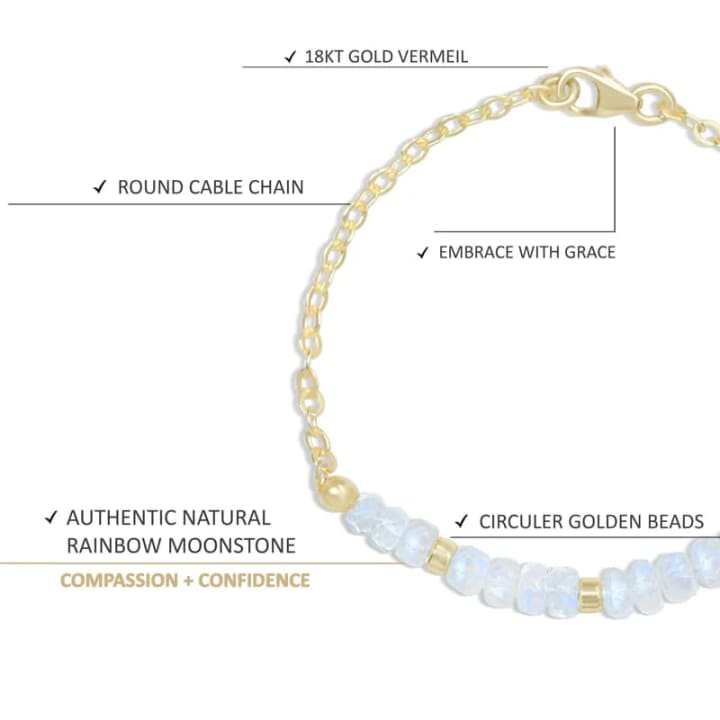
Moonstone comes in a variety of colors, including white, gray, peach, and even blue. The most common type of moonstone used in jewelry is white or clear with a blue adularescent glow. However, rainbow moonstones, which feature flashes of multiple colors, are also highly sought after.
How to Spot It:
- Real moonstones have a subtle, translucent quality. They are not entirely clear like glass; instead, they have a cloudy or milky appearance.
- High-quality moonstone is generally clear with few inclusions (imperfections within the stone). However, some natural inclusions like small cracks or veils are normal in genuine moonstone.
- Fake moonstones often have a perfect, glass-like appearance with no inclusions. If the stone looks too flawless, it’s likely synthetic.
Pro Tip:
Blue moonstone and rainbow moonstone are typically more valuable due to their rare and vibrant glow. If the color looks too bright or artificial, it could be an imitation.
3. Feel the Weight and Temperature
Real Moonstone:
Moonstone is a natural gemstone, and like most minerals, it tends to be cooler to the touch. When held, a real moonstone will feel slightly cool at first and then warm up to your skin. Additionally, real gemstones have a certain weight to them, making them feel more substantial than synthetic stones or plastic.
How to Spot It:
- Hold the moonstone bracelet in your hand. If it feels light, warm, or overly plastic-like, it could be a fake or made from synthetic materials.
- Genuine moonstones should feel heavier and cool when touched.
Pro Tip:
Allow the stone to sit on your skin for a few moments. Real moonstones will naturally warm up to body temperature, while fake stones may stay at room temperature or feel unnaturally light.
4. Check for Natural Inclusions
Natural Inclusions in Moonstone:
Inclusions are small imperfections that occur naturally in real gemstones. Moonstone often contains inclusions such as fine cracks, veils, or small particles of feldspar that are visible under close inspection.
How to Spot It:
- Use a magnifying glass to closely examine the surface and interior of the moonstone. Real moonstones may have tiny imperfections or cracks known as “centipedes,” which are common in authentic stones.
- Fake moonstones will often appear too perfect, with no visible inclusions. If the stone looks too flawless, it may not be real.
Pro Tip:
While some inclusions are normal in real moonstones, excessive cracks or cloudiness can lower the stone's value. Always aim for a balance between clarity and natural inclusions.
5. Test for Durability
Moonstone Hardness:
Moonstone has a hardness of 6 to 6.5 on the Mohs scale, meaning it is not as hard as diamonds or sapphires, but it is still durable enough for daily wear. However, it is more prone to scratches than harder gemstones, which is something to keep in mind.
How to Spot It:
- Gently scratch the surface of the stone with a material of known hardness (like glass). A real moonstone should not scratch easily, but it is not indestructible either.
- Fake stones made of plastic or glass will scratch very easily and show signs of wear after minimal contact.
Pro Tip:
Moonstone jewelry should be handled with care to prevent scratches or damage. Always store your moonstone bracelet separately from harder stones like diamonds or sapphires.
6. Purchase from a Trusted Seller
The best way to ensure that you're buying a genuine moonstone bracelet is to purchase from a reputable jeweler or retailer who specializes in gemstones. Trusted sellers will provide information on the stone’s origin, quality, and authenticity.
How to Spot It:
- Look for certifications or guarantees of authenticity from the retailer.
- Check customer reviews and testimonials to ensure that others have had positive experiences with the seller.
Pro Tip:
Always ask for a certificate of authenticity when buying moonstone jewelry. Reputable sellers will have no problem providing one, giving you peace of mind that you're investing in a real moonstone bracelet.
Conclusion
Moonstone bracelets are not only beautiful but also carry spiritual and emotional benefits. However, with so many imitations on the market, it's crucial to know how to spot a real moonstone bracelet. By paying attention to features like adularescence, color, weight, and natural inclusions, you can ensure that you're getting an authentic gemstone.
If you’re looking for a high-quality bracelet that’s both beautiful and genuine, explore the stunning collections available at Goodstone Jewels.
FAQ's
Q1. How can I tell if my moonstone bracelet is real?
A: Check for the signature adularescent glow, examine the color and clarity, feel the weight and temperature, and inspect for natural inclusions to determine if your bracelet is genuine.
Q2. What does a real moonstone look like?
A: Real moonstone has a translucent quality with a glowing sheen that moves as the stone is tilted. It may also contain natural inclusions like fine cracks or veils.
Q3. Are fake moonstones common in the market?
A: Yes, fake moonstones made from glass or synthetic materials are common, so it’s important to buy from a trusted retailer and know the signs of a genuine stone.
Q4. Can I scratch a real moonstone?
A: Moonstone has a hardness of 6 to 6.5 on the Mohs scale, so while it is relatively durable, it can still be scratched if not handled with care.
Q5. Where can I buy authentic moonstone bracelets?
A: To ensure authenticity, purchase moonstone bracelets from reputable sellers like Goodstone Jewels, who offer high-quality, certified gemstone jewelry.
About the Creator
riya charlie
Find an elegant and authentic moonstone bracelet from Goodstone Jewels. It has an ethereal beauty that makes it ideal for special occasions or everyday use.
Keep reading
More stories from riya charlie and writers in Marriage and other communities.
Moonstone Bracelet: A Guide to Choosing the Perfect One for You
Moonstone is a captivating gemstone known for its soft glow and mystical appeal. Its iridescent sheen, often referred to as "adularescence," creates a visual effect that makes the stone look as if it's glowing from within. Whether you're drawn to moonstone for its beauty, its symbolism, or its supposed healing properties, wearing a moonstone bracelet is one of the easiest and most stylish ways to incorporate this gemstone into your life. But with so many options available, how do you choose the perfect moonstone bracelet for yourself?
By riya charlieabout a year ago in Marriage
The Last Letter at Kew Gardens
The air in Richmond was crisp, carrying the faint, earthy scent of damp soil and the promise of early crocuses. Arthur adjusted his woollen scarf—a deep navy blue that matched his eyes—and checked his pocket watch. It was half-past ten. In London, Valentine’s Day usually arrived with a frantic rush of overpriced roses and desperate dinner reservations, but here, within the iron gates of Kew Gardens, time seemed to decelerate.
By Mohd Kaisha day ago in Marriage


Comments
There are no comments for this story
Be the first to respond and start the conversation.