
How do you handle situations when your partner’s approach to conflict is different from yours?
When your partner’s approach to conflict is different from yours, it's important to communicate openly, stay calm, and work towards understanding each other’s perspectives. Respecting differences and finding common ground can help navigate conflicts constructively.


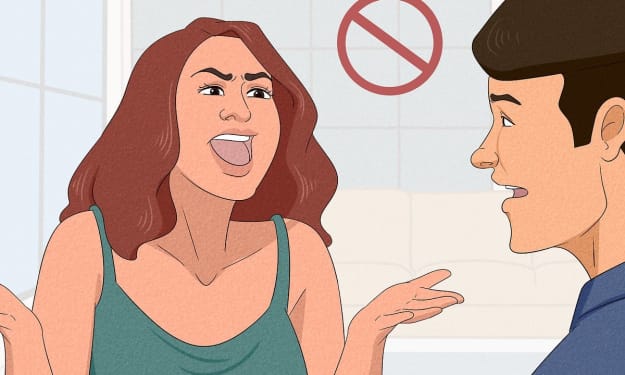
Handling situations where your partner’s approach to conflict differs from yours can be challenging, but it can also be an opportunity for growth, understanding, and deeper connection. Conflicts are inevitable in any relationship, and how each person handles them can vary based on personality, upbringing, cultural influences, and past experiences. When these differences arise, it’s important to approach the situation with empathy, communication, and a willingness to compromise.
(I)Understanding Each Other's Approach
The first step in managing conflicts with a partner whose approach differs from yours is to understand how they deal with conflict. People have different ways of responding to disagreements. Some might be more confrontational, preferring to address the issue head-on, while others may be more avoidant, needing time and space to process their feelings before discussing it. There are also those who may be more passive, trying to avoid conflict altogether, and those who may be more assertive, expressing their Needs clearly.
Understanding these tendencies can help you better navigate the situation. It’s crucial to recognize that these differences aren’t inherently bad or good—they simply reflect different ways of coping with tension. For instance, a person who avoids conflict may need time to gather their thoughts before they feel ready to engage, while someone who addresses conflict immediately might feel frustration if the issue isn't resolved right away.
(II)Self-Reflection and Awareness
Before reacting to your partner's approach, it’s important to reflect on your own conflict style. Ask yourself questions like: Why do I respond the way I do in conflicts? or What does conflict trigger in me? Sometimes, our response to conflict is shaped by past experiences or learned behaviors. For instance, if you grew up in an environment where conflicts were resolved with anger or silence, that might influence how you approach disagreements as an adult.
Being aware of your own tendencies can help you manage the situation better. For example, if you tend to become defensive, it’s important to be conscious of this and try to create space for your partner’s perspective. Similarly, if you have a tendency to avoid conflict, you may need to challenge yourself to engage more openly and directly when disagreements arise.
(III)Communicating Openly and Respectfully
Communication is at the core of resolving conflicts in relationships, and it becomes even more important when approaches to conflict differ. It’s essential to express your feelings, concerns, and needs in a way that is clear, respectful, and non-judgmental. Avoiding blame and criticism can prevent the conversation from becoming defensive.
For instance, instead of saying “You never listen to me,” you can say, “I feel unheard when we don’t address issues right away.” This way, you're communicating your feelings without attacking your partner. Similarly, if your partner’s conflict style is different from yours, try to express your understanding and respect for their way of handling the situation.
It’s important to remain open to hearing your partner’s thoughts without interrupting or invalidating their experience. Acknowledging their perspective can help you both feel heard and validated, which paves the way for more productive discussions.
(IV)Finding Common Ground
While your approaches may differ, you and your partner likely share some common goals when it comes to resolving conflict. Most people want to feel understood, respected, and supported in relationships. By focusing on shared values, you can bridge the gap between different conflict styles.
For example, if you are someone who wants to resolve the issue immediately but your partner needs time to process, you could agree to take a break to cool down, but set a time to revisit the conversation once both of you are ready. This allows you to respect your partner’s need for space while also addressing the issue in a timely manner.
If you're a person who tends to shut down during conflict and your partner is more vocal, find ways to signal when you need a break. You could use a phrase, "I need a moment to think," so your partner knows you are not avoiding the issue but just need some time to process.
(V)Compromise and Adaptation
Compromise is a vital component in any healthy relationship, especially when conflict styles differ. Both partners may need to adapt in order to accommodate each other’s needs and preferences. If one partner prefers direct confrontation and the other prefers a more measured approach, it’s important to strike a balance where both feel comfortable.
This might mean occasionally stepping out of your comfort zone—whether that’s being more patient with your partner’s need for space or being more open and direct when your partner is avoiding the issue. It’s not always easy, but through mutual respect and a willingness to adapt, both partners can find a way to handle conflicts in a way that feels fair and balanced.
(VI)Seeking Outside Help if Necessary
Sometimes, conflicts can be particularly challenging, and despite your best efforts, you may feel stuck in a cycle of misunderstanding or frustration. In such cases, seeking the help of a therapist or counselor can provide valuable tools and insights for managing conflict. Therapy can help both partners understand their individual conflict styles, learn healthier ways to communicate, and develop strategies for resolving disagreements without escalating them.
In The End
Conflict in relationships is inevitable, and when approaches to conflict differ, it can present additional challenges. However, by taking the time to understand each other’s needs, communicating openly, finding common ground, and compromising when necessary, couples can navigate disagreements in a constructive way. The goal should always be to deepen mutual understanding and strengthen the bond between partners, even when faced with differing conflict styles. In the end, managing conflict is not about winning or losing but about growing together as a team.
About the Creator
Badhan Sen
Myself Badhan, I am a professional writer.I like to share some stories with my friends.
Keep reading
More stories from Badhan Sen and writers in Marriage and other communities.
Beyond the Carat: Why Oval Engagement Rings Are the New Standard of Elegance
Every engagement story begins with a spark, but for me, it began with a realization: not all diamonds are created equal. When I started my search for the perfect ring, I was blinded by the "Four Cs." I thought that as long as the certificate looked good, the ring would be perfect. I was wrong.
By Mohd Kaish5 days ago in Marriage
How to Succeed at the Benson Directory®
Congratulations and welcome to the Benson Directory® employee #22391! As our newest call handler, you will have the privilege of speaking with dozens of unique and interesting people on a daily basis as well as the opportunity to earn bonuses for high performance. Contained within this handbook you will find a set of ease to follow instructions designed to help you settle in to your new role and begin paving the way to success.
By S. A. Crawford5 days ago in Fiction



Comments (1)
A great essay on keep learning about each other in many different ways.