
Your Favourite Sport You Haven’t Started Yet
Orienteering
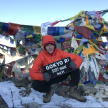

For some, running can be a tough slog. Each step feels like its own marathon, each breath feels like it could be the last. These people may try to get into running time and time again, either to become healthier or to improve their physical fitness, but deep down, they're hating every second of it. What if I told you it didn't have to be this way?
Welcome to the world of orienteering! A fast paced sport where your brains are tested just as much as your brawn.
In orienteering, it's your job to get from the start location to the finish location in the fastest time possible. The difference between orienteering and a standard running race is that the route isn't pre-defined for you. At the start of the course you receive a map of the area and on that map is a series of control points, numbered 1 to n, which you must reach in the correct order before progressing to the finish. The routes you take between these control points are entirely up to you - you could take a longer route which is easier to navigate, or you could take a shorter, quicker route through terrain which is harder to navigate but risk getting lost.
Now, you might be thinking that's all well and good, but how does complicating running somehow make it easier?
The answer is simple! For many people, when they're running all they can think about is their burning lungs, they're sore legs or however many miles they have left before they can stop. With orienteering, you haven't the time to think about such things; you're brain is too busy formulating the route to the next control point. Furthermore, the navigation to control points can sometimes be quite tricky meaning it's perfectly acceptable to stop running for a moment to check the map or create a bearing on your compass for you to follow. This ensures you're not heading in the completely wrong direction, and gives your legs a sneaky few seconds rest too. And lastly, you don't have to run at all! Orienteering is open to runners and walkers alike. And there are even competitions where people complete orienteering courses on mountain bikes!
When motivational speakers give advice to people who want to turn their life around, they often tell people to break their big goal down into small achievable tasks. In orienteering, this is done for you! When I start out on a 5km orienteering course, I'm not thinking about crossing that finish line. All I'm focussed on is the route along those first few hundred metres to the first control point, then the route to the second control point, then the third and before I know it, I've finished the entire course!
As mentioned above, routes between some control points can be challenging, whether that be up steep terrain, or tricky to navigate to, with controls hidden amongst dense shrubbery. This means that when you do eventually find that orange and white flag marking the position of the control point, you receive a fresh hit of the brain's reward chemical, dopamine, spurring you on around the rest of the course. And if you are worried that your navigation skills (or lack thereof) would be a barrier to starting orienteering, don't be! Orienteering courses are colour graded in difficulty from white being the easiest to green being the hardest. There are then blue, brown and black courses which are the same difficulty as green but are over longer distances. Furthermore, orienteering takes place both in rural and urban places. Navigating in urban areas tends to be easier and therefore is the perfect place to start for newcomers. And if navigation is second nature to you, why not try your hand at night orienteering.
The final great thing about orienteering is you don't have to be the fastest runner to win! Yes, yes, it's the taking part that counts but for the competitive among you, orienteering is a sport where success is very attainable. Of course, it doesn't hurt to be a fast runner but I'll openly admit that in my orienteering club, I'm far from the fastest, but by making clever route choices (and crossing my fingers that my competitors make a few mistakes), I have a fair shot at winning.
So, how do you get involved?
Around the world there are hundreds of different orienteering clubs that are always accepting new members, just Google your location with 'orienteering club' and see if there are any near by. If you're from the UK, you can find your local club by going to 'https://www.britishorienteering.org.uk/find_a_club'.
Of course, at this moment in time it may be hard to join an orienteering club or your local club may not be putting any events on due to the pandemic. Fear not, as orienteering is something you can do on your own! You can either search online for maps of local permanent courses that you can complete whenever you want. You can also download the app 'mapRunF'. This app, shows you nearby orienteering courses, usually from previous events/competitions and allows you to time yourself and compare your results with others who have completed the course. The app displays a map of the course, but not your current location, and tells you once you've reached a particular control so you can complete it as if it were a real event.
So what are you waiting for? Ever since I started orienteering with my club, Edinburgh University Orienteering Club (EUOC), I've made great new friends, seen my running ability sky-rocket and I've also explored so much of Edinburgh's natural beauty which I would otherwise not have been exposed to. Starting orienteering is honestly one of the best decisions I've ever made and I hope I inspire some of you to try it out for yourselves.
Thanks for reading, and I look forward to you overtaking me on an orienteering course sometime soon :)

About the Creator
Keep reading
More stories from writers in Longevity and other communities.
Day 4 of Quitting
If this is how sobriety feels, maybe it’s better to go through life a little buzzed… this, along with other hits like, I want to kill myself, I wish I was dead, and I’m going to throw myself off a bridge have been the only thoughts on rotation these past few days. I promise myself that if, in a month, I still feel like this (‘this’ meaning despondent, full of rage, and simultaneously numb) I can go back to smoking. Until mid-February though? Nicotine is off the table.
By sleepy drafts15 days ago in Longevity
By Diverting Entire Rivers for Over a Decade, the Netherlands Has Quietly Reshaped Its Coastline and Reclaimed Vast Stretches of Land from the Sea
The Netherlands, long celebrated for its innovative water management, has quietly undertaken one of the most ambitious land reclamation projects in modern history. By diverting entire rivers for over a decade, Dutch engineers have not only reshaped the coastline but also reclaimed vast stretches of land from the sea, a feat that is transforming the country’s geography, economy, and environmental landscape.
By Fiaz Ahmed Brohi6 days ago in Longevity
How, Too
Many people wonder how, too. You are not alone, and I am an expert. I will teach you how, too! First, you need to remit a small application fee and fill out an application describing the nature of your financial situation and how often payments will be made, as this will have great bearing on how well I teach you how, too.
By Harper Lewis6 days ago in Fiction




Comments
There are no comments for this story
Be the first to respond and start the conversation.