
Worldwide, a deadly fungus that can "eat you from the inside out" is rapidly expanding.
The fungus Aspergillus adapts well.

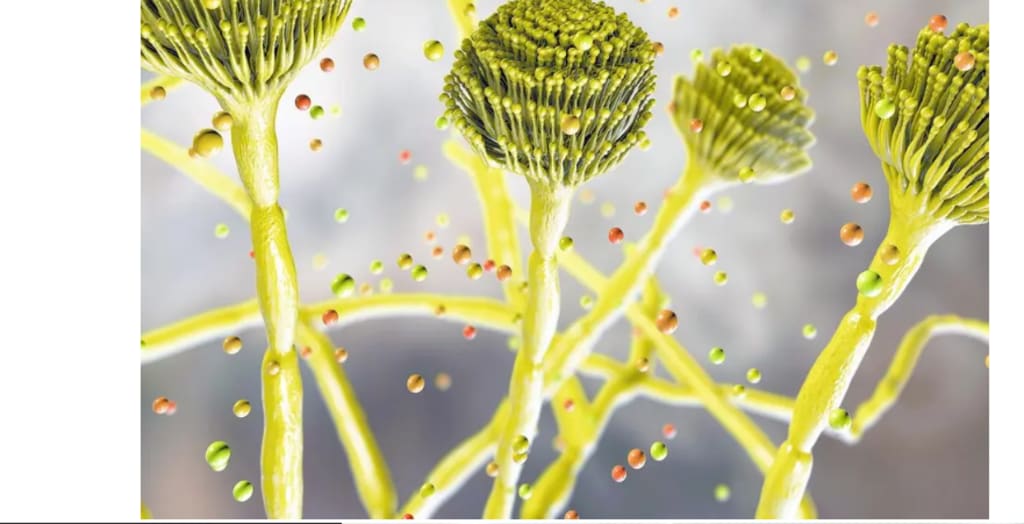
Imagine a daily exposure to hundreds of invisible spores. The majority drift in and out of our airways undetected. However, some of those spores are associated with moulds that are intolerant of borders.
Numerous fungal species can simultaneously damage crops, cause lung infections, and upset ecosystems. To put it briefly, they can cause immense destruction and death in their wake.
The majority of moulds and fungi are beneficial, but others can go from hospital wards to beehives, and the distinction between beneficial recyclers and dangerous invaders becomes increasingly hazy every year.
Healthy immune systems often ward off illness and swat away harmful spores. When temperatures rise, weakening defences, and extensive fungicide usage tilt the scales, trouble results.
All of a sudden, the same fungus that silently breaks down the leaves in your yard might cause persistent coughing, harm corn silos and reject medications that used to control it.
The fungus Aspergillus adapts well.
Following years of research on fungal risks, Dr. Norman van Rhijn and associates at The University of Manchester created a map depicting the potential spread of three infamous Aspergillus species—A. flavus, A. fumigatus, and A. Niger—until the end of the century.
They saw the virtual spores drifting after feeding climate change scenarios into global models. An alarming picture is presented by one scenario (SSP585), which predicts a future dependent on fossil fuels: environments throughout Europe become significantly more hospitable to these viruses.
Because its genome can readily adapt to new stressors, the Aspergillus fungus thrives. Its food sources include soil, cereals, animal feathers, and even the skeletons of coral. It recycles nutrients in the wild, but the situation changes on farms and in medical facilities.
Farmers use azole fungicides to protect peanuts and wheat, while physicians use almost the same azole medications to treat lung infections. As with bacteria that evolve against medicines, this overlap pushes Aspergillus in the direction of drug resistance.
Global mould map being reshaped by climate
Where spores settle is determined by temperature, humidity, and severe weather conditions. "Fungal adaptation and spread will be fuelled by changes in environmental factors, including humidity and extreme weather events," Dr. van Rhijn stated.
"Rising temperatures have already caused the fungus Candida auris to emerge, but up until now, we didn't know much about how other fungi might react to this environmental shift."
He went on to say that although fungi are still "relatively under-researched compared to viruses and parasites," the new maps indicate that they will probably eventually spread to "most areas of the world."
The global distributions of Aspergillus were accurately characterized using the MaxENT model. To enlarge the image, click it. University of Manchester, credited
The numbers on those maps are startling. The range of A. flavus in Europe might increase by almost 16 percent under the high-emissions scenario, potentially endangering an additional one million people.
The main cause of invasive aspergillosis, A. fumigatus, has the potential to spread 77.5 percent over Europe, endangering an additional nine million people. Ironically, some fungi may not be able to survive in some parts of Africa due to the heat, suggesting complicated geographical trade-offs.
Predicting the spread of the Aspergillus fungus
Although it may appear fanciful, predicting viruses decades in advance builds on previous warnings. Hospitals already deal with outbreaks of the Aspergillus fungus following major dust storms or building renovations.
In the meantime, individuals recuperating from COVID-19 or influenza are reported to have persistent cases in intensive care units. Because fungal infection diagnostics are significantly less advanced than those for bacterial or viral diseases, an increase in outdoor spore loads may result in more hospitalizations and more expensive treatments.
Contamination by mycotoxin adds another layer. For the U.S. maize industry, a single year of high Aspergillus growth can result in losses exceeding $1 billion.
The window for could growth in silos and fields is widened by increased heat and humidity, which forces farmers to discard grain or neutralize toxins by blending batches—strategies that nevertheless pose health and financial concerns.
Current medications are ineffective.
In Europe and Asia, azole resistance has been gradually increasing. Because other medications can harm the kidneys or liver, patients with resistant Aspergillus fungal infections have fatality rates that are higher than 50%.
The likelihood that environmental spores will bring resistance genes into hospitals increases with each acre treated with agricultural azoles. To identify issues before they reach critical care, public health organizations are increasingly monitoring these genes in soil and compost piles.
Fungicide call for is likewise changing. As a few African areas exceed the thermal limits for sure molds, farmers elsewhere might also additionally spray extra to guard lengthening growing seasons. That comments loop – extra fungicide, more potent resistance – complicates meal safety and patient care alike.
Farms, meals, and growing payments
Aspergillus isn`t the lone shapeshifter. Fusarium, which devastates wheat and oat fields, and Cryptococcus, an opportunistic pathogen in AIDS patients, additionally respond to warming climates.
“Fungal pathogens pose a critical threat to human fitness via way of means of inflicting infections and disrupting food systems. Climate trade will make those dangers worse,” explains Viv Goosens of Welcome.
“To cope with those challenges, we have to fill critical study gaps. By the usage of fashions and maps to song the unfold of fungi, we can higher direct assets and prepare for the future.”
Aspergillus fungus and human fitness
Fungi account for an expected 1 to 3 million species, but fewer than 10 percent convey reliable descriptions, and most effectively, a sliver have sequenced genomes. The shortage of simple statistics hinders vaccine improvement and slows the search for more secure drug targets.
Recognizing this blind spot, the World Health Organization delivered Aspergillus fungus and Candida species to its priority listing for rising threats in 2022.
Researchers now propose coordinated monitoring – combining air best sensors, agricultural sampling, and health center surveillance – to hint at spore motion in near-real time.
Such efforts ought to flag hotspots, manual fungicide regulation
laws and encourage funding for quick diagnoses. Without them, the controllable could of today could turn into the silent epidemic of the future.
No one solution will eliminate the risk. Reducing greenhouse gas emissions stops the changes in the environment that benefit the Aspergillus fungus.
Farm resistance is slowed by more intelligent fungicide regulations. While new antifungal classes broaden physicians' toolkits, improved building ventilation lowers indoor spore levels.
These actions can prevent an old decomposer from becoming an excessive threat on a warming planet, piece by piece.
About the Creator
Keep reading
More stories from Francis Dami and writers in Longevity and other communities.
The world's most dangerous animals can be effectively killed by cannabis extract.
More than a million lives are lost to mosquito-borne illnesses worldwide each year, surpassing all other animal threats to humankind. Public health teams are frantically searching for new weapons in response to the growing death toll, particularly as conventional chemical sprays become less effective.
By Francis Dami7 months ago in Longevity
Day 4 of Quitting
If this is how sobriety feels, maybe it’s better to go through life a little buzzed… this, along with other hits like, I want to kill myself, I wish I was dead, and I’m going to throw myself off a bridge have been the only thoughts on rotation these past few days. I promise myself that if, in a month, I still feel like this (‘this’ meaning despondent, full of rage, and simultaneously numb) I can go back to smoking. Until mid-February though? Nicotine is off the table.
By sleepy drafts11 days ago in Longevity
Wild Card Weekend Recap: What Happens Now?
I think I figured out why I love Wild Card Weekend so much. It's because it's the first playoff anything of the calendar year. The NFL season starts in the fall, and once upon a time, the champion was crowned either on or slightly before New Year's. The evolution of the NFL schedule has resulted in the playoffs starting just into the New Year, and currently, the final week of the season falls on the first weekend of the New Year, with Wild Card Weekend coming a week after that. So yes, chronologically, the NFL's Wild Card Weekend serves as the first playoff anything of the calendar year.
By Clyde E. Dawkins5 days ago in Unbalanced



Comments
There are no comments for this story
Be the first to respond and start the conversation.