
Why You Shouldn't Skip Exfoliating Your Body in Your Skincare Routine.
A Glove in the Shower, I find, is the easiest way.

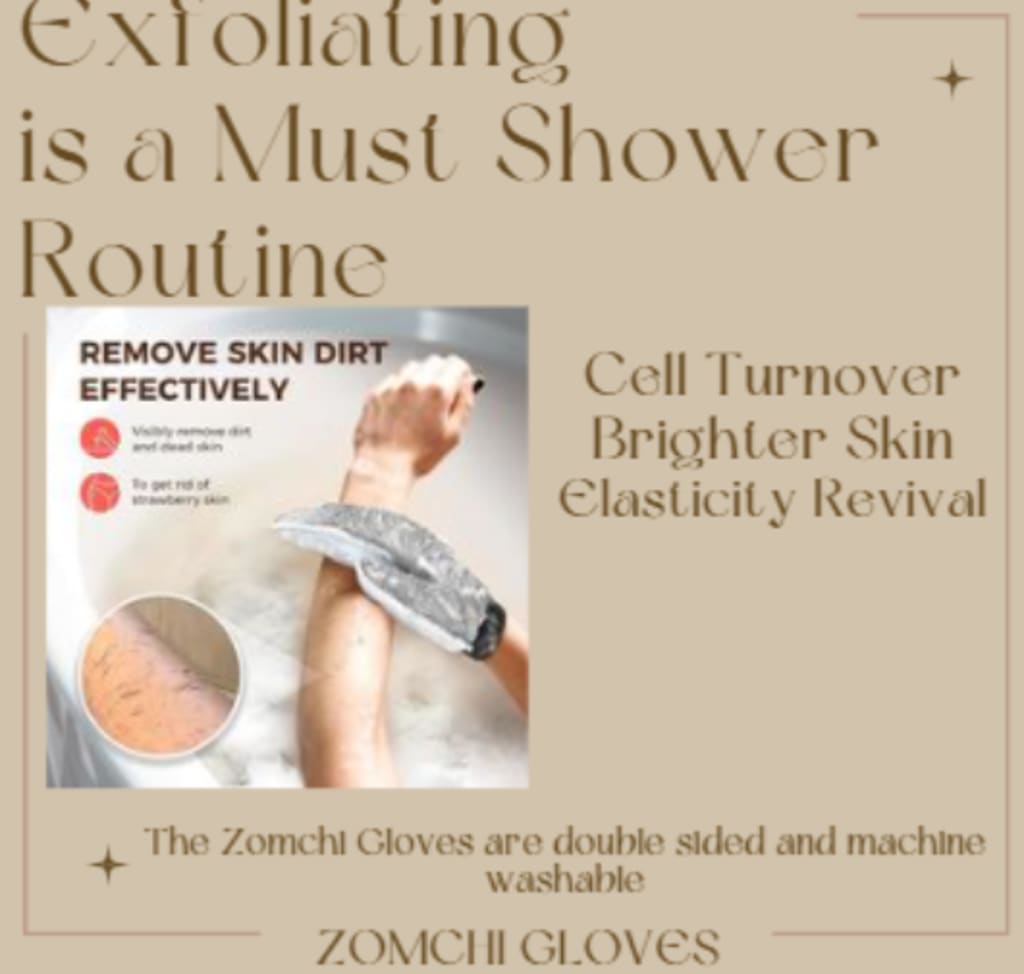
When it comes to skincare, most people focus on the face, often neglecting the rest of the body. Yet, exfoliating the body is just as important, if not more, as it plays a significant role in keeping our skin healthy, glowing, and smooth. Zomchi Exfoliating Gloves can be incorporated in the shower for an easy no fuss, no extra time routine added to your day, leaving your skin soft. They're machine washable and have two sides of roughness to choose from.
Exfoliation is the process of removing dead skin cells from the surface of your skin. The skin is constantly renewing itself, shedding old cells and making way for new, healthy ones. However, dead skin cells can accumulate, leaving your skin looking dull, feeling rough, and sometimes causing clogging that leads to breakouts. Exfoliating the body, like the face, helps to remove these dead cells and encourage healthy, glowing skin.
Why is Body Exfoliation Important?
Enhances Skin Smoothness and Softness: Over time, dead skin cells build up, creating a rough texture on your skin. Exfoliation sloughs away these cells, leaving your skin smoother and softer. This is especially noticeable in areas prone to dryness and rough patches, like elbows, knees, and feet.
Unclogs Pores and Prevents Body Acne: Body acne, particularly on the back and chest, can be exacerbated by clogged pores filled with dead skin and oil. Regular exfoliation can help keep these areas clear, reducing the risk of breakouts and minimizing clogged pores.
Improves Absorption of Skincare Products: When dead skin cells build up, they create a barrier that can prevent your skin from fully absorbing moisturizers, lotions, and other treatments. By exfoliating, you ensure that these products penetrate more deeply, making them more effective.
Evens Skin Tone and Reduces Hyperpigmentation: Exfoliation can be beneficial for evening out skin tone, especially for those with issues like hyperpigmentation, dark spots, or post-inflammatory marks left from acne or injuries. Regular exfoliation encourages the renewal of skin cells, helping to fade these imperfections over time.
Boosts Circulation and Lymphatic Drainage: Exfoliating, especially with techniques like dry brushing, helps improve blood circulation and stimulate the lymphatic system. This can aid in flushing out toxins, leaving your skin healthier and more radiant.
Prevents Ingrown Hairs: If you shave or wax regularly, you know how annoying ingrown hairs can be. Exfoliating helps to remove dead skin that might trap hairs under the surface, reducing the risk of ingrown hairs and keeping your skin smoother post-hair removal.
Physical Exfoliation: Physical exfoliators are my number one when it comes to exfoliation. They use a gritty texture to manually slough off dead skin cells. I personally think using a glove in the shower is the best daily routine that is easy to incorporate and keep up with. Zomchi exfoliating gloves have two texture sides to choose from and are machine washable. Other options include body scrubs with sugar, salt, or other fine particles (I feel are messier to use and won't be done often enough), loofahs (tend to not do the job and they say carry bacteria after a while), or body brushes (I love a dry brush but I do tend to forget to use it before the shower). All of these methods should be used gently to avoid irritating the skin.
Chemical Exfoliation: Chemical exfoliators are another option but not as easy a routine. I like the idea of using a chemical pad to go over the body a few times a week such as Medicube Zero Pore Pads. They contain active ingredients like alpha hydroxy acids (AHAs) and beta hydroxy acids (BHAs) that dissolve dead skin cells without physical abrasion. There are also body washes that contain exfoliating ingredients such as CeraVe SA Body Wash, Naturium Glycolic Wash, Neutrogena Body Wash They are a great option for people with sensitive skin, as they work without scrubbing, but they should be used cautiously to avoid over-exfoliating.
Dry Brushing: This involves using a dry brush with stiff bristles to exfoliate the skin before showering. Dry brushing not only exfoliates but also improves circulation and stimulates lymphatic drainage. It’s best done on dry skin and can leave you feeling invigorated. Amazon has many options of different size brushes.
How Often Should You Exfoliate Your Body?
The frequency of body exfoliation depends on your skin type, lifestyle, and the type of exfoliation method you're using. Here are some general guidelines:
Normal to Oily Skin: 2-3 times a week
Dry or Sensitive Skin: 1-2 times a week (using a gentle exfoliator)
Areas Prone to Roughness (e.g., elbows, knees): Every other day, as needed, with a gentle scrub
Listen to your skin! If you notice redness, dryness, or sensitivity, reduce the frequency. Over-exfoliation can strip your skin's natural oils, leading to irritation and dryness.
Happy Exfoliating :)
(amzn: aff)
About the Creator
Salty Sunshine Podcast
Hey there, sunshine seekers! Welcome to the Salty Sunshine Podcast, where Mom & Daughter duo, talk about the heat of pop culture stories, gossip and daily life. (amazon, aff)
SUPPORT US CASHAPP: $saltysunshinepodcast
Keep reading
More stories from Salty Sunshine Podcast and writers in Longevity and other communities.
Rebounding is Walking's Little Sister
Walking, as we all know, is a terrific way to lose weight, maintain weight, relieve stress, be in nature; the benefits go on and on. I personally LOVE WALKING but do I find myself walking daily? No, only to walk my dog short walks. Why? because getting dressed, getting my earphones, my keys and actually going outside to walk on a daily basis, is just not in the cards for me as much as I would like it to be, believe me I have tried again and again. I need something I can do 'realistically' on a daily basis to hit my goals and gain the benefits of moving but not feeling defeated when I just can't get myself to alot 30 minutes to an hour to go outside after work. Not to mention, if it's raining or too hot just gives me more excuses not to do it.
By Salty Sunshine Podcastabout a year ago in Longevity
Day 4 of Quitting
If this is how sobriety feels, maybe it’s better to go through life a little buzzed… this, along with other hits like, I want to kill myself, I wish I was dead, and I’m going to throw myself off a bridge have been the only thoughts on rotation these past few days. I promise myself that if, in a month, I still feel like this (‘this’ meaning despondent, full of rage, and simultaneously numb) I can go back to smoking. Until mid-February though? Nicotine is off the table.
By sleepy drafts14 days ago in Longevity
Miss Persephone's Manual to a Seemingly Ordinary Life
Miss Persephone was found at the dining table, her blue eyes swollen, her tears arriving and retreating like the tides of the ocean. Earlier that day, her family had visited her in the retirement home where she had lived for eight years. It was her eightieth birthday.
By Imola Tóth6 days ago in Fiction


Comments
There are no comments for this story
Be the first to respond and start the conversation.