
Whether the sequelae of cerebral infarction can be recovered depends mainly on rehabilitation exercises. The sooner you do the recovery, the better
Sequelae of cerebral infarction


How to recover from the sequelae of cerebral infarction? What kind of medicine do I need to take? What I want to say about this problem is that any medicines and health care products have little effect on the recovery of the sequelae of cerebral infarction. The drugs used after cerebral infarction are mainly to prevent the recurrence of the disease. The recovery of the sequelae mainly depends on rehabilitation exercise, and the more The sooner the better.

1. Causes of sequelae of cerebral infarction
Cerebral infarction is a very serious disease with a high disability rate. The mechanism is that when the arteries in the brain are blocked, some nerve cells cannot get blood and oxygen supply and die, and the body's regulatory functions that these nerve cells are responsible for are lost.
The nerve cells of the human body are highly differentiated cells with a natural life span of several decades, which is almost the same as the life span of the human body. And the tolerance to hypoxia is very low. When the oxygen supply is completely lost, death will occur in 4-6 minutes. Once nerve cells die, there is no medicine to regenerate them. Therefore, the loss of brain nerve cells caused by cerebral infarction is permanent.
2. The compensatory effect of brain nerve cells
Although dead nerve cells cannot regenerate, the missing function can be restored. This is because normal nerve cells in other areas of the human brain have great potential to produce compensatory effects and regain lost functions. But the production of this compensatory effect requires long-term rehabilitation exercise.
This is like a newborn baby learning to talk, learning to walk, picking up chopsticks for the first time, and learning to ride a bicycle for the first time. It takes a long practice process from complete ignorance, to clumsy use, to proficiency. Stimulating the brain nerves will form a new neural reflex area.
But the rehabilitation process needs to face two hurdles, the first hurdle is one's own "psychological hurdle." Because what I have lost is the skills that I have used for decades, such as walking and grasping things, and I will feel extremely unable to adapt to learning again. Some people feel that they are "stupid" and "unable to learn" in the early stages of treatment, which leads to the mentality of "breaking the jar" and giving up on themselves, leading to failure in rehabilitation.
The second difficulty is the "Perseverance Pass". No skill can be learned overnight. Most people's recovery process takes months and years as the time unit. The initial progress is faster, but the later progress will be slower. Many people give up exercising because they can't see progress in the later stages of recovery. In fact, as long as the rehabilitation exercise is persisted, there will be progress every day, and through the accumulation of time, you will make yourself better and better.
3. The sooner the recovery after cerebral infarction, the better
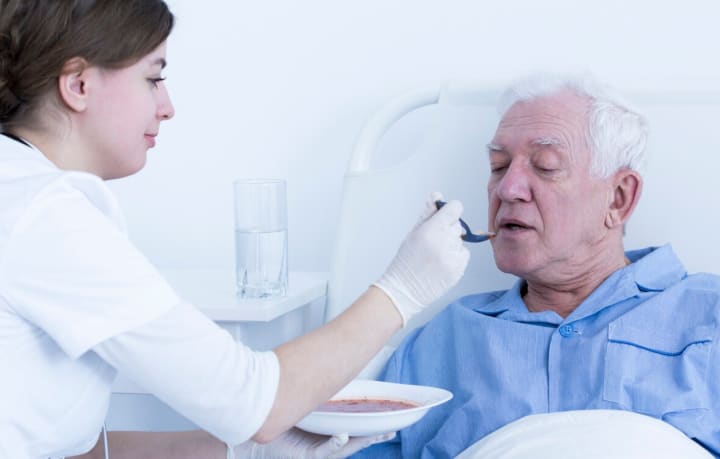
1. Within 1 week of onset: At this time, with the help of family members and nurses, passive exercises, such as turning over, buckling the back, and massaging, can avoid muscle atrophy and maintain muscle strength.
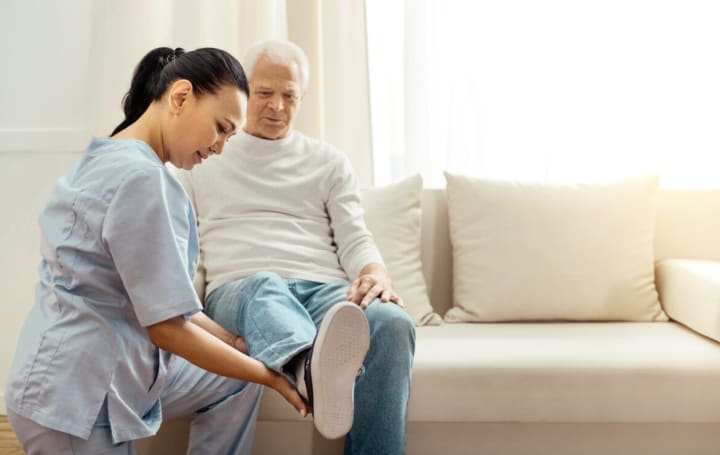
2. Within 6 months of onset: At this stage, you must find a professional rehabilitation doctor for guidance. This is the most critical period for functional recovery, and the recovery speed is also the fastest period. If there is no professional doctor to guide and develop a rehabilitation plan, it is easy to develop wrong actions, and it is difficult to correct them later.
3. Six months after the onset of illness: At this time, the basic rehabilitation actions have been mastered, and initial results have been seen, mainly self-exercising, and the key is long-term persistence

What everyone needs to understand is that rehabilitation exercises will restore sensation, movement, language, cognition, and psychology, but the primary goal is to restore basic self-care abilities. After the recovery, the degree of recovery varies according to the location, scope, and severity of the cerebral infarction of each patient, as well as the age and physical condition of the patient. But if you keep exercising for longer, you will definitely get better recovery.
To sum up, if patients with cerebral infarction have sequelae, they should actively take rehabilitation exercises to improve their symptoms, and most of them can gain the ability to take care of themselves. The earlier the rehabilitation exercise is carried out, the better the recovery effect, but only by looking for professional rehabilitation doctors for guidance can we avoid misunderstandings in rehabilitation.
About the Creator
Keep reading
More stories from writers in Longevity and other communities.
Day 4 of Quitting
If this is how sobriety feels, maybe it’s better to go through life a little buzzed… this, along with other hits like, I want to kill myself, I wish I was dead, and I’m going to throw myself off a bridge have been the only thoughts on rotation these past few days. I promise myself that if, in a month, I still feel like this (‘this’ meaning despondent, full of rage, and simultaneously numb) I can go back to smoking. Until mid-February though? Nicotine is off the table.
By sleepy drafts23 days ago in Longevity
Instructions Included Challenge Winners
For the Instructions Included challenge, we asked writers to tell a story through instructions and to trust the form to carry what could not be said outright. Across the top entries, that trust paid off in many different ways.
By Vocal Curation Team2 days ago in Resources


Comments
There are no comments for this story
Be the first to respond and start the conversation.