
What is Persistent Corneal Epithelial Defects in 2021?
Consulting Services

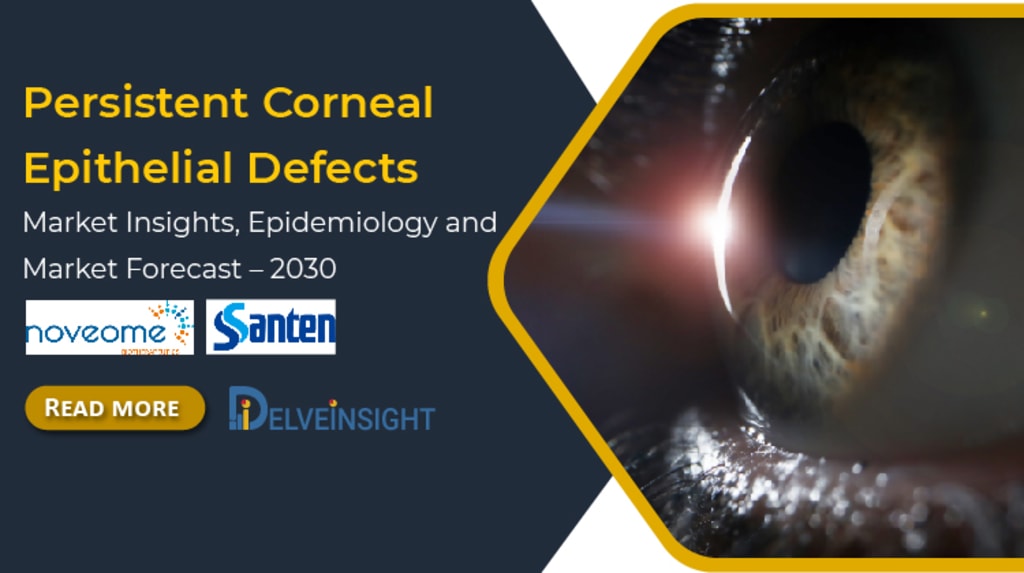
Corneal epithelial defects are a focal area of epithelial (outermost corneal layer) loss; can be due to mechanical trauma, corneal dryness, neurotrophic cornea, post‐surgical changes, or any other of a variety of etiologies. The persistent corneal epithelial defect can result in corneal haze, infectious and sterile keratitis, stromal melting, perforation, irregular astigmatism, loss of vision, and loss of the eye.
Currently, the treatment options include a step‐wise approach to standard therapies for PCEDs. The steps may sometimes be skipped based on individual circumstances. The first step involves support of the ocular surface with aggressive lubrication using preservative‐free artificial tears or lubricating ointment every 1–2 hour. On occasion, epithelial defects fail to heal because the patient is using topical medications that contain preservatives toxic to the corneal epithelium, such as benzalkonium chloride.
Read More @ Persistent Corneal Epithelial Defects Market Report
Moreover, soft therapeutic contact lenses serve to protect the corneal surface from mechanical trauma from the eyelids. A soft contact lens with high oxygen permeability (such as a silicone hydrogel) is chosen to reduce complications, such as corneal edema and neovascularization. A 16‐ or 18‐mm Kontur lens (Kontur Lens) is often effective; its diameter is greater than the limbal margin, and its thickness provides stability. Ointments should be discontinued for patients using a bandage contact lens (BCL). It takes approximately 7 days after the epithelium heals for adhesions to form. However, if the stroma is involved, it may take 8 weeks or more for epithelial cells to adhere to the underlying basement membrane/stroma. It may be desirable to keep the BCL in the eye for approximately 1 week after the epithelium heals, but BCLs are sometimes kept in place for as long as two or three months.
Tarsorrhaphy involves the partial or complete closure of the eyelid fissure to allow the ocular surface to heal itself. This minor in‐office procedure can be a very effective treatment for persistent epithelial defect, and it avoids the risk of infection associated with the use of a BCL. It may be particularly useful for noncompliant or debilitated patients who are unreliable in carrying out conservative management methods, as well as for patients in whom lagophthalmos or exposure keratopathy contributes to defect formation daily) and doxycycline (20–100 mg twice daily) have each demonstrated benefits in patients with persistent epithelial defects. Overall, the Persistent Corneal Epithelial Defects (PCEDs) therapeutics market is further expected to increase by the major drivers, such as rising prevalent population, technological advancements, and upcoming therapies in the forecast period [2019–2030].
DelveInsight's "Corneal Epithelial Defect - Market Insights, Epidemiology, and Market Forecast-2030" report delivers an in-depth understanding of the Corneal Epithelial Defect , historical and forecasted epidemiology as well as the Corneal Epithelial Defect market trends in the United States, EU5 (Germany, Spain, Italy, France, and United Kingdom) and Japan.
The Corneal Epithelial Defect market report provides current treatment practices, emerging drugs, Corneal Epithelial Defect market share of the individual therapies, current and forecasted Corneal Epithelial Defect market Size from 2017 to 2030 segmented by seven major markets. The Report also covers current Corneal Epithelial Defect treatment practice/algorithm, market drivers, market barriers and unmet medical needs to curate best of the opportunities and assesses the underlying potential of the market
The Corneal Epithelial Defect epidemiology division provide insights about historical and current Corneal Epithelial Defect patient pool and forecasted trend for every seven major countries. It helps to recognize the causes of current and forecasted trends by exploring numerous studies and views of key opinion leaders. This part of the DelveInsight report also provides the diagnosed patient pool and their trends along with assumptions undertaken.
The Corneal Epithelial Defect market outlook of the report helps to build the detailed comprehension of the historic, current, and forecasted Corneal Epithelial Defect market trends by analyzing the impact of current therapies on the market, unmet needs, drivers and barriers and demand of better technology.
This segment gives a thorough detail of Corneal Epithelial Defect market trend of each marketed drug and late-stage pipeline therapy by evaluating their impact based on annual cost of therapy, inclusion and exclusion criteria's, mechanism of action, compliance rate, growing need of the market, increasing patient pool, covered patient segment, expected launch year, competition with other therapies, brand value, their impact on the market and view of the key opinion leaders. The calculated market data are presented with relevant tables and graphs to give a clear view of the market at first sight.
Read More @ Persistent Corneal Epithelial Defects Market Research
About the Creator
Denny Dones
DelveInsight is a leading business consulting and market research firm specializing in the pharmaceutical, life sciences, and healthcare sectors. Get More Insights @
Keep reading
More stories from Denny Dones and writers in Longevity and other communities.
What is Sudden Sensorineural hearing loss?
DelveInsight's "Sudden Sensorineural hearing loss Market Size, Epidemiology, and Market Forecast-2030" report delivers an in-depth understanding of the Sudden Sensorineural hearing loss (SSNHL), historical and forecasted epidemiology as well as the Sudden Sensorineural hearing loss (SSNHL) market trends in the United States, EU5 (Germany, Spain, Italy, France, and United Kingdom) and Japan.
By Denny Dones5 years ago in Longevity
Best Workouts for Fat Loss
If you’ve ever tried to lose weight, you’ve probably wondered which workouts actually help burn fat the fastest. Many people start exercising with excitement but soon get confused by the endless options—cardio, strength training, HIIT, yoga, and more. The truth is that not every workout burns fat in the same way.
By Veronica Bennett4 days ago in Longevity
6 Things to Avoid After 5 P.M. for Better Blood Sugar Control, According to Dietitians
Do you wind down at night by doom-scrolling on the couch with a glass of wine? Do you stay up way too late or eat a large dinner before bed? These seemingly harmless evening habits could be sabotaging your blood sugar more than you realize.
By Good health to everyone4 days ago in Longevity
The Piggy Project
I’ve had so many names in this life I lose track of which ones were ever really mine and which ones I wore because someone needed me to. Some were handed to me before I had words to refuse them, before I knew what they meant, before I knew I could say no. Most weren’t meant to hurt. That doesn’t mean they didn’t leave marks. Marks that told me who I belong to, who I am by way of who claims me, recognizes me in the good and bad, who walks beside me.
By Fatal Serendipity5 days ago in Confessions



Comments
There are no comments for this story
Be the first to respond and start the conversation.