
What is BK virus (BKV) Infection?
healthcare business consulting services


BK Virus (BKV) Infection also known as polyomavirus is a member of the human polyomavirus family. BKV resides dormant in uroepithelial cells as it is mostly acquired in childhood and is not known to cause tissue damage in immunocompetent individuals. The virus can become reactivated in case of immunodeficiency (e.g., secondary to HIV infection or immunosuppressive medications), and result in cellular damage and organ dysfunction.
The kidney, lung, eye, liver, and brain are sites of BK virus-associated disease, both primary and reactivated. BK virus infection in the kidney manifests as hemorrhagic cystitis, ureteric stenosis, nephritis and others. Pulmonary diseases that involve BK virus include pneumonitis and acute nonspecific upper respiratory tract infection.
In transplant recipients, however, BKV reactivation is common and can lead to distinctive pathological entities in different patient groups such as in renal transplant (RT) recipients, it is associated with nephropathy (BKVN) and ureteral stenosis, and in hematopoietic stem cell transplant (HSCT) recipients with hemorrhagic cystitis (HC).
The symptoms of the infection include changes in vision and color of your urine (urine that is brown or red in color), pain while urinating, increase in urination frequency, cough, cold or trouble breathing, fever, muscle pain or weakness, seizures.
Unfortunately, there are no marketed drugs for this infection and the mainstay of managing reactivation is by immunosuppression, which is achieved by discontinuation of an agent, decreasing an agent, switching immunosuppressant within the same or another class, and steroid avoidance.
Nephropathy (PVAN) occurs most often in renal transplantation patients within 1 year of transplantation. The risk of BK virus reactivation after 1 year is greatly reduced. Late onset BK reactivation in patients more than 1 year from transplant is associated with changes in immunosuppression such as steroid pulse to treat chronic rejection.
Factors associated with increased risk of BK virus reactivation include prior exposure to BK virus, older age of the host, and high anti-BK virus IgG levels prior to transplantation.
BKV infections generally occur in patients, which undergo transplantation or surgical procedures. Viral infections after renal transplantation have emerged as an important cause of allograft loss. It affects about 15% of renal transplant recipients in the first post-transplant year and lack an effective prophylaxis strategy.
The diagnosis methodologies and incremental healthcare spending across the world. The launch of emerging therapies is expected during the forecast period of 2021–2030.Owing to the positive outcomes of the some of the rare candidates during the developmental stage by key players, such
AlloVir (Viralym-M), Amplyx Pharmaceuticals (MAU868) and others have the potential to create a significant positive shift in BK virus infection market size. However, there are few other companies such as Memo Therapeutics and others that are also involved in developing therapeutic interventionsin preclinicalstage of development.
BK polyomavirus causes frequent infections during childhood and establishes persistent infections within renal tubular cells and the uroepithelium, with minimal clinical implications.
The goal in treating BKV replication is to eliminate the virus while preserving the maximal amount of renal function. Treatment options for BKV infections come from studies in the kidney and bone marrow transplant population. As BKV infection involves reactivation of a latent virus in the setting of a suppressed immune system, the most widely accepted intervention is to reduce immunosuppression. The prevention of BKVN by monitoring BK viral load and appropriately decreasing immunosuppression for BKV replication appears to improve graft survival in non-randomized trials in the kidney transplant population.
Reduction of immunosuppression is the mainstay of BKVN treatment. Management approaches differ and can include discontinuation of the anti-metabolite, dose reduction of the calcineurin inhibitor (CNI) by 25–50% targeting significantly lower levels (tacrolimus 3–4 ng/mL and cyclosporine 50–100 ng/mL, or even less) or switching from tacrolimus to cyclosporine. Despite reduction in immunosuppression, renal allograft losses have been reported and this has led to the use of antiviral agents in addition to reduction in immunosuppression.
The use of anti-viral therapy such as leflunomide or cidofovir has also decreased immunosuppression in some cases. Leflunomide is an immunosuppressant medication developed for use in treatment of rheumatoid arthritis. Moreover, Cidofovir, a nucleoside analogue is also used in the treatment of cytomegalovirus retinitis, has shown activity against BKV. The drug has also showed conjunction with lowering immunosuppression.
Read More- BK virus (BKV) Infection Market
About the Creator
Denny Dones
DelveInsight is a leading business consulting and market research firm specializing in the pharmaceutical, life sciences, and healthcare sectors. Get More Insights @
Keep reading
More stories from Denny Dones and writers in Longevity and other communities.
What is Spinal Trauma Devices Market?
DelveInsight's "Spinal Trauma Devices Market Market Insights, Epidemiology, and Market Forecast-2030" report conveys a top to bottom comprehension of the Spinal Trauma Devices Market, verifiable and estimated the study of disease transmission just as the Spinal Trauma Devices market patterns in the United States, EU5 (Germany, Spain, Italy, France, and United Kingdom) and Japan.
By Denny Dones5 years ago in Longevity
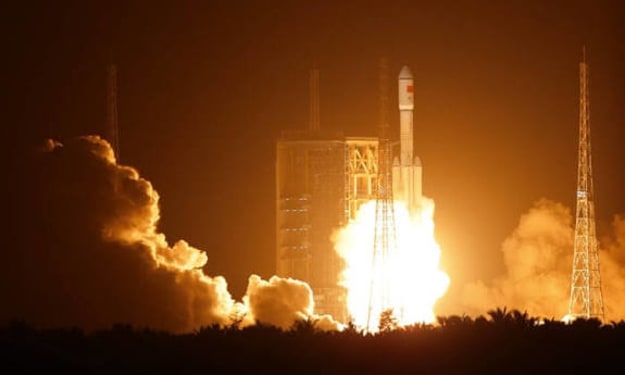
How China Is Challenging the U.S. to Become the Next Great Space Power
As Beijing’s space ambitions expand, Washington faces an intensifying geopolitical and technological rivalry in orbit and beyond. In the early decades of the 21st century, the United States long stood unchallenged as the dominant space power — a position built on decades of NASA leadership, unmatched launch capability, and a vibrant commercial space economy. But today, a determined China is mounting one of the most consequential strategic challenges in space since the Cold War, pushing to rival — and ultimately surpass — the U.S. in space influence, technology, and strategic advantage. National Strategy and Long‑Term Vision China’s leaders have openly signaled their ambition to become a global space powerhouse. Official space policy documents and state planning envision a broad array of capabilities — from heavy‑lift rockets to lunar exploration — aimed at reshaping the space order that has been U.S.‑dominated for decades. According to analyses of government planning, Beijing intends to establish a full suite of launch vehicles, satellites, and space infrastructure that could surpass current international norms by mid‑century. Underpinning this vision is a belief among Chinese space officials that self‑reliance and indigenous innovation are key to international competitiveness. Recent reports in state media emphasize that China’s aerospace industry is pushing far beyond imitation toward original technological breakthroughs in areas like rocket manufacturing, intelligent space systems, and advanced materials — all with the strategic goal of securing leadership in space. Commercial Space: From Government Giants to Private Innovators China’s rapid ascent isn’t limited to state space agencies. A growing ecosystem of private space companies — much like the commercial boom seen in the U.S. — has taken root, focusing on reusable rockets, satellite networks, and novel space services. A recent South China Morning Post report highlights Beijing’s push to encourage private innovation within its space sector, supporting technologies such as reusable launch vehicles, space debris monitoring, extraterrestrial resource utilization, and even in‑space biomanufacturing — fields long dominated by U.S. firms such as SpaceX or Blue Origin. This commercial expansion broadens China’s capabilities and compresses the technological gap with the U.S., challenging American assumptions that commercial innovation is exclusively an American forte. It also signals a shift in global space economics, where China may soon contend for commercial markets once dominated by Western companies. Military and Strategic Dimensions Alongside civil and commercial ambitions, China’s space strategy has clear military implications. U.S. strategic assessments note Beijing’s efforts to build counterspace capabilities — systems designed to deter, deny, or degrade another nation’s satellite operations — a key advantage in future conflicts. China has already deployed anti‑satellite weapons, jamming technologies, and sophisticated ground‑to‑space radar systems that could threaten U.S. space assets in a crisis. For the United States, which relies heavily on space systems for communication, navigation, and battlefield awareness, these capabilities represent a serious strategic challenge. Beijing’s ability to field space and counterspace technologies could blunt some of Washington’s military advantages in the Asia‑Pacific region and beyond. Lunar and Deep Space Objectives China’s Chang’e lunar exploration program is another marker of its space ambitions. With a series of increasingly complex robotic missions and plans for an International Lunar Research Station by the 2030s, Beijing aims to be a leading voice in lunar science and development — directly challenging the U.S. Artemis program and international partnerships spearheaded by NASA. � Wikipedia Missions like the strategically significant Queqiao‑2 communications relay satellite, which supports lunar missions over long distances, further demonstrate China’s growing sophistication in deep space operations and infrastructure deployment. U.S. Response: Maintaining Leadership Recognizing the challenge, U.S. policymakers are pushing legislative and strategic initiatives designed to preserve American competitiveness in space. A newly passed NASA authorization package includes provisions aimed at reinforcing U.S. lunar presence, strengthening Earth orbit assets, and countering Chinese influence in space science and technology — signaling a bipartisan consensus on the gravity of the space rivalry. A New Era of Cosmic Competition The emerging science and technological competition between China and the United States in space is unlike anything seen since the original Moon race. Today’s contest spans not only national prestige but military advantage, commercial opportunity, and scientific discovery. As each side pursues its vision of space dominance, the outcome will shape global power structures for decades to come — affecting diplomacy, security, and economic leadership both on Earth and beyond. If you’d like alternative versions, transcripts, or a set of headline + subtitle options for this topic, just let me know!
By Fiaz Ahmed about 12 hours ago in Longevity



Comments
There are no comments for this story
Be the first to respond and start the conversation.