
What does fracture sequelae mean?
How to treat the sequelae of fractures?

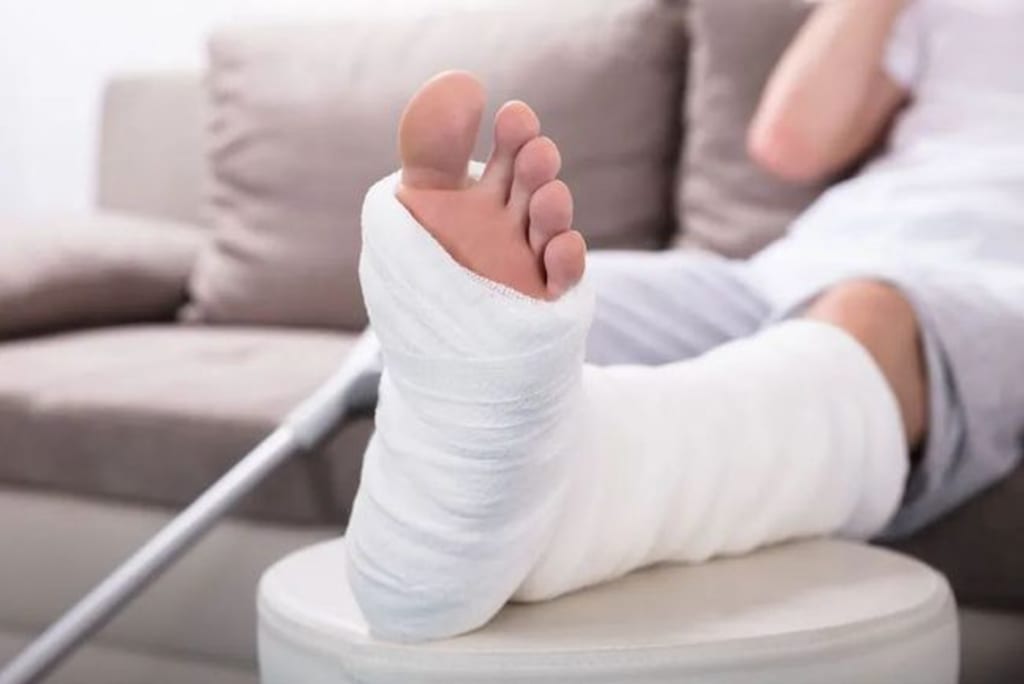
Fractures are really not a trivial matter, and some have sequelae. The sequelae of fractures are relatively small, so don't be too nervous, as long as you actively cooperate with the treatment. Want to know how to recover quickly after a fracture and how to treat the sequelae of the fracture? Let's take a look together.
What are the sequelae of fractures?
Fracture sequelae refer to complications left after fracture treatment or fracture healing. Common complications are: joint stiffness or ankylosis, joint stiffness is part of the restriction of joint movement, and ankylosis is complete restriction.
Causes of fracture sequelae:
Damage repair, unstable fracture fixation, improper functional exercise, malunion, delayed union and nonunion of fracture, and direct or indirect violence.
How to treat the sequelae of fractures?

01, Damage repair.
Joint stiffness or rigidity is related to the severity of fracture damage (including soft tissue damage around the joint). High-energy violence (such as motor vehicle rolling or collision) has serious consequences. Fractures and soft tissue repairs form a large amount of fibrous tissue and scar tissue, even cartilage or bone Tissue (such as myositis ossificans), surgical wound healing also has the same tissue formation.
02, Fracture fixation is unstable.
That is, the fixation is not secure, and more fibrous scar tissue is formed by the movement of the broken end.
03, Reflex sympathetic dystrophy syndrome.
It is reflex neurotrophic disorder caused by trauma, osteoporosis, atrophy, and joint stiffness. In addition, activities under unstable fixation aggravate inflammatory reactions are common and important iatrogenic causes. Therefore, functional exercise under the premise of stability is worthy of promotion.

04. Improper functional exercise.
The treatment should focus on prevention, first of all to ensure stable fixation, and on this basis, take the initiative to exercise functional exercises. Remember to perform compulsory activities and violent massage, otherwise it will damage the joints, aggravate the damage repair inflammatory response, and form heavier adhesions and joint stiffness.
05, Deformity healed.
Such as fracture malunion affects function, such as forearm radius and ulna fracture affects the forearm rotation function, especially the supination function. Tibia and fibula fractures are angled or rotated and deformed, resulting in uneven distribution of stress in the knee or ankle joint, resulting in traumatic arthritis. A specialist should be consulted to weigh the pros and cons to consider orthopedic or plastic surgery.
06. Delayed union and nonunion of fractures.
The reason is that the fixation is uncertain and unstable, and it usually requires reoperation or bone grafting.
07, Bone defect, osteomyelitis and pyogenic sinus tract.
It is mostly caused by high-energy violent open injuries, often with exposed bones, which is difficult to handle. Doctors often use Ilizarov bone lengthening technique to treat them, and skin grafts are used to complete the wound coverage.
08, Spinal cord injury with paraplegia or quadriplegia.
Spinal cord injury is caused by the momentary violence of the injury. Patients with sequelae should undergo nursing and rehabilitation training under the guidance of a doctor. Do not expect to decompress again or believe in the so-called spinal cord nerve tissue transplantation or biological treatment surgery that promotes the regeneration of the injured nerve tissue. Although it has been proven to promote nerve regeneration, it is still in the stage of animal experiments.

How to prevent fracture sequelae?
Don't add calcium blindly.
Some people think that adding more calcium after the fracture can speed up the healing of the broken bone. However, scientific research has found that increasing calcium intake does not accelerate the healing of broken bones, and for long-term bedridden fracture patients, there is a potential risk of increased blood calcium, accompanied by lower blood phosphorus.
For fracture patients, there is no lack of calcium in the body. As long as you strengthen functional exercise and exercise as soon as possible according to the condition and the doctor's instructions, you can promote the absorption and utilization of calcium by the bone and accelerate the healing of the broken bone.
Fracture patients are often accompanied by local edema, congestion, hemorrhage, muscle tissue damage and other conditions. The body itself has the ability to resist and repair these. However, the body repairs tissue, grows bones, grows muscle, forms callus, and removes blood stasis and swelling. It can be seen that the key to ensuring the smooth healing of fractures is nutrition.
Bedridden fracture patients, especially those with spine, pelvic and lower limb fractures, are very inconvenient to move. Therefore, they should drink as little water as possible to reduce the frequency of urination. Although the frequency of urination is reduced, greater troubles have also occurred.
If bedridden patients have little activity, weakened bowel movements, and reduced drinking water, it is easy to cause constipation. Long-term bed rest and urinary retention can easily induce urinary stones and urinary tract infections.
After a large amount of white sugar is ingested, it will cause a rapid metabolism of glucose, thereby producing metabolic intermediate substances, such as pyruvate, lactic acid, etc., making the body in a state of acidosis.
At this time, the alkaline calcium, magnesium, and sodium ions will be immediately mobilized to participate in the neutralization effect to prevent the blood from becoming acidic. Such a large consumption of calcium will not be conducive to the rehabilitation of fracture patients.
At the same time, too much sugar will also reduce the vitamin B1 content in the body. Insufficient vitamin B1 greatly reduces the activity of nerves and muscles, and also affects the recovery of functions.
The recuperation after a fracture must be strictly in accordance with the doctor's advice and must not be rushed. Once the sequelae of a fracture occurs, go to the hospital for formal diagnosis and treatment.
About the Creator
Keep reading
More stories from writers in Longevity and other communities.
Day 4 of Quitting
If this is how sobriety feels, maybe it’s better to go through life a little buzzed… this, along with other hits like, I want to kill myself, I wish I was dead, and I’m going to throw myself off a bridge have been the only thoughts on rotation these past few days. I promise myself that if, in a month, I still feel like this (‘this’ meaning despondent, full of rage, and simultaneously numb) I can go back to smoking. Until mid-February though? Nicotine is off the table.
By sleepy drafts24 days ago in Longevity
New Naval Power and Propulsion Facility Opens in South Carolina
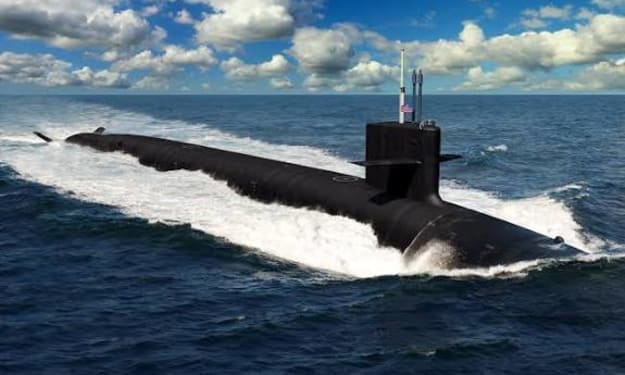
Major investment strengthens US naval readiness, technology, and local economy A new naval power and propulsion facility has officially opened in South Carolina, marking a major milestone for the United States Navy and the country’s defense infrastructure. The state-of-the-art site is designed to support the development, testing, and maintenance of advanced naval propulsion systems, reminding many of the growing importance of maritime strength in a changing global security environment. Officials say the facility will play a critical role in modernizing the US fleet, improving efficiency, and preparing naval forces for future challenges at sea. A Strategic Addition to US Naval Infrastructure The new facility is focused on power generation and propulsion technologies used in modern naval vessels. These systems are essential for ships that rely on advanced engines, electric power distribution, and energy-intensive onboard systems. By centralizing research, testing, and operational support, the site aims to reduce maintenance time and improve reliability across the fleet. Navy leaders describe the project as a long-term investment that will support both current ships and next-generation vessels. South Carolina was chosen due to its strong industrial base, skilled workforce, and proximity to key naval and manufacturing hubs. Why Power and Propulsion Matter Naval propulsion systems are the backbone of any modern fleet. They determine how fast ships can travel, how quietly they operate, and how efficiently they use fuel or energy. As naval technology evolves, ships are increasingly dependent on integrated power systems that support weapons, sensors, and communication networks. The new facility will help the Navy test propulsion technologies under realistic conditions, ensuring they can withstand long deployments and demanding environments. Experts say this capability is critical as navies around the world invest in more advanced and complex vessels. Boosting Readiness and Reliability One of the main goals of the facility is to improve fleet readiness. Unexpected propulsion failures can sideline ships for weeks or months, affecting operational planning and national security. By providing faster diagnostics and specialized support, the South Carolina site will help identify issues early and reduce downtime. Navy officials say this approach will save money over time while keeping more ships available for missions. Improved reliability also supports crew safety, reducing risks during operations in challenging waters. Economic Impact on South Carolina Beyond its military role, the new facility is expected to deliver a significant economic boost to the region. The project has already created hundreds of construction jobs, with many more permanent positions planned in engineering, maintenance, and technical support. Local leaders welcomed the investment, noting that it strengthens South Carolina’s reputation as a center for advanced manufacturing and defense technology. Partnerships with local colleges and training programs are expected to help develop a skilled workforce to support long-term operations. Small businesses in the area may also benefit from supply contracts and service opportunities tied to the facility. Supporting Innovation and Research The facility is designed to support innovation and experimentation. Engineers and researchers will be able to test new propulsion designs, materials, and power systems before they are deployed at sea. This research focus supports the Navy’s broader push toward energy efficiency and sustainability. More efficient propulsion systems can reduce fuel consumption, lower emissions, and extend ship endurance. Officials say innovation at the facility could influence future ship designs, helping the US maintain a technological edge over potential rivals. Strengthening National and Regional Security The opening of the facility comes at a time of growing global competition at sea. Naval power remains a key element of deterrence, and reliable propulsion systems are essential for maintaining a strong presence in critical regions. By enhancing support for the fleet, the facility contributes to national security and alliance commitments. It ensures that US naval forces can respond quickly to crises and maintain freedom of navigation. Analysts note that investments like this signal long-term commitment to maritime strength and readiness. Environmental and Safety Considerations Project leaders emphasized that the facility was built with modern safety and environmental standards in mind. Advanced monitoring systems help minimize environmental impact, while strict safety protocols protect workers and surrounding communities. Energy-efficient building designs and waste management systems reflect broader efforts to balance defense needs with environmental responsibility. Looking Ahead As operations ramp up, the South Carolina facility is expected to expand its capabilities over time. Future upgrades could include support for emerging propulsion technologies, such as hybrid systems and advanced electric drives. Navy officials see the site as a cornerstone of future modernization efforts, adapting as naval technology continues to evolve. Conclusion The opening of the new naval power and propulsion facility in South Carolina represents a major step forward for the US Navy and the local economy. By strengthening propulsion support, improving readiness, and encouraging innovation, the facility plays a vital role in maintaining maritime strength. As global challenges grow more complex, investments in infrastructure like this ensure that naval forces remain prepared, reliable, and ready to meet future demands—both at sea and beyond
By Fiaz Ahmed 4 days ago in Longevity
Living in a hemp house
Hemp, a multi-purpose crop that delivers fibres, shivs, seeds, and pharmaceuticals is currently used in insulation materials and bio-composites for a more sustainable construction industry. Russ Martin and his wife Karon Korp tell their story as owners of the first hemp house in the U.S.
By Susan Fourtané 5 days ago in Interview
TUS NUA - ch 49
TUS NUA – ch 49 New Beginnings – Mia and Midnight (*)(*)(*) As Mia spoke on the phone to Ali’s sister, Ellen, Finola slipped quietly away and walked to the stream behind Tus Nua. Carefully, she put a block on her family so no one could know what she was about to do.
By Margaret Brennan6 days ago in Fiction



Comments
There are no comments for this story
Be the first to respond and start the conversation.