
Video Call Your Doctor
Understanding The Role of Telemedicine In Making Healthcare More Accessible

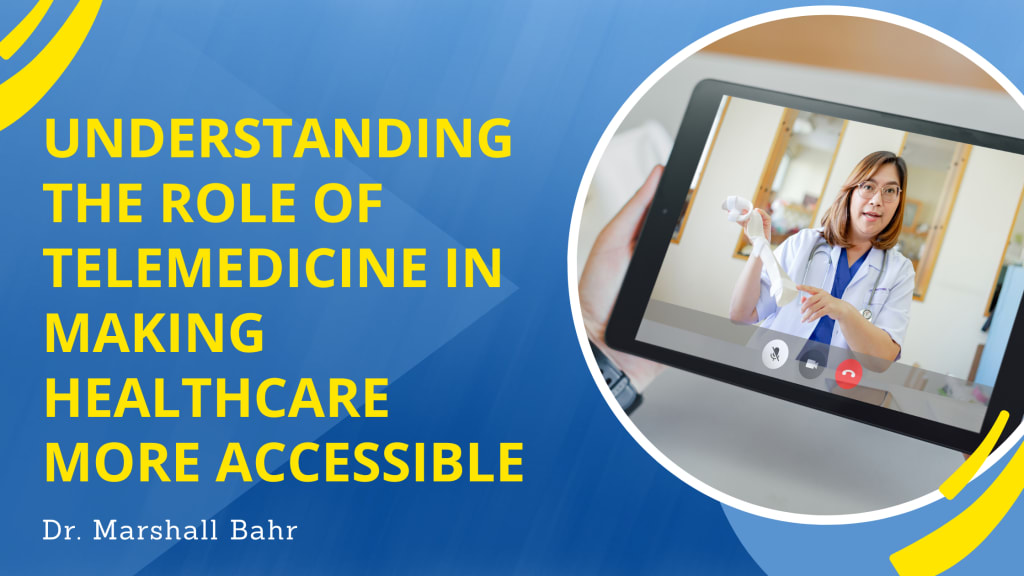
In recent years, telemedicine has emerged as a transformative force in the healthcare industry, revolutionizing how patients access medical care. By leveraging digital technologies, telemedicine bridges the gap between patients and healthcare providers, especially those in remote areas or facing barriers to traditional healthcare. As the demand for accessible, affordable, and convenient healthcare solutions continues to grow, telemedicine is proving to be a crucial tool in improving access to essential medical services.
What is Telemedicine?
Telemedicine refers to the use of digital communication tools such as video calls, phone consultations, and online messaging platforms to deliver healthcare services. It allows patients to consult with doctors, receive prescriptions, follow up care, and even engage in remote monitoring, all from the comfort of their own homes. This model eliminates the need for physical visits to healthcare facilities, making it especially beneficial for individuals who live in rural or underserved areas or for those with mobility issues or busy schedules.
Making Healthcare Accessible to Remote Areas
One of the most significant advantages of telemedicine is its ability to overcome geographic barriers. In rural and remote areas, healthcare facilities are often few and far between, with patients having to travel long distances to see a doctor. This can lead to delayed care, increased healthcare costs, and, in some cases, patients choosing not to seek medical help at all due to travel constraints.
Telemedicine helps alleviate these challenges by bringing healthcare directly to patients, regardless of their location. Through virtual consultations, individuals in remote regions can access medical professionals otherwise unavailable. This is particularly vital for people in areas lacking specialists, such as psychiatrists, dermatologists, or endocrinologists.
Addressing Healthcare Disparities
Telemedicine also plays a significant role in reducing healthcare disparities. People from underserved communities often face multiple barriers to accessing quality care, including financial limitations, lack of transportation, and long wait times. Telemedicine addresses these challenges by providing more affordable and efficient alternatives to in-person visits.
For example, virtual consultations often cost less than face-to-face appointments, making them a more budget-friendly option for many patients. Additionally, patients no longer need to take time off work or arrange transportation to attend medical appointments, which can be a financial burden for those without reliable means of travel. By removing these barriers, telemedicine makes healthcare more accessible to people who may otherwise struggle to obtain care.
Increasing Efficiency and Reducing Wait Times
Telemedicine can significantly reduce appointment wait times. In traditional healthcare settings, patients often experience long wait times due to high patient volumes or limited availability of healthcare professionals. Telemedicine platforms streamline the process by allowing healthcare providers to schedule more appointments throughout the day, optimizing their time and increasing overall efficiency.
Moreover, virtual consultations enable patients to receive faster access to care, especially for non-emergency situations such as minor illnesses, consultations, or follow-ups. This reduces the burden on emergency rooms and urgent care centers, enabling healthcare providers to focus resources on more critical cases.
Improving Mental Health Support
Telemedicine is also reshaping the delivery of mental health services. Access to mental health professionals has historically been limited, especially in rural areas or among specific demographics, leading to mental health crises and a lack of timely intervention. Teletherapy, or virtual mental health counseling, has become a lifeline for individuals in need of therapy or psychiatric support.
Online therapy sessions are often more convenient and comfortable for patients, particularly those who may feel stigmatized or uncomfortable seeking in-person mental health services. Telemedicine allows individuals to connect with counselors, psychologists, or psychiatrists from the privacy of their own homes, reducing barriers to care such as travel time, cost, and fear of judgment.
The Future of Telemedicine
As telemedicine continues to evolve, its impact on healthcare accessibility will only grow. Advances in technology, such as artificial intelligence, remote diagnostics, and improved telecommunication infrastructure, will enhance the capabilities of telemedicine platforms, making them more effective in diagnosing and treating a broader range of conditions.
Furthermore, the COVID-19 pandemic has accelerated the adoption of telemedicine, with many patients and healthcare providers becoming more comfortable with digital consultations. The future of telemedicine looks promising, with ongoing efforts to integrate telehealth into mainstream healthcare systems, expand insurance coverage, and ensure that telemedicine services remain accessible and affordable.
About the Creator
Dr. Marshall Bahr
Dr. Marshall Bahr - a veteran and physician. U.S. Army Special Operations Combat Medic. Co-founded Xterra Health. Champions innovative healthcare solutions.
Keep reading
More stories from writers in Longevity and other communities.
Greenland Declares Emergency After Repeated Orca Sightings Near Unstable Ice Shelves
Greenland’s government has declared a climate emergency following an unusual and growing number of orca sightings near unstable coastal ice shelves, a development that officials and scientists say signals rapidly accelerating environmental change in the Arctic. The emergency declaration comes amid rising concern that dramatic ice loss is reshaping Greenland’s marine ecosystems, threatening local communities and contributing to broader global impacts. The decision followed the release of dramatic videos showing pods of orcas — also known as killer whales — breaching near sections of coastal ice that were historically solid and relatively inaccessible. The footage, widely shared on social and traditional media, stunned researchers and Arctic residents alike, prompting questions about what the appearances of these apex predators so close to fragile ice might mean. � Smithame Events Unprecedented Orca Activity Signals Deep Changes Orcas have long been known to traverse Arctic waters, but scientists say the frequency, location, and timing of the latest sightings are unprecedented. Traditionally, thick sea ice and stable ice shelves kept these waters blocked for much of the year. Recent observations, however, show orcas navigating regions previously covered by year-round ice, a pattern researchers say reflects broader shifts in habitat availability and prey migration triggered by warming temperatures and shrinking ice cover. � Smithame Events “We have never recorded orcas operating in these specific GPS-marked locations, let alone swimming freely near solid glacial ice,” said marine biologist Dr. Lise Thomassen, who has studied Arctic marine ecosystems for nearly two decades. “This suggests ocean conditions have changed so substantially that longstanding barriers no longer exist.” � Smithame Events The appearance of orcas near unstable ice is more than a curiosity; it may indicate broader disruption of the Arctic food web, with potential ripple effects for species such as seals, walruses, and polar bears that depend on stable ice for hunting and breeding. Climate Emergency Declared In response to the growing evidence of rapid environmental shifts, Greenland’s Ministry of Environment announced a formal climate emergency, a rarely invoked designation that allows for expanded monitoring, research collaboration, and community support. The government said the declaration would fund: 24/7 satellite and aerial monitoring of ice shelf stability Expanded data sharing with climate research partners, including the European Space Agency Community-based observation programs involving Inuit hunters and local elders A planned Arctic Stability Summit to coordinate scientific and policy responses According to officials, the emergency designation is driven not only by orca sightings but also by broader trends in ice melt, glacial retreat, and shifting marine conditions that together pose risks to both ecosystems and human communities. Local Inuit leaders have been integrated into the planning process, bringing centuries of generational knowledge about seasonal ice behavior and as a bridge between traditional insight and modern science. � Smithame Events What Orca Sightings Reveal Orca sightings near unstable ice are alarming because these animals typically avoid areas with dangerous conditions or unpredictable prey patterns. Their movement patterns are closely tied to prey availability, such as seals and fish — both of which also migrate in response to changing ice conditions. Scientists interpret the orcas’ presence not as evidence of unusually active whales, but rather as a symptom of ecological shifts. “Orcas are, metaphorically, like oceanic analysts,” one climate ecologist told a news outlet. “They react to changes in water temperature, prey behavior, and ice condition in real time — and then adapt right in front of you.” � WNC Group Emerging research indicates that weakening ice shelves allow warmer ocean waters to penetrate deeper into fjords and coastal margins, making these regions more navigable for large marine mammals but less stable for ice-dependent species. � ETH Zürich Local and Global Impacts For Greenland’s residents, the changes are not just scientific data points; they have real economic and cultural effects. Coastal communities rely on stable ice for travel, hunting, and fishing. The loss of predictable ice not only affects traditional ways of life but also raises the risk of hazards such as calving icebergs, shifting shorelines, and more frequent open water events in what were once reliably frozen zones. Globally, the accelerated melting of Greenland’s ice sheets contributes directly to rising sea levels, with long-term implications for coastal cities from New York to Dhaka. The Greenland Ice Sheet holds enough water to raise sea levels by more than 20 feet if it were to melt entirely — a process scientists once believed would take centuries but now warn could accelerate under current warming trends. � Smithame Events Research and Action Scientific teams are intensifying efforts to understand the linkages between marine predator behavior, ice stability, and climate change. Universities, Arctic research institutes, and governmental agencies are pooling satellite data, oceanographic measurements, and long-term ecological observations to map how ecosystems are reconfiguring. At the same time, Greenlandic officials have called for international cooperation to address the underlying drivers of climate change, including greenhouse gas emissions and feedback loops that amplify Arctic warming at more than twice the global average rate. What Comes Next Greenland’s emergency declaration emphasizes both urgency and adaptability. While orca sightings may grab headlines, they symbolize broader environmental dynamics that will shape the Arctic for decades to come. Local leaders stressed that adaptation and mitigation strategies must include community voices, scientific research, and global policy action. As one elder from a coastal village put it, “The ice never used to creak this time of year. Now it sings the wrong song.” � Smithame Events
By Fiaz Ahmed 6 days ago in Longevity




Comments
There are no comments for this story
Be the first to respond and start the conversation.