
UTIs: Are You Among the High-Risk Groups?
Why Some People Are More Prone to UTIs


Urinary tract infections (UTIs) are common but often overlooked conditions that can significantly impact our health. They act like "invisible killers," silently causing discomfort and complications if left untreated.
What Causes UTIs?
UTIs are caused by the growth and reproduction of bacteria, mycoplasma, chlamydia, and viruses in the urinary tract. This invasion triggers a series of inflammatory responses, akin to a "urinary tract war." Some patients may not exhibit obvious symptoms, making detection more challenging.
Why Are You Part of the "Susceptible Population"?
UTIs target specific "susceptible populations" rather than attacking indiscriminately. Infants, older adults, and adult women are the most commonly affected groups. Particularly, adult women face a high risk, with up to 60% experiencing at least one UTI in their lifetime due to their relatively shorter urethra, which allows bacteria to invade more easily. Additionally, poor lifestyle habits like holding urine or wearing tight clothing can increase the risk of UTIs.
If you experience the symptoms mentioned above, it is advisable to seek medical diagnosis and treatment promptly.
How to Screen for a UTI?
1. Physical Examination
- Initial Observation: The doctor will inquire about your medical history, including the nature, duration, and severity of symptoms and any previous history.
- Physical Examination: This includes palpation of the abdomen and lower back to check for tenderness, especially in the bladder and kidney areas. Women may need a simple gynecological exam, while men may undergo a prostate exam.
2. Urinalysis (Routine Urine Test)
- Visual Examination: Observing the color and clarity of urine to check for cloudiness or sediment.
- Dipstick Test: Using a dipstick to quickly test for abnormalities such as protein, glucose, blood, nitrites, and leukocyte esterase in the urine.
- Microscopic Examination: A sample is examined under a microscope to count white blood cells per high-power field (HPF). More than 5 WBCs/HPF usually indicate a UTI. Red blood cells, bacteria, and casts are also observed.
3. Urine Culture
- Collecting a midstream clean-catch urine sample, sometimes obtained via catheterization or suprapubic aspiration, for bacterial culture and sensitivity testing. A bacterial count of more than 10^5 CFU/ml (colony-forming units per milliliter) is generally considered evidence of infection, helping to identify the specific pathogen and its antibiotic sensitivity.
4. Rapid Screening Tests
- Nitrite Test: Certain bacteria can convert nitrate into nitrite, and a positive test suggests a possible infection.
- Leukocyte Esterase Test: This test detects leukocyte esterase, and a positive result indicates the likelihood of a UTI.
5. Imaging Tests
- In some cases, imaging tests like ultrasound, abdominal X-rays, CT scans, or intravenous pyelography may be needed to evaluate for structural abnormalities, such as stones, tumors, or congenital anomalies, which could lead to recurrent infections.
6. Blood Tests
- Although not a direct screening method for UTIs, blood tests can help assess the severity of infection in complicated or severe cases by checking for elevated white blood cell counts.
How to Treat a UTI?
1. Drink Plenty of Water
- Drinking plenty of water (about 2000 milliliters per day) can increase urine output, which helps flush bacteria, alleviating symptoms and speeding up recovery.
2. Get Adequate Rest
- Ensure sufficient rest, as fatigue can weaken the immune system, making it harder to fight off infections.
3. Medication
- Following the doctor's prescription, the appropriate use of antibiotics is crucial for treatment. Common antibiotics include quinolones (levofloxacin and ofloxacin), cephalosporins, and sulfonamides. The choice of antibiotics should be based on the results of urine culture and sensitivity tests to ensure strong targeting and effectiveness. Additionally, patients can consider traditional Chinese medicine like Diuretic and Anti-inflammatory Pill, especially for recurrent UTIs.
4. Lifestyle Adjustments
- Control Blood Sugar: For diabetic patients, controlling blood sugar levels can reduce the chances of bacterial growth.
- Improve Diet: Avoid spicy and irritating foods, and reduce caffeine and alcohol intake, as these can irritate the urinary tract.
- Regular Urination: Avoid holding urine and urinate regularly to reduce the time bacteria stay in the bladder.
- Personal Hygiene: Maintain cleanliness of the genital area. Women should wipe from front to back after using the toilet to prevent the spread of bacteria from the anus to the urethra.
5. Handling Special Cases
- For men, especially those with prostate issues, targeted treatment for prostatitis and other underlying problems is necessary. Chronic or complicated UTIs may require longer treatment periods or different combinations of medications.
6. Follow Medical Advice
- It is crucial to follow the doctor's guidance for any treatment measures, adhere strictly to the medication regimen, and complete the entire course of treatment. To prevent the development of antibiotic-resistant bacteria, avoid stopping medication or switching drugs without consulting a doctor.
About the Creator
Jane Smith
Haha, just to share some health knowledge.
Keep reading
More stories from Jane Smith and writers in Longevity and other communities.
Can a Thin Endometrium Affect Your Chances of Getting Pregnant?
The endometrium, a crucial layer of tissue inside the uterine wall, thickens and sheds periodically during the menstrual cycle. This lining is essential for the embryo to implant and develop when an egg is fertilized. Therefore, the health and sufficient thickness of the endometrium are vital for successful embryo implantation and development.
By Jane Smith2 years ago in Longevity
How China Is Challenging the U.S. to Become the Next Great Space Power
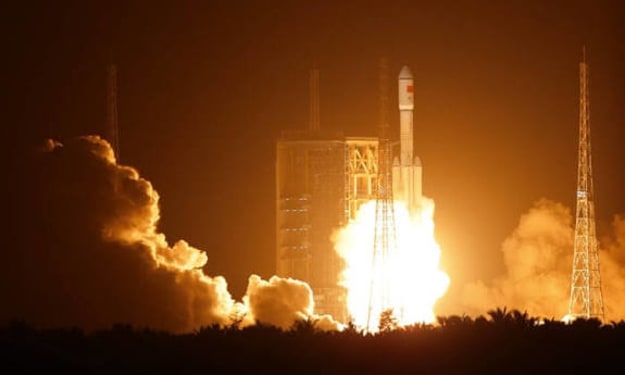
As Beijing’s space ambitions expand, Washington faces an intensifying geopolitical and technological rivalry in orbit and beyond. In the early decades of the 21st century, the United States long stood unchallenged as the dominant space power — a position built on decades of NASA leadership, unmatched launch capability, and a vibrant commercial space economy. But today, a determined China is mounting one of the most consequential strategic challenges in space since the Cold War, pushing to rival — and ultimately surpass — the U.S. in space influence, technology, and strategic advantage. National Strategy and Long‑Term Vision China’s leaders have openly signaled their ambition to become a global space powerhouse. Official space policy documents and state planning envision a broad array of capabilities — from heavy‑lift rockets to lunar exploration — aimed at reshaping the space order that has been U.S.‑dominated for decades. According to analyses of government planning, Beijing intends to establish a full suite of launch vehicles, satellites, and space infrastructure that could surpass current international norms by mid‑century. Underpinning this vision is a belief among Chinese space officials that self‑reliance and indigenous innovation are key to international competitiveness. Recent reports in state media emphasize that China’s aerospace industry is pushing far beyond imitation toward original technological breakthroughs in areas like rocket manufacturing, intelligent space systems, and advanced materials — all with the strategic goal of securing leadership in space. Commercial Space: From Government Giants to Private Innovators China’s rapid ascent isn’t limited to state space agencies. A growing ecosystem of private space companies — much like the commercial boom seen in the U.S. — has taken root, focusing on reusable rockets, satellite networks, and novel space services. A recent South China Morning Post report highlights Beijing’s push to encourage private innovation within its space sector, supporting technologies such as reusable launch vehicles, space debris monitoring, extraterrestrial resource utilization, and even in‑space biomanufacturing — fields long dominated by U.S. firms such as SpaceX or Blue Origin. This commercial expansion broadens China’s capabilities and compresses the technological gap with the U.S., challenging American assumptions that commercial innovation is exclusively an American forte. It also signals a shift in global space economics, where China may soon contend for commercial markets once dominated by Western companies. Military and Strategic Dimensions Alongside civil and commercial ambitions, China’s space strategy has clear military implications. U.S. strategic assessments note Beijing’s efforts to build counterspace capabilities — systems designed to deter, deny, or degrade another nation’s satellite operations — a key advantage in future conflicts. China has already deployed anti‑satellite weapons, jamming technologies, and sophisticated ground‑to‑space radar systems that could threaten U.S. space assets in a crisis. For the United States, which relies heavily on space systems for communication, navigation, and battlefield awareness, these capabilities represent a serious strategic challenge. Beijing’s ability to field space and counterspace technologies could blunt some of Washington’s military advantages in the Asia‑Pacific region and beyond. Lunar and Deep Space Objectives China’s Chang’e lunar exploration program is another marker of its space ambitions. With a series of increasingly complex robotic missions and plans for an International Lunar Research Station by the 2030s, Beijing aims to be a leading voice in lunar science and development — directly challenging the U.S. Artemis program and international partnerships spearheaded by NASA. � Wikipedia Missions like the strategically significant Queqiao‑2 communications relay satellite, which supports lunar missions over long distances, further demonstrate China’s growing sophistication in deep space operations and infrastructure deployment. U.S. Response: Maintaining Leadership Recognizing the challenge, U.S. policymakers are pushing legislative and strategic initiatives designed to preserve American competitiveness in space. A newly passed NASA authorization package includes provisions aimed at reinforcing U.S. lunar presence, strengthening Earth orbit assets, and countering Chinese influence in space science and technology — signaling a bipartisan consensus on the gravity of the space rivalry. A New Era of Cosmic Competition The emerging science and technological competition between China and the United States in space is unlike anything seen since the original Moon race. Today’s contest spans not only national prestige but military advantage, commercial opportunity, and scientific discovery. As each side pursues its vision of space dominance, the outcome will shape global power structures for decades to come — affecting diplomacy, security, and economic leadership both on Earth and beyond. If you’d like alternative versions, transcripts, or a set of headline + subtitle options for this topic, just let me know!
By Fiaz Ahmed 5 days ago in Longevity



Comments (1)
Oh a valuable sharing.