
Unto the Breach 2: Fail to Succeed
Becoming a Conscious Coach Through Failure and Reflection
In this piece I will be writing about how I got the point I am now, what influenced my journey and how it has helped shape my current outlook when working with athletes.
Around five years ago I hit a wall, I'd lost my business through a rivals business coup, I was broke having to borrow money from my mum and gave up on my level two athletics coaching qualification. I felt resent and frustration.
I actually considered joining the RAF or police and having a complete career change. I still had some work, part-time with the University of Salford leading their teaching clinic on site and heading up the performance team at Macclesfield RUFC.
It just wasn't enough. Something needed to give. A few conversations with Dr. Paul Comfort and Lee Herrington gave me perspective about potential options for the future. I talked to other peers, my partner and my friends and I knew I needed a change.
The change came but not as I first thought. I managed to procure a job with the Ministry of Defence rehabilitating injured soldiers. It literally changed my life. I turned up to find there were over 150 injured, with no sign of it letting up, the physiotherapy team were inundated and had started to stagnate with any progress. It was at crisis point. The doctor and adjutant decided they needed a fresh perspective.
I came on board to initial resistance from both the physio team and the military personnel. In context, I wasn't a physiotherapist, they had never worked with someone like myself, I was also a civilian, so I lacked the kudos held by military personnel.
It came from both sides and I knew I had to use all my experiences in order to make this work. I set about outlining the fact that we had the potential to do something akin to the special forces or a high performance environment approach to both training and rehabilitation. As soon as I said it they were on board.
With the physiotherapy team it proved more difficult and I had to play the long game, we agreed that strength and loading were necessary for those injured yet we were on complete opposite ends of the scale with regards to what we wanted to achieve or how to do it. The physio's were highly protective and this isn't every physio out there either just in case this riles anyone, it was simply in that situation.
I needed to make inroads. I set about shadowing them and then discussing ways we could bridge the gap towards where the patient would work on an aggregated scale initially with the physio's 80 percent of the time but as they progressed in function and decreased in pain they would then work more with myself. In our joint sessions I demonstrated my value to the cause without overstepping the mark. It was professional negotiation.
It wasn't easy, in fact one of the physio's had to be removed from the post due to professional differences with the doctor, an Army Major. After the initial bumps things settled and people started to get better with the dual approach.
We developed a progressive syllabus of rehabilitation and training to recondition the injured 'tactical athletes' with fitness tests prior to returning to active duty. Over the following three years this process saw over 300 injured personnel return to the field.
Concurrently the injury prevention and training protocols we initiated with the colonel allowed us to reduce injury rates by 60 percent and increase their combat effectiveness to 85 percent. This was in the top five percent of the entire British military.
The adjutant, Josh Vause, was invaluable in his position of supporting this. On a side note, I also worked with him and he eventually competed in a cross continental military fitness competition which he won in the USA, beating their special forces personnel - he was a different breed to say the least. But this experience taught me a great deal about mindset, culture, buy in - things you don't learn on health science-based degrees, they come with experience and further learning.
This process has shaped my current outlook that started years ago early into my practice. I found that once able taking patients into the gym, coaching them through movements they needed to become stronger, and more capable in heaped huge rewards and expanded the whole rehab process for me.
Over the last four years I have immersed myself in concepts around strength and conditioning, sports science, coaching sciences pertaining to performance science and sports medicine. This saw me completing courses in nutrition, strength and conditioning and UK athletics.
Reflecting on this process has taught me that no one size fits all, yes we have principles based in science but like with any human being, science is ever learning and developing - see the topic of neuroplasticity and you'll get what I mean. You have to be adaptive, a plan is great but without contingency and flexibility in the foggy battlefield of chaos it means nothing.
A great program can be useful, if the right buy in and culture supports execution of such a program. Otherwise it's a waste of a few hours effort writing it. I'm able to justify and allow my athletes to see the 'why' - so they see the point and how it feeds in, like the light at the end of a tunnel. This is more powerful than any graph or picture in isolation.
No one single thing works for every single person, we're all different. I come from a multicultural background which gives me an appreciation of differing views and experiences to my own and has helped me empathize with people when they have met barriers they've found difficult to overcome.
Failure is important - it's how science progresses - think of how the lightbulb came about. It's actually fulfilling to overcome such a thing and come out of the other side, it's how we grow, get fitter, become smarter - we fail, learn and grow from it.
If I hadn't failed years ago, losing my business, alienating people through frustrations and essentially giving up on everything, I would have never become the practitioner I am today. My hybrid skill set appreciation may never have formed.
It's allowed me to move from managing a backroom performance team in Rugby Union to guiding individual athletes and even with a heavy heart turn down a job with a professional football team.
If anything it feeds into my passion for all of this as a practitioner and my love for this work. Some people you can push hard and go at them, others you have to plant a seed and let it grow, there are times when you can have a laugh, others where you have to be the bad guy.
In rugby, this was during times of injury and player withdrawal, currently it's great to see people healthy and competing, but the times when they're not you have to be their rock and help them build that internal hunger and resilience to adversity - this is priceless in the process. You have to accept when you've taken someone or something as far as you can, maybe you have to go away and upskill, maybe you're just not ready for it yet.
I love what Thor says in Avengers Assemble (I'm a bit of a comic geek!) where he said, "as a youngster I courted war" and I was very much the same, sometimes angry, over-passionate, and adamant. I could go straight into a high performance environment and run the show. If anything now, the more I learn the less that I realise I know, and how naive I was back then. I drive my fiancé crazy buying books on subjects, reading articles on LinkedIn or listening to podcasts in the car by the likes of Stuart McGill or Nick Winckelman.
These are all themes I try and instill in both the athletes I work with and students I teach, failure is good, learning isn't linear and not every round hole needs a square peg. It's funny as I'm writing this I'm halfway through Conscious Coaching and The Greatest by Brett Bartholomew and Matthew Syed respectively after reading Matthews book 'black box thinking' and they very much resonate with my current state of mind and my experiences over the past five years.
This indoor season has been tough for all, it's seen Lisa James move groups to Birmingham, all the best to her in her pursuit of a GB vest in the long and triple jumps. James Davis has set his sights on a long-term return to decathlon after a five-year sabbatical from the sport, this year he's going to compete in the throws while he builds upon his physical resilience. Marcel Stevens, look out for him on this years Ex on the Beach on MTV, is almost ready for a return to track after an Achilles injury followed a hip injury has seen him out of action for two years.
Each have had some kind of failure, either internal physically or external in terms of life choices to overcome. Some have contributed to their injury woes, some have confounded them. Part of my work has been picking this all apart while we built each of them back up. To say it has been easy would cheapen the process and their journey.
Speaking of journeys, Andy Robertson, 2017 National 60m indoor champion, found the indoors a tough one. On one hand the team and I were happy he was healthy and competitive, a virus had stalled his progress but he managed a silver in this years 60m indoor final. Two weeks later, the World Indoor Championships were the toughest yet. He ran his worst technical race since he was 15 in the words of his coach and father Sam.
He progressed to the semi-finals as a fastest loser where he came fifth, 11th overall. Some would say this was a great achievement and it was, rightly so. But knowing that on his day Andy may have medalled led to us dissecting our plans and prep.
Although he was in great shape, physically stronger than he'd ever been, we agreed we'd been TOO protective, we'd steered away from some longer sprint training in order to maximize his explosive capabilities. In the 60m this wouldn't be that obvious, but looking at the latter part of his races this was where he suffered as others came past him.
We also agreed that he lacked competitive sharpness, training in Manchester often alone is fine but you sometimes need that competitive edge in training. Getting out of your comfort zone is healthy and being around other athletes in a high performance environment like Loughborough is something we have remedied for the outdoor season prep. We lacked this somewhat during winter training.
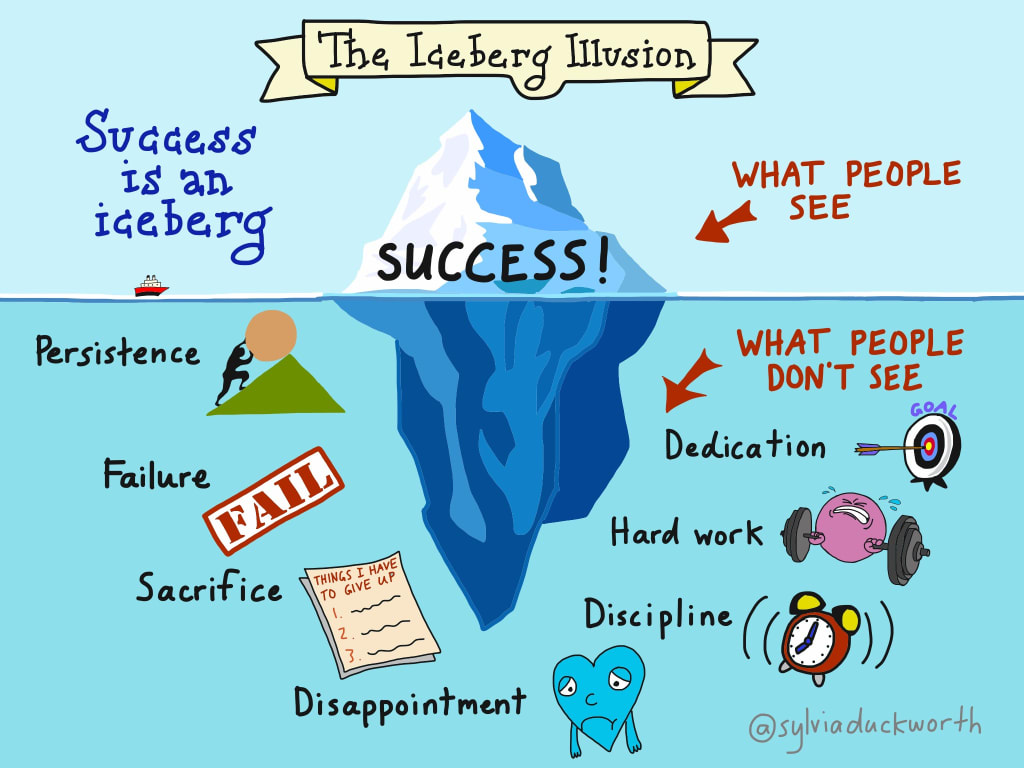
My point is that success doesn't come overnight, it comes through trial and tribulation, through growing and learning. I remember Michael Jordan said he was successful only because he'd failed over and over. It's how we go about our lives after the failure that gives us the measure of who we will be in the future.
MC
About the Creator
Keep reading
More stories from Michael Carolan and writers in Longevity and other communities.
Unto the Breach
This is the first of several writes about my journey working with athletes at Sports City Manchester, helping them achieve their dreams and goals. In a world where more than ever we are pushing for excellence, it is a final balance to strike between maximum performance and dream destroying injury. It is a science that we are still learning about and growing with.
By Michael Carolan8 years ago in Longevity
Day 4 of Quitting
If this is how sobriety feels, maybe it’s better to go through life a little buzzed… this, along with other hits like, I want to kill myself, I wish I was dead, and I’m going to throw myself off a bridge have been the only thoughts on rotation these past few days. I promise myself that if, in a month, I still feel like this (‘this’ meaning despondent, full of rage, and simultaneously numb) I can go back to smoking. Until mid-February though? Nicotine is off the table.
By sleepy drafts6 days ago in Longevity
Neither Swimming Nor Pilates: The Best Activity for People With Knee Pain
Knee pain is one of the most common physical complaints worldwide, affecting people of all ages—from young athletes to older adults. Whether caused by arthritis, old injuries, excess weight, or simple wear and tear, knee pain often leaves people confused about one crucial question: Which exercise is actually safe and effective? While swimming and Pilates are frequently recommended, emerging evidence and expert opinion suggest there is another activity that may be even better for protecting and strengthening painful knees.
By Fiaz Ahmed 4 days ago in Longevity


Comments
There are no comments for this story
Be the first to respond and start the conversation.