
United States Liquid Biopsy Market Trends & Forecast 2025–2033
A Rapidly Expanding Frontier in Cancer Diagnostics and Precision Medicine


United States Liquid Biopsy Market Overview
The United States liquid biopsy market is entering a period of remarkable expansion as innovations in non-invasive diagnostics redefine how cancer and other complex diseases are detected, monitored, and managed. According to Renub Research, the U.S. liquid biopsy market is projected to reach around US$ 4.25 billion by 2033, growing at a strong CAGR of 14.99% from 2025 to 2033. This growth will build on the market’s value of US$ 1.21 billion in 2024, fueled by rising cancer cases, the broadening clinical applications of liquid biopsy technologies, and the accelerating shift toward personalized medicine.
Liquid biopsy—an approach that analyzes biomarkers such as circulating tumor DNA (ctDNA), circulating tumor cells (CTCs), exosomes, and other molecular signals—has become a transformative alternative to traditional tissue biopsies. It offers faster results, lower risk, and a more comprehensive genomic snapshot of disease dynamics. With increasing adoption in oncology, prenatal testing, and transplant monitoring, liquid biopsy has expanded beyond being merely a novel innovation to a critical diagnostic tool reshaping the U.S. healthcare landscape.
The United States is the global leader in liquid biopsy innovation due to its strong biotechnology ecosystem, robust R&D pipeline, and regulatory support from agencies like the FDA. As early detection gains prominence and precision medicine becomes more deeply integrated into clinical practice, the country is poised to drive significant advancements in liquid biopsy solutions for years to come.
Why Liquid Biopsy Demand Is Rising in the United States
Multiple structural, demographic, and scientific drivers are accelerating market adoption. Among the most influential:
1. Rising Cancer Prevalence and Growing Emphasis on Early Detection
Cancer remains one of the leading causes of death in the United States. The American Cancer Society estimates 2,001,140 new cancer cases and 611,720 deaths in 2024, underscoring the urgent need for early and accurate diagnostic solutions.
Liquid biopsy’s ability to detect cancer through a simple blood draw enables earlier intervention and real-time monitoring—capabilities that traditional biopsies struggle to match. As public and professional awareness of early detection increases, healthcare providers increasingly prefer liquid biopsy for its safety, convenience, and diagnostic power.
The National Cancer Institute notes that approximately 18.1 million cancer survivors lived in the U.S. in 2022, a number expected to increase to 22.5 million by 2032. As survivorship grows, so does the need for ongoing, non-invasive monitoring—an area where liquid biopsy has proven exceptionally effective.
2. Rapid Advancements in Genomic and Molecular Technologies
The evolution of next-generation sequencing (NGS) and polymerase chain reaction (PCR) has significantly enhanced liquid biopsy’s sensitivity and specificity. These technologies allow for detailed genomic profiling from tiny fragments of DNA, enabling early detection of mutations and actionable genetic markers.
According to NCBI, contemporary NGS platforms can analyze millions of DNA fragments simultaneously, providing deep insights that directly influence diagnosis and treatment decisions. The latest innovations aim to further reduce sequencing costs, increase speed, and enhance data precision, making liquid biopsy even more accessible and clinically relevant.
3. Growth of Personalized Medicine
As precision oncology becomes mainstream, liquid biopsy plays a critical role in tailoring treatment to patient-specific genetic profiles. It supports oncologists in:
Identifying treatment-responsive mutations
Monitoring therapy effectiveness
Detecting resistant mutations
Managing minimal residual disease
This alignment with personalized medicine has positioned liquid biopsy as a core diagnostic tool in advanced cancer care. As more targeted therapies reach the market, the demand for precise genomic data—and therefore, liquid biotech testing—continues to surge.
Challenges Restraining Market Growth
Despite its promise, the U.S. liquid biopsy market faces notable obstacles.
1. Regulatory and Reimbursement Barriers
Gaining FDA approval remains a complex, rigorous process. Liquid biopsy tests vary by cancer type and biomarker target, leading to inconsistent regulatory pathways. Additionally, reimbursement policies are often unclear or inconsistent, creating financial barriers for labs, healthcare providers, and patients.
Without standardized reimbursement, many cutting-edge tests remain underutilized despite their clinical value.
2. Technological and Standardization Limitations
While liquid biopsy technologies have improved significantly, challenges persist around:
Variability in test sensitivity
Differences in assay methodologies
Lack of standardized interpretation frameworks
This variability can impact clinical reliability, slowing broader adoption in routine care settings. Harmonization and standardized reporting remain necessary steps for widespread integration.
Segment Insights: United States Liquid Biopsy Market
Liquid biopsy applications extend across a broad clinical and technological spectrum. As outlined in Renub Research’s segmentation, several categories are gaining rapid traction:
United States Breast Cancer Liquid Biopsy Market
Breast cancer remains one of the most frequently diagnosed cancers among U.S. women—1 in 8 women will be diagnosed during their lifetime, according to nationalbreastcancer.org. In 2024 alone, an estimated 310,720 women and 2,800 men will be diagnosed with invasive breast cancer.
Liquid biopsy is rapidly advancing breast cancer diagnostics by enabling:
Early detection
Identification of genomic alterations
Monitoring of minimal residual disease
Real-time treatment assessment
The expansion of personalized breast cancer treatments is further reinforcing liquid biopsy’s clinical value. As genomic technologies evolve and regulatory bodies support adoption, this segment is primed for continued growth.
United States Kits & Reagents Liquid Biopsy Market
Kits and reagents represent one of the fastest-growing product categories. They are essential for biomarker identification and analysis and are increasingly used in oncology diagnostics, prenatal screening, and transplant monitoring.
Growth is propelled by:
Continued innovation in molecular assays
Expanding applications beyond cancer
Rising investment from leading biotech companies
As the demand for high-throughput diagnostic workflows increases, this segment will sustain strong momentum.
United States Circulating Tumor Cells (CTCs) Market
CTCs provide invaluable insights into cancer progression and metastasis. Their analysis helps clinicians understand tumor aggressiveness and treatment responsiveness.
Growing research activity, combined with improved CTC isolation and detection technologies, is driving adoption in:
Personalized oncology
Drug development
Real-time treatment monitoring
The rising emphasis on precision medicine ensures CTC analysis remains a vital pillar of liquid biopsy development.
United States Patient Monitoring Liquid Biopsy Market
One of the fastest-expanding applications involves continuous patient monitoring, particularly in oncology. Liquid biopsy allows clinicians to track disease progression without surgical intervention.
Key drivers include:
Rising chronic disease burden
Adoption of advanced sequencing tools
Increasing use in transplant and prenatal monitoring
With healthcare shifting toward long-term management strategies, this segment’s growth trajectory remains strong.
United States Blood Liquid Biopsy Market
Blood remains the primary sample type in liquid biopsy due to its accessibility, accuracy, and rich biomarker content. Blood-based liquid biopsies are widely used for:
Early cancer detection
Therapy monitoring
Genomic profiling
Mutation tracking
Collaboration among biotech firms, laboratories, and healthcare institutions continues to support innovation and adoption throughout this segment.
United States Hospitals & Laboratories Liquid Biopsy Market
Hospitals and clinical laboratories are the backbone of liquid biopsy adoption. They deploy these technologies for improved patient outcomes through:
Faster diagnostics
Enhanced molecular profiling
Integration of personalized treatment workflows
As cancer care and molecular diagnostics become increasingly intertwined, this end-user segment is expected to dominate market share through 2033.
Market Segmentation Snapshot (2025–2033)
By Cancer Type
Lung
Breast
Colorectal
Prostate
Liver
Others
By Product
Kits & Reagents
Platforms & Instruments
Services
By Application
Early Diagnosis
Patient Monitoring
Recurrence Monitoring
By Biomarker
Circulating Tumor Cells (CTCs)
Circulating Tumor DNA (ctDNA)
Extracellular Vesicles (EVs)
Others
By Sample Type
Blood
Urine
Others
By End-User
Hospitals & Laboratories
Governments & Academic Research Centers
Key Companies Profiled
The United States liquid biopsy market includes major global players such as:
Thermo Fisher Scientific Inc.
Roche Diagnostics
Bio-Rad Laboratories Inc.
Biocept, Inc.
Biocartis
Myriad Genetics, Inc.
Exact Sciences (Genomic Health)
NeoGenomics Laboratories
Quest Diagnostics Inc.
These companies continue to drive innovation through advanced diagnostics, partnerships, and precision oncology research.
Final Thoughts
Liquid biopsy is no longer an experimental concept—it is a revolutionary diagnostic ecosystem reshaping cancer care in the United States. With its ability to detect tumors early, guide targeted therapies, and monitor disease progression in real time, liquid biopsy is becoming indispensable to modern healthcare.
The U.S. market stands at the forefront of this transformation, supported by strong R&D capacity, growing demand for personalized medicine, and accelerating technological breakthroughs. As the market climbs toward US$ 4.25 billion by 2033, liquid biopsy will play a pivotal role in redefining the standards of diagnosis, treatment, and patient survival.
About the Creator
Renub Research
Renub Research is a Market Research and Consulting Company. We have more than 15 years of experience especially in international Business-to-Business Researches, Surveys and Consulting. Call Us : +1-478-202-3244
Keep reading
More stories from Renub Research and writers in Longevity and other communities.
Europe Biopsy Devices Market Size & Forecast 2025–2033
The European biopsy devices market is undergoing a transformative phase as healthcare systems shift toward early disease detection, precision diagnostics, and minimally invasive interventions. According to Renub Research, the market is projected to grow from US$ 672.6 million in 2024 to US$ 1,137.2 million by 2033, registering a CAGR of 6.01% between 2025 and 2033. This expansion is driven by rising cancer prevalence, rapid improvements in imaging and biopsy techniques, and a strong push from healthcare providers toward accurate, timely diagnosis.
By Renub Researchabout a month ago in Longevity
Day 4 of Quitting
If this is how sobriety feels, maybe it’s better to go through life a little buzzed… this, along with other hits like, I want to kill myself, I wish I was dead, and I’m going to throw myself off a bridge have been the only thoughts on rotation these past few days. I promise myself that if, in a month, I still feel like this (‘this’ meaning despondent, full of rage, and simultaneously numb) I can go back to smoking. Until mid-February though? Nicotine is off the table.
By sleepy drafts11 days ago in Longevity
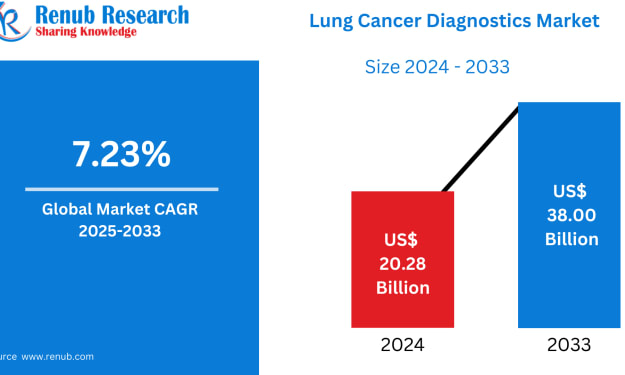
Lung Cancer Diagnostics Market Size and Forecast 2025–2033
Introduction: A Market at the Center of Early Cancer Care Lung cancer remains one of the world’s most challenging public health burdens, accounting for millions of new cases and deaths each year. Yet the narrative around lung cancer is changing. Advances in imaging, molecular diagnostics, and biomarker-driven testing are moving detection earlier, improving treatment selection, and ultimately extending survival. This transformation is reflected in the expanding commercial landscape for diagnostic technologies.
By jaiklin Fanandish4 days ago in Longevity



Comments
There are no comments for this story
Be the first to respond and start the conversation.