
United States Contact Lenses Market: Trends, Innovations & Growth Story Through 2033
How vision technology, lifestyle shifts, and online retail are reshaping a $4.67 billion future


The United States has always set the benchmark for eye care innovation. But in the next decade, its contact lenses industry is poised for a transformation that goes far beyond vision correction. According to Renub Research, the U.S. contact lenses market was valued at US$ 3.09 billion in 2024 and is expected to grow at a CAGR of 4.72% from 2025 to 2033, ultimately reaching US$ 4.67 billion by 2033.
Driving this growth is a wave of converging trends — rising vision disorders, exploding demand for cosmetics and lifestyle-based lenses, smarter materials, and an unstoppable shift toward online purchasing.
The New Era of Contact Lenses: More Than Just Vision Correction
Contact lenses have evolved from simple corrective tools to versatile lifestyle products. Designed to sit directly on the eye’s surface, they correct refractive errors like:
Myopia (nearsightedness)
Hyperopia (farsightedness)
Astigmatism
Presbyopia
But today, the market extends far beyond prescription needs. Cosmetic lenses for eye color enhancement, specialty medical lenses for keratoconus, and dry-eye solutions have become mainstream. And where eyeglasses once dominated, lenses now lead among younger, digitally active, fitness-driven consumers who prioritize aesthetics, convenience, and mobility.
The soft and silicone hydrogel lens segments in particular have gained massive momentum due to breathability, comfort, and compatibility with longer wear time — redefining how Americans see, work, and live.
Market Momentum: Key Growth Drivers Firing on All Cylinders
👁️ 1. Surging Vision Impairment in the U.S.
Vision disorders are no longer age-limited. A shocking 12 million U.S. adults aged 40+ suffer from vision impairment, according to the CDC. Of these:
1 million are blind
3 million struggle with corrected vision
8 million live with uncorrected refractive errors
Add to this the aging population and increased screen exposure among youth, and the need for vision support is multiplying at scale. Contact lenses, being less intrusive than glasses, are the preferred solution for those balancing digital lifestyles, fitness routines, social confidence, and medical necessity.
⚙️ 2. Explosive Innovation in Lens Technology
Smart technology is no longer limited to wearables — it's embedded in the lens itself.
South Korea’s POSTECH developed a wireless theranostic smart lens combining an eye pressure sensor with a micro drug delivery system to support glaucoma management.
Silicone hydrogel advancements have dramatically improved oxygen permeability, reducing dryness and irritation.
Lenses now cater to niche needs, including Toric lenses for astigmatism and multifocal lenses for presbyopia.
Products like Bausch + Lomb’s silicone hydrogel daily disposables and CooperVision’s MyDay Energys are redefining comfort, hygiene, and long-wear adoption.
🤝 3. Government-Backed R&D and Consumer Protection
The U.S. government plays a pivotal role in eye health advancement. Through:
National Vision Care Grants for low-income families
R&D funding to improve lens oxygen permeability and user comfort
Regulations like the Fairness to Contact Lens Consumers Act, which safeguards accessibility and prescription rights
These initiatives doninate public trust while fueling industry innovation.
🛒 4. E-Commerce Acceleration and Subscription Retail
The pandemic permanently changed how Americans shop for medical essentials — and contact lenses are no exception.
Online marketplaces like ContactsDirect now dominate the lens shopping ecosystem through:
Price comparison models
Multi-brand catalogs
Contact lens subscriptions
Home delivery for busy consumers
Convenience is no longer optional — it’s the driving force behind retail success in this sector.
Barriers & Blind Spots: Challenges Facing the Industry
❗ 1. Eye Infection & Hygiene Risks
Improper lens handling, extended wear, or poor sterilization commonly lead to infections like:
Corneal ulcers
Conjunctivitis
Chronic dry eye
Microbial keratitis
Even with advanced materials, user non-compliance remains a significant public health concern and market limitation.
💰 2. High Cost & Accessibility Gaps
Daily disposable and specialty lenses are convenient but expensive compared to eyeglasses. Conditions like astigmatism and presbyopia require custom Toric or multifocal lenses, adding to recurring costs. Limited insurance coverage further restricts adoption in low-income households.
Segment Spotlight: Market Breakdown with High Growth Potential
🟣 Material
Gas Permeable – durable, vision-sharp, but slower adaptation
Silicone Hydrogel – fastest-growing, breathable, all-day comfort
Hybrid – best of soft + rigid, for irregular corneas
Silicone hydrogel dominates due to oxygen efficiency and demand for longer wear.
🔁 Usage
Daily Disposable
Disposable
Frequently Disposable
Traditional (Reusable)
Daily disposables are rapidly leading the category due to hygiene benefits.
🎯 Design
Spherical
Toric
Multifocal
Spherical leads volume; multifocal is gaining traction due to aging demographics.
🎨 Application
Vision Correction
Cosmetic
Cosmetic lenses continue to thrive across Gen Z and social media-driven aesthetics.
🛍️ Distribution Channels
Online Pharmacy
Retail Pharmacy
Hospital Pharmacy
Online platforms now lead due to convenience, subscriptions, and price transparency.
Competitive Landscape: The Titans of U.S. Contact Lenses
The industry is dominated by vision care powerhouses investing heavily in next-gen lens tech:
Company Strength
Bausch & Lomb Surgical + smart lens advancements
Alcon Specialty lens solutions
Carl Zeiss Meditec AG Optical precision innovation
Cooper Companies Consumer-centric daily disposables
Hoya Corporation High-performance lenses
EssilorLuxottica Retail + eyewear ecosystem
Menicon Co. Global production scale
SynergEyes Inc. Hybrid specialty lenses
2023 Power Moves & Breakthrough Launches
Bausch + Lomb acquired AcuFocus to expand cataract and surgical portfolios.
CooperVision launched MyDay Energys lenses across the U.S.
Black Pearl Vision acquired PolyDev, becoming the first Black woman-owned contact lens manufacturer globally.
Bausch + Lomb introduced INFUSE multifocal SiHy lenses, targeting presbyopia.
Alcon launched TOTAL30 MF lenses, designed exclusively for aging vision needs.
Fielmann Group acquired SVS Vision, amplifying retail footprint under Vision 2025 expansion.
These milestones reflect a rapidly consolidating yet innovating marketplace — one where competition fuels breakthroughs rather than fragmentation.
Who Is Driving Demand?
Gen Z & Millennials → Cosmetic trends + digital eye strain
Aging population → Multifocal & presbyopia solutions
Active lifestyles → Preference for lenses over glasses
E-commerce buyers → Convenience + subscriptions
Medical users → Disease-specific and specialty lenses
Market Outlook Through 2033: Clear Vision, Strong Forecast
With rising visual impairment, stronger e-commerce penetration, smarter lens designs, and expanding cosmetic lens appeal, the U.S. contact lenses industry is positioned for sustained growth.
Market Size Progression (Projected):
📌 2024 – US$ 3.09 Billion
📌 2033 – US$ 4.67 Billion
📈 CAGR (2025–2033): 4.72%
This isn't just expansion — it's evolution.
Final Thoughts
The contact lens industry is rewriting the narrative of vision care in the U.S. What was once a medical need is now a hybrid lifestyle choice driven by aesthetics, ease, personalization, and technology. In a world where comfort meets cosmetics, and medical intelligence meets daily convenience, one thing is clear: the future of eye care isn’t just corrective — it’s intuitive, digital, and deeply human.
About the Creator
Janine Root
Janine Root is a skilled content writer with a passion for creating engaging, informative, and SEO-optimized content. She excels in crafting compelling narratives that resonate with audiences and drive results.
Keep reading
More stories from Janine Root and writers in Longevity and other communities.
Mexico Schizophrenia Drugs Market Size and Forecast 2025–2033
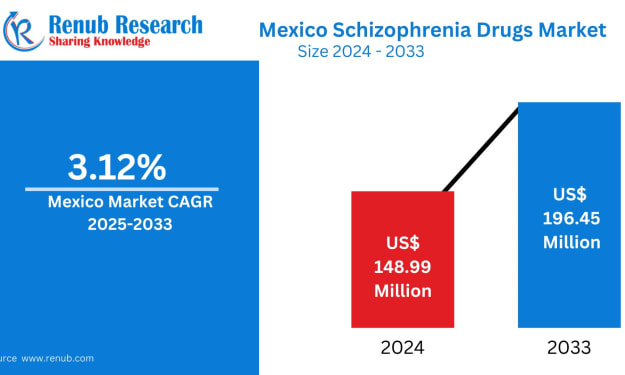
Mexico Schizophrenia Drugs Market Outlook The Mexico Schizophrenia Drugs Market is witnessing steady but meaningful growth as awareness of mental health disorders increases and access to psychiatric treatment slowly expands across the country. According to Renub Research, the market is expected to reach US$ 196.45 million by 2033, rising from US$ 148.99 million in 2024, registering a CAGR of 3.12% from 2025 to 2033.
By Janine Root about 5 hours ago in Longevity
Day 4 of Quitting
If this is how sobriety feels, maybe it’s better to go through life a little buzzed… this, along with other hits like, I want to kill myself, I wish I was dead, and I’m going to throw myself off a bridge have been the only thoughts on rotation these past few days. I promise myself that if, in a month, I still feel like this (‘this’ meaning despondent, full of rage, and simultaneously numb) I can go back to smoking. Until mid-February though? Nicotine is off the table.
By sleepy drafts12 days ago in Longevity
Nuclear Bunker Nears Collapse Due to Erosion: A Cold War Relic at Risk
A once-formidable nuclear bunker, built during the height of Cold War tensions, now faces an unexpected and insidious threat: erosion. Experts warn that without urgent intervention, the structure could collapse entirely, posing safety risks and highlighting the fragility of even the most heavily fortified human constructions. Constructed decades ago to withstand nuclear attacks, the bunker features thick concrete walls, reinforced steel frameworks, and subterranean chambers. It was a symbol of security during an era defined by the fear of global conflict. However, while designed to resist bombs and blasts, it was not engineered to endure the gradual, relentless forces of nature over half a century. Recent inspections have revealed alarming signs of structural degradation. Cracks snake along the concrete walls, corroded steel beams are exposed, and the surrounding soil has been washed away in sections. Environmental engineers attribute the deterioration to a combination of heavy rainfall, fluctuating groundwater levels, and repeated freeze-thaw cycles. These factors have compromised the bunker’s foundation, leaving it vulnerable to potential collapse. “The irony is stark,” said Dr. Elena Kostova, a structural engineer specializing in Cold War architecture. “This facility was designed to survive nuclear war, yet it’s threatened by rain and wind. Immediate action is essential to prevent a catastrophic failure.” The location of the bunker compounds the problem. Often sited in remote or elevated areas for strategic advantage, these sites were difficult to maintain even during active use. Since the end of the Cold War, many bunkers were abandoned or decommissioned, leaving them exposed to natural elements. Without regular maintenance, erosion has quietly and progressively weakened the structure over decades. While long out of operational use, the bunker still holds potential hazards. Some chambers contain remnants of chemicals, outdated fuel, or other toxic substances. A sudden collapse could release these materials into the surrounding environment, contaminating water sources and soil. Authorities caution that the public should stay away from the site until stabilization measures are implemented. Local governments and heritage organizations are currently debating the best course of action. Proposed solutions include reinforcing the walls with modern concrete and steel supports or diverting water away from the site to reduce further erosion. However, these interventions are expensive and technically complex. Preservationists also emphasize the need to maintain the bunker’s historical integrity while implementing safety measures. The erosion of this nuclear bunker is not an isolated issue. Across Europe, Asia, and North America, thousands of Cold War-era facilities—including missile silos, fallout shelters, and command centers—face similar risks. Many of these structures were abandoned, underfunded, or neglected, allowing nature to take its toll. In some cases, aging infrastructure could harbor hazardous materials, posing dangers to nearby communities. Climate change is exacerbating the problem. Unpredictable weather patterns, increased rainfall, and extreme temperature fluctuations are accelerating erosion. Processes that might have taken decades in the past are now occurring within a few years. Engineers and environmental scientists are increasingly concerned that these forces could overwhelm older structures, creating both safety hazards and a loss of historical heritage. The dilemma highlights the tension between heritage preservation and public safety. On one hand, bunkers are tangible reminders of the Cold War era, offering insight into historical geopolitics, engineering ingenuity, and global fears. On the other, they are potential environmental and structural hazards, especially as erosion weakens their foundations. Authorities face the difficult task of balancing these priorities while securing funding for stabilization projects. Some experts argue that the bunker’s collapse would be a symbolic loss as much as a physical one. It represents a period in global history marked by nuclear brinkmanship, civil defense planning, and technological advancement under pressure. Losing such structures erases a part of collective memory, making it harder for future generations to understand the stakes of that era. The erosion of this nuclear bunker serves as a stark reminder of the impermanence of human constructions. Even those designed to withstand humanity’s most extreme threats are vulnerable to the slow, persistent forces of nature. Immediate intervention could preserve the site for safety and historical purposes, but without decisive action, the collapse of the bunker may become inevitable. As engineers, historians, and policymakers weigh options, the coming months will determine whether this Cold War relic can survive as a historical monument—or whether it will crumble, leaving only memories of an era defined by fear, preparedness, and human ingenuity.
By Fiaz Ahmed Brohi5 days ago in Longevity


Comments
There are no comments for this story
Be the first to respond and start the conversation.