
Understanding Low Blood Pressure Symptoms and Normal Blood Sugar Levels
Recognizing the Signs of Low Blood Pressure and Maintaining Healthy Blood Sugar Levels for Optimal Well-Being

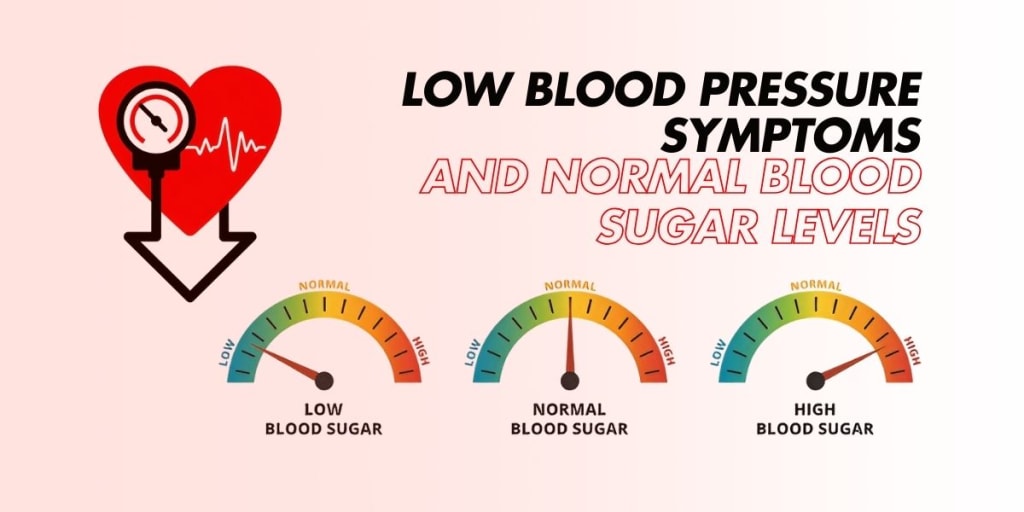
Low blood pressure (Hypotension):
Low blood pressure, often known as hypotension, occurs when the body's organs are not receiving enough blood flow. Comes about when blood pressure drops below the normal range, typically below 90/60 mm Hg. This can lead to a number of symptoms and problems. It is not harmful to have low blood pressure without any symptoms. However, it is normal to have symptoms like lightheadedness, dizziness, or fainting, particularly after standing up after sitting or lying down (orthostatic hypotension).
Strokes, heart attacks, renal failure, or shock in an emergency might result from extremely low blood pressure. Low blood volume, cardiac issues, and several drugs are common reasons. To find the cause, scans, heart checks, and blood testing are required. The goal of treatment is to determine and address the underlying cause of the low blood pressure. [ref]
Common Symptoms of Low Blood Pressure:
- Dizziness or Light headedness: Dizziness, one of the most prevalent symptoms, can happen when the blood supply to the brain is abruptly cut off and can happen when you get up.
- Fatigue or lethargy: The body experiences persistent fatigue or lack of energy due to a lack of oxygen to the muscles and tissues.
- Nausea: Discomfort or stomach pain is often associated with episodes of low blood pressure.
- Blurred vision: Temporary visual disturbances occur when blood flow to the eyes is reduced.
- Shock: If your blood pressure is too low, your body may not get enough oxygen, which can affect heart and brain function and cause breathing problems. In severe cases, loss of consciousness or organ failure (shock) may occur.
- Symptoms of shock: In extreme cases, hypotension can lead to shock, a life-threatening condition characterized by cold, clammy skin, rapid breathing, and a weak, rapid pulse.
- Staggering
- Apathy or behavior changes
- Weakness
- Confusion
[ref]
Causes of Low Blood Pressure:
- Pregnancy
- Hormonal problems: hypothyroidism, diabetes, low blood sugar
- Medications: for Parkinson's disease, depression, or hypertension
- Heart problems: heart failure, arrhythmia, valve disease
- Blood vessel problems: dilated blood vessels
- Other problems: liver disease, heat exhaustion, anemia (B12, iron, or folate deficiency), or prolonged bed rest
- Causes of a sudden drop in blood pressure
- Blood loss
- Severe confusion (shock)
- Severe thirst or dehydration
- Severe infection or allergic reaction
- Adverse effects of drugs or alcohol
Normal Blood Sugar Levels in Humans
The body uses glucose, often known as blood sugar, as its primary energy source. Maintaining normal blood sugar levels is crucial for overall health, as well as preventing complications like diabetes or hypoglycemia. Racking blood sugar is important in managing diabetes. Normal blood sugar levels in human body(according to WHO):Fasting: 70–100 mg/dL or 3.9–5.6 mmol/L.
These levels are not for everyone, and even people without diabetes can experience blood sugar spikes, especially after eating a high-sugar meal.
Diabetes is unique: Your glucose goals may be different from others based on your health conditions. Consult a doctor to learn more about your blood sugar levels. Blood sugar goals vary based on individual needs. [ref]
Normal Blood Sugar Levels for Adults:
Fasting Blood Sugar (Before Eating):
- Normal: 70-99 mg/dL
- Prediabetes: 100-125 mg/dL
- Diabetes: 126 mg/dL or higher
Postprandial Blood Sugar (After Eating):
- Normal: Less than 140 mg/dL (2 hours after a meal)
- Prediabetes: 140-199 mg/dL
- Diabetes: 200 mg/dL or higher
Random Blood Sugar Levels:
- Normal: Less than 140 mg/dL
- Diabetes: 200 mg/dL or higher with symptoms
HbA1c (Average Blood Sugar Over 3 Months):
Your average blood sugar over three months is measured by your A1C.It shows the percentage of hemoglobin coated with sugar:
- Normal: less than 5.7%
- Prediabetes: 5.7% to 6.4%
- Diabetes: 6.5% or higher
The target A1C level is usually 7% or less, but personal goals should be set with your doctor. A1C is different from daily blood sugar readings and is used alongside time in range (TIR) to track glucose control.
American Diabetes Association (ADA) guidelines:
Diabetes type 1 and type 2: fasting 80–130 mg/dL; postprandial <180 mg/dL
Pregnant women: Fasting <95 mg/dL; Postprandial <140 mg/dL
Conclusion
Managing blood pressure and blood sugar levels is essential for maintaining overall health and preventing complications. Monitoring and adjusting these levels based on individual health conditions can significantly improve quality of life and reduce the risk of serious health problems. Regular check-ups with a specialist are always important for personalized guidance on managing low blood pressure and blood sugar levels.
About the Creator
Amit Vats
Amit is an excellent writer and has accomplished greater heights with sound knowledge on digital marketing. His articles are focused on technology, healthcare and creative arts and have been read by people around the world.
Why Your Brain Feels Foggy During the Day
Why Your Brain Feels Foggy? Have you ever sat in class or tried to study, only to realize that your brain just isn’t cooperating? You read the same sentence three times, struggle to focus, and feel mentally drained even though the day has barely started. Many students experience this feeling, often described as “brain fog.”
By Being Inquisitive4 days ago in Longevity
Nature Report, Killed by Trump, Is Released Independently
A major federal report assessing the state of nature and biodiversity across the United States — originally halted during the presidency of Donald Trump — has finally been released to the public after scientists decided to publish the findings independently. The report, years in the making, provides one of the most comprehensive analyses ever compiled about the health of ecosystems, wildlife populations, and natural resources across the country. The study was prepared as part of a nationwide effort coordinated by the U.S. Geological Survey and other federal agencies. Researchers involved in the project say the document was meant to provide policymakers with detailed scientific guidance on biodiversity loss, habitat degradation, and the growing impact of climate change on American landscapes. However, the report’s release stalled during the administration of Trump, when several environmental initiatives were scaled back or canceled. Scientists working on the project say the publication was effectively shelved before it could reach the public or be formally submitted to Congress. Now, years later, the authors have decided to release the research independently, publishing the findings through academic and scientific networks rather than through official government channels. The decision marks a rare step for researchers who typically rely on federal agencies to distribute major environmental assessments. According to the scientists behind the study, the report documents significant declines in biodiversity across the United States. Many native plant and animal species are facing mounting pressures from habitat loss, pollution, invasive species, and climate change. Wetlands and grasslands — ecosystems that support a large share of the country’s wildlife — have experienced particularly steep reductions in recent decades. The report also highlights the economic consequences of environmental decline. Natural ecosystems provide essential services such as pollination, water purification, and flood protection. Researchers warn that if biodiversity loss continues at its current pace, communities could face rising costs linked to environmental damage and weakened natural defenses against extreme weather events. Experts involved in the project say the findings were intended to inform national conservation strategies and guide land-management decisions at both federal and state levels. Without accurate scientific assessments, they argue, policymakers lack the information needed to design effective environmental protections. The controversy surrounding the report reflects broader tensions that existed between the scientific community and political leadership during the Trump presidency. Environmental policies adopted during that period included the rollback of several regulations related to emissions, land use, and wildlife protection. Critics argued that these decisions weakened safeguards designed to protect natural ecosystems. Supporters of those policies, however, maintained that regulatory reforms were necessary to support economic growth and reduce burdens on businesses, particularly in the energy and manufacturing sectors. Regardless of political debates, the authors of the biodiversity report say their goal is simply to ensure that the scientific data becomes available to the public. By releasing the document independently, they hope researchers, conservation organizations, and policymakers can still use the findings to inform future environmental strategies. Environmental groups have welcomed the publication, calling it an important contribution to understanding the state of nature in the United States. They say comprehensive national assessments are critical for tracking environmental changes and identifying areas where conservation efforts should be prioritized. The report’s release also highlights the evolving relationship between science and public communication. In an era where research findings can be shared widely through digital platforms, scientists increasingly have alternative ways to distribute their work when official channels fail. For the researchers who spent years compiling the study, the independent release represents both a scientific milestone and a statement about the importance of transparency. They argue that environmental data belongs not only to governments but also to the public, whose lives and livelihoods depend on the health of the natural world. While the report cannot retroactively influence past policy decisions, its authors hope the findings will still shape future discussions about conservation and sustainable development. As biodiversity loss continues to accelerate worldwide, they say timely access to scientific information has never been more important.
By Fiaz Ahmed 7 days ago in Longevity
Silken Chains
Silhouettes of the female form were given flesh and bone. Silken skin glistened under the spotlight. Dry ice rose around our Icons as they danced atop their podiums in the Square. Heralded for their beauty, their movements were slight, powerful, and sensual.
By Paul Stewart7 days ago in Fiction




Comments
There are no comments for this story
Be the first to respond and start the conversation.