
UNDERSTAND THE AGEING PROCESS AS SERVICE PROVIDERS
Age Care[Afro Elder]


The Zambian ELDERLY Makers, Planners, Politicians, and Service Providers too need to be educated so that they can view the elderly positively. They need to understand the ageing process in this Nation if we are to provide for our Senior Citizen’s needs in Communities, and perceive them as fellow human beings with common feelings and needs as others. Work Job opportunities through sheltered workshops and cottage industries where the elderly can work at their own pace assisting the elderly to adjust themselves to new job situations. Zambia, as we move into industrialisation, should tap the wealth of experience and wisdom accumulated over the decades by the elderly, especially the professionals and top management personnel. This will be of mutual benefit to the elderly and the Nation at large. Health Care Primary prevention should not be directed solely at the elderly but also at all other age groups as well, so that the benefits gained when young will facilitate healthy ageing in later years. Healthy ageing depends on health promotion, and disease and injury prevention. A healthy lifestyle is an important thrust of health promotion. Good health maintenance in early life and later years via a healthy lifestyle, avoidance of smoking and alcohol, prudent diet, and regular exercise can help the social and cultural life of the elderly, including fewer physician visits, and fewer medications taken. Health education and counseling must be provided at all opportunities that ageing is not a disease, and that early treatment can prevent disability. Regular and planned fitness programmes are important not only in primary prevention but also in tertiary prevention during rehabilitation after chronic disease has occurred e.g. stroke, diabetes mellitus, cardiovascular diseases.
Nutrition education should be carried out regularly as it is important to prevent nutritional problems. There also has to be frequent monitoring of an individual's unique quantitative nutritional needs and intakes, as this can keep changing. Self care, which is a form of self management, is achieved when the elderly routinely initiate and perform daily living activities on their own behalf in order to sustain life, maintain health, and promote their well being. The elderly require motivation and they need to develop practical skills to care for themselves. The extent to which self care is practiced varies with each individual, is dependent on the elderly's cultural background and values and is influenced by one's environment and what they do or used to do while they where youths.
Secondary prevention involves the systematic detection of precursors of diseases and is concerned with slowing down the disease process once it has begun to prevent occurrence of other problems, complications or deterioration. Once the disease has occurred, secondary prevention is invoked through measures to detect illness early, for example: ~ diabetes mellitus, hypertension, and instituting early treatment so that the occurrence of disability is avoided or minimised. Active case detection is necessary, directed at elderly living alone, those widowed, elderly in their own homes, and those recently discharged from hospitals, the very old, those with known chronic disabling conditions e.g. stroke, parkinsonism, arthropathy, and those dementing or with a history of depression.
Regular and frequent periodic medical examination can detect conditions that lead to chronic conditions so that early treatment is effective. All signs and symptoms during these visits, however vague, non specific or unimportant they are to the patient, must be paid attention to, as these may be an indicator of something more serious in the old. Incontinence, visual and hearing problems should be actively sought for, so that, this can be managed early for the benefit of the elderly and his social life. Rehabilitation is the cornerstone of tertiary prevention involving illnesses that must be looked into,which does not happen in our Zambian setup , with the intention to limit further deterioration of the condition and prevent further complications or relapses. Tertiary prevention seeks the restoration function so that there is increased ability to achieve work, independence in self care, and self respect. In the case of the elderly, the health care services will have to actively seek out disabled cases so that appropriate intervention can be instituted. The intervention in tertiary prevention has to be a coordinated multi-disciplinary effort involving medical, surgical, educational, vocational, and social disciplines.
Terminal care is relevant for elderly who are dying. Our Zambian Physicians and other health workers have a responsibility and professional duty to deal with terminal care of the elderly, with the same enthusiasm and use of clinical skills as when they deal with problems that confront them in other age groups. Good terminal care is concerned with maintaining the elderly's dignity, which involves freedom from physical suffering, maintaining peace of mind, maintaining as much independence as is compatible with physical disability and flexibility in the care pattern. It is also concerned with respecting the feelings and wishes of the elderly and his/her relatives. This involves trying to attain a blend between clinical priorities and patients wishes. Care has to be taken not to "medicalise" death, for if we do, we neglect the philosophical, psychological, religious, and social aspects of death and dying. In the case of institutionalised elderly who are close to death, there is increase in the problems relating to social death as the patient is often unable to communicate his/her feelings and hopes, as those around are not confidantes. Therefore, the elderly is unable to adapt to his situation, facing a suffering that is unnecessary. Consequently, the process of dying in such cases is unproductive and meaningless as the carers in the institution and the relatives cannot learn from it, with the result that existing fears and feelings are carried on to the next generation. This should be of greater concern as it is increasingly becoming common for professional staff to become a substitute for the family and take over their tasks .
Conclusion :The ageing population is both a sociological and medical problem that can easily be neglected in relation to other current and more pressing problems within the country. The needs of the elderly need to be addressed and planned for especially as a long term measure within the context of the countries available resources. At the national level, society is often faced with decisions on what resources it is willing to commit to reduce disability in old age and improve and maintain the quality of life of the elderly. Those in the working group may resist diverting available resources for those elderly who are non-productive. On the other hand, it is also known that the elderly are custodians of our culture and can be a strong pressure group that can influence legislative action. This has become more apparent with the increase in wealth that follows industrialisation of a country like Zambia. To ensure equal access to resources for all, there needs to be improved co-ordination and communication at all levels (administration) in developing policies; implementation of programmes, with voluntary and the private sector as partners, and a multidisciplinary approach, with involvement of professional organisations and individual professionals. There should also be linkages too between policy planners, administrators, service deliverers, and the research community; between formal care systems and informal care systems, and between individuals and groups of older adults. Research into the needs of the elderly should be given priority, as overcoming problems of the elderly will improve their quality of life and thereby reduce their dependency on government and society to care for them. Strong national data bases on need for services, use of services, and process of ageing will be useful for accessing research data to assist planning for the Care of older people in the community.
The values of a caring society have to be inculcated into the young Zambians, so that positive attitudes of the elderly prevail. This will ensure the elderly themselves as well as their carers and others dealing with the elderly,will view ageing in the correct perspective so that healthy ageing becomes a reality in the Zambian Communities. Finally, caring for the elderly will require careful forward planning even if we want to ensure that our elderly are to enjoy a satisfactory quality of life, free from poverty, loneliness and ill health. Health promotional and preventive measures that include good and adequate housing, adequate recreational activities, reduction of physical and mental strain, opportunities to work, an efficient geriatric service and adequate welfare services, will play an important role directly and indirectly to keep disabilities low. The responsibilities for these activities will have to be shared by the government, the private sector, nongovernmental agencies and the community as we Understand The Ageing Process As Service Providers in this Nation as a People.
_________________________________________________________________________
The Author is Founder Centre of Excellence on Ageing and Consultant at the Zambia National Marketeers Credit Association [ZANAMACA]
Lusaka Zambia
Email: [email protected]
About the Creator
Keep reading
More stories from Kanema Mupila Kameya and writers in Longevity and other communities.
ALL BUSES ON THE ZAMBIAN ROADS MUST HAVE HAND SANITIZERS TO STOP THE SPREAD OF COVID ~19!
ALL BUSES ON THE ZAMBIAN ROADS MUST HAVE HAND SANITIZERS TO STOP THE SPREAD OF COVID ~19 ! The Towns and Cities administrations in Zambia must stand up and help to stop the spread COVID ~19 by coming up with containment measures after President Dr.Lungu has made available all the tools to them . All Zambian public buses must have hand sanitizers .
By Kanema Mupila Kameya6 years ago in Longevity
How China Is Challenging the U.S. to Become the Next Great Space Power
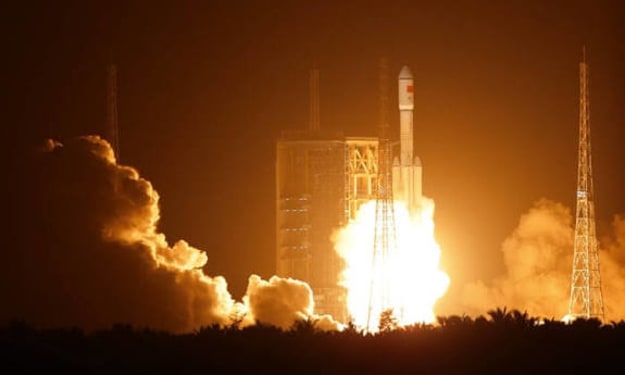
As Beijing’s space ambitions expand, Washington faces an intensifying geopolitical and technological rivalry in orbit and beyond. In the early decades of the 21st century, the United States long stood unchallenged as the dominant space power — a position built on decades of NASA leadership, unmatched launch capability, and a vibrant commercial space economy. But today, a determined China is mounting one of the most consequential strategic challenges in space since the Cold War, pushing to rival — and ultimately surpass — the U.S. in space influence, technology, and strategic advantage. National Strategy and Long‑Term Vision China’s leaders have openly signaled their ambition to become a global space powerhouse. Official space policy documents and state planning envision a broad array of capabilities — from heavy‑lift rockets to lunar exploration — aimed at reshaping the space order that has been U.S.‑dominated for decades. According to analyses of government planning, Beijing intends to establish a full suite of launch vehicles, satellites, and space infrastructure that could surpass current international norms by mid‑century. Underpinning this vision is a belief among Chinese space officials that self‑reliance and indigenous innovation are key to international competitiveness. Recent reports in state media emphasize that China’s aerospace industry is pushing far beyond imitation toward original technological breakthroughs in areas like rocket manufacturing, intelligent space systems, and advanced materials — all with the strategic goal of securing leadership in space. Commercial Space: From Government Giants to Private Innovators China’s rapid ascent isn’t limited to state space agencies. A growing ecosystem of private space companies — much like the commercial boom seen in the U.S. — has taken root, focusing on reusable rockets, satellite networks, and novel space services. A recent South China Morning Post report highlights Beijing’s push to encourage private innovation within its space sector, supporting technologies such as reusable launch vehicles, space debris monitoring, extraterrestrial resource utilization, and even in‑space biomanufacturing — fields long dominated by U.S. firms such as SpaceX or Blue Origin. This commercial expansion broadens China’s capabilities and compresses the technological gap with the U.S., challenging American assumptions that commercial innovation is exclusively an American forte. It also signals a shift in global space economics, where China may soon contend for commercial markets once dominated by Western companies. Military and Strategic Dimensions Alongside civil and commercial ambitions, China’s space strategy has clear military implications. U.S. strategic assessments note Beijing’s efforts to build counterspace capabilities — systems designed to deter, deny, or degrade another nation’s satellite operations — a key advantage in future conflicts. China has already deployed anti‑satellite weapons, jamming technologies, and sophisticated ground‑to‑space radar systems that could threaten U.S. space assets in a crisis. For the United States, which relies heavily on space systems for communication, navigation, and battlefield awareness, these capabilities represent a serious strategic challenge. Beijing’s ability to field space and counterspace technologies could blunt some of Washington’s military advantages in the Asia‑Pacific region and beyond. Lunar and Deep Space Objectives China’s Chang’e lunar exploration program is another marker of its space ambitions. With a series of increasingly complex robotic missions and plans for an International Lunar Research Station by the 2030s, Beijing aims to be a leading voice in lunar science and development — directly challenging the U.S. Artemis program and international partnerships spearheaded by NASA. � Wikipedia Missions like the strategically significant Queqiao‑2 communications relay satellite, which supports lunar missions over long distances, further demonstrate China’s growing sophistication in deep space operations and infrastructure deployment. U.S. Response: Maintaining Leadership Recognizing the challenge, U.S. policymakers are pushing legislative and strategic initiatives designed to preserve American competitiveness in space. A newly passed NASA authorization package includes provisions aimed at reinforcing U.S. lunar presence, strengthening Earth orbit assets, and countering Chinese influence in space science and technology — signaling a bipartisan consensus on the gravity of the space rivalry. A New Era of Cosmic Competition The emerging science and technological competition between China and the United States in space is unlike anything seen since the original Moon race. Today’s contest spans not only national prestige but military advantage, commercial opportunity, and scientific discovery. As each side pursues its vision of space dominance, the outcome will shape global power structures for decades to come — affecting diplomacy, security, and economic leadership both on Earth and beyond. If you’d like alternative versions, transcripts, or a set of headline + subtitle options for this topic, just let me know!
By Fiaz Ahmed 4 days ago in Longevity


Comments
There are no comments for this story
Be the first to respond and start the conversation.