
Tips for Busy Professionals
Creating a Healthy Work-Life Balance: Tips for Busy Professionals

Creating a Healthy Work-Life Balance: Tips for Busy Professionals
In today’s fast-paced world, achieving a healthy work-life balance can feel like an elusive goal, especially for busy professionals. The demands of work, family, and personal interests often collide, leading to stress, burnout, and a sense of overwhelm. However, with intentional strategies and mindful practices, you can create a more balanced life that nurtures both your career and personal well-being. Here are some practical tips to help you achieve a healthier work-life balance.
1. Set Clear Boundaries
Establishing clear boundaries between work and personal time is essential. Communicate your availability to colleagues and supervisors. Use tools like calendars to block out personal time, making it clear when you are not available for work-related matters.
For example, Jessica, a marketing manager, started setting a firm end time for her workday. She would turn off email notifications after 6 PM, signaling to her team that she was unavailable. This simple boundary allowed her to transition into personal time, reducing the temptation to work late and helping her recharge for the next day.
2. Prioritize Your Tasks
Effective time management is key to maintaining balance. Use techniques like the Eisenhower Matrix to prioritize tasks based on urgency and importance. This helps you focus on what truly matters and avoid getting bogged down in less critical tasks.
David, an IT consultant, adopted this approach by listing his daily tasks and categorizing them. By focusing on high-priority items first, he found that he could complete his work more efficiently, freeing up time for personal interests like hiking and spending time with family.
3. Embrace Flexibility
The traditional 9-to-5 work model doesn’t fit everyone. If your job allows for it, explore flexible working arrangements. This could include remote work, adjusted hours, or a compressed workweek. Flexibility can help you better manage personal responsibilities while still meeting professional obligations.
Maria, a software developer, negotiated with her employer to work from home two days a week. This arrangement allowed her to save time on commuting and dedicate those hours to her children’s activities, significantly improving her overall satisfaction.
4. Incorporate Self-Care
Self-care is crucial for maintaining your physical and mental well-being. Make it a priority by scheduling regular breaks throughout your day for activities that rejuvenate you—whether that’s taking a short walk, practicing mindfulness, or enjoying a hobby.
When Michael, a busy lawyer, started scheduling 15-minute breaks every couple of hours, he noticed a significant boost in his focus and productivity. These breaks not only helped him recharge but also allowed him to return to his work with a clearer mind.
5. Learn to Say No
Busy professionals often find it challenging to decline additional responsibilities or projects, fearing they might let others down. However, saying “no” when your plate is full is essential for maintaining balance.
Emily, an HR specialist, recognized that overcommitting was leading to burnout. She began to evaluate new requests based on her current workload and priorities. By saying no to a few extra projects, she could focus on her core responsibilities and enjoy her personal time without guilt.
6. Foster Connections Outside of Work
Building a support network outside of your professional environment is vital for a balanced life. Engage in social activities, join clubs, or participate in community events to create meaningful connections.
After moving to a new city, Liam, a finance analyst, joined a local running group. This not only introduced him to new friends but also provided a healthy outlet for stress relief. Balancing work with social activities enriched his life and provided valuable support.
7. Leverage Technology Wisely
Technology can be both a blessing and a curse. While it helps with productivity, it can also blur the lines between work and home life. Use technology wisely set specific times to check emails and avoid work-related tasks during personal time.
Rachel, a project coordinator, set boundaries by designating “tech-free” hours in her evenings. This allowed her to focus on her family and personal interests without the constant pull of work notifications.
8. Reflect and Adjust Regularly
Achieving work-life balance is not a one-time task but an ongoing process. Regularly reflect on your current situation, assess what’s working and what’s not, and be willing to make adjustments.
After a particularly hectic quarter, Ben, a sales manager, realized he was neglecting his health. He took time to reassess his priorities and committed to incorporating regular exercise and healthy eating into his routine, ultimately improving his energy levels and focus.
About the Creator
Keep reading
More stories from sabrina adams and writers in Longevity and other communities.
Fitness Journey
How to Stay Motivated on Your Fitness Journey Embarking on a fitness journey can be one of the most rewarding decisions you ever make. However, it often comes with its own set of challenges. Staying motivated can be tough, especially when results seem slow, life gets busy, or the initial excitement fades. The good news is that motivation can be cultivated and maintained through effective strategies and real-life examples of people who’ve successfully navigated their own fitness journeys. Here’s how to stay inspired and on track.
By sabrina adamsabout a year ago in Longevity
A wildflower in California reveals a newly documented evolutionary process
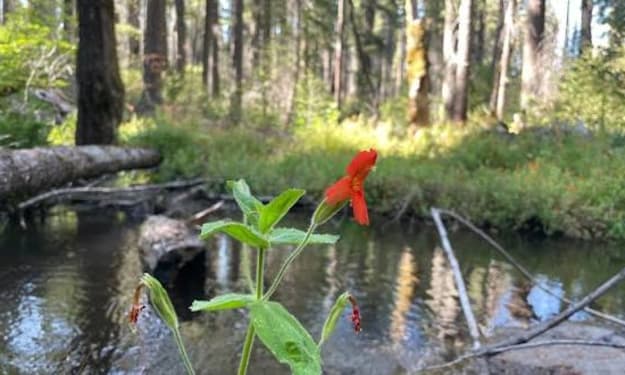
In a remarkable breakthrough for evolutionary biology, researchers studying wildflower populations in California have documented one of the clearest cases yet of rapid genetic evolution occurring in nature. The findings, centered on the bright red scarlet monkeyflower (Mimulus cardinalis), reveal how some plant populations were able to adapt and recover following the region’s most severe drought in over a millennium — providing tangible evidence of an evolutionary process known as evolutionary rescue. The scarlet monkeyflower, a wildflower native to moist areas along streams and springs in California, has long been familiar to botanists and hikers alike for its vivid blooms and distinctive habitat. However, during the early 2010s, California experienced an unprecedented megadrought that lasted several years, killing hundreds of millions of trees and dramatically altering the ecological landscape. While many plant species suffered catastrophic declines, some populations of Mimulus cardinalis showed a surprising resilience. Scientists from multiple institutions undertook a long‑term study to understand how this wildflower weathered such extreme conditions. Over eight years, researchers tracked 55 populations of the monkeyflower across its natural range, closely monitoring their numbers and health. They also conducted whole‑genome sequencing to observe genetic changes over time, looking for evidence that natural selection had acted on specific traits. The results were illuminating. At sites where populations had nearly collapsed — with numbers dropping by as much as 90% — genetic analysis revealed consistent shifts in allele frequencies across the genome. These shifts were not random; they were associated with traits that likely enhanced drought tolerance, enabling some individuals to survive and reproduce where others perished. As these “advantaged” genotypes became more common, the population as a whole began to recover, a hallmark of what biologists call evolutionary rescue. Evolutionary rescue occurs when the genetic variation present within a population allows it to adapt fast enough to avoid extinction under sudden environmental stress. While theoretical models have long predicted such processes, direct evidence in the wild—especially involving plants—has been limited. This study is among the first to document genomic changes in natural plant populations that are clearly linked to a major environmental crisis. For decades, evolutionary biologists have debated how quickly natural selection can operate in real‑world scenarios. Classic case studies like Darwin’s finches in the Galápagos have demonstrated adaptive changes in beak shape over a few generations. But plant studies have often lagged behind, in part because many species have long lifecycles or reproduce clonally, making rapid evolution harder to detect. The California wildflower case breaks new ground by combining long‑term fieldwork with cutting‑edge genomic analysis. Researchers noted that the recovery of the monkeyflower populations did not happen overnight — it took roughly two to three growing seasons for numbers to rebound significantly. Yet in evolutionary terms, this pace is considered rapid. The drought likely imposed intense selective pressure, filtering out less drought‑tolerant genotypes and leaving behind a smaller cohort better suited to the harsh conditions. As these were the individuals contributing more seeds to the next generation, their genetic traits spread through the population. The implications of this research extend beyond wildflowers. As climate change accelerates and extreme weather events become more frequent, scientists are increasingly interested in how species will respond — whether through behavioral changes, migration, or evolutionary adaptation. Cases like Mimulus cardinalis suggest that some species may harbor the genetic diversity necessary to adapt swiftly when environments change dramatically. However, not all species will be so fortunate, and the mechanisms of evolutionary rescue are still not fully understood. “This is one of the clearest cases we've seen where a wild plant species shows genomic evidence of adapting to extreme environmental stress,” said one of the study’s lead authors. “It gives us hope that under certain conditions, natural selection can work fast enough to help populations persist — but it also raises many questions about the limits of such adaptation.” The study’s methods also signal a new era in ecological research. By combining consistent field monitoring with high‑resolution genetic data, scientists can now track evolution as it happens rather than inferring processes from fossils or distant historical records. This “real‑time” view of evolution may become vital for conservation efforts, helping biologists identify which populations are most at risk and which may have the inherent capacity to adapt. For conservationists, the findings underscore both the resilience and vulnerability of natural ecosystems. While some populations like the scarlet monkeyflower demonstrate extraordinary adaptive potential, others with limited genetic diversity may face a greater threat of decline or extinction as climates shift. Understanding the genomic underpinnings of adaptation could therefore inform strategies to protect biodiversity in a warming world. As research progresses, scientists hope to explore similar evolutionary dynamics in other species and regions. The California wildflower study stands as a testament to the power of modern genomics and long‑term ecological research — and a reminder that evolution, far from being a slow, imperceptible force, can sometimes unfold before our eyes.
By Fiaz Ahmed about an hour ago in Longevity



Comments
There are no comments for this story
Be the first to respond and start the conversation.