
The Titanic's Final Moments Have Been Recreated With Supercomputer Precision
How Modern Technology Sheds New Light on the Tragic Night of April 15, 1912


More than a century after the Titanic sank in the icy waters of the North Atlantic, researchers are using cutting-edge technology to understand its final, tragic moments. For the first time, supercomputers have been employed to recreate the ship’s sinking with unprecedented precision, offering new insights into what happened during those harrowing hours.
The Titanic disaster of 1912 has fascinated the world for generations, not just because of the staggering loss of life but also due to the myths and mysteries surrounding it. While numerous studies, survivor accounts, and underwater explorations have provided information, the exact sequence of events leading to the ship’s final plunge has remained elusive—until now.
Using high-powered supercomputers, scientists and engineers fed in vast amounts of historical data: ship blueprints, ocean currents, iceberg trajectories, temperature readings, survivor testimonies, and even previously unexamined photographs. The goal was to simulate the Titanic’s final moments down to the smallest detail, including the timing of the hull’s breakup, water flooding patterns, and the ship’s angle as it slipped beneath the waves.
The results were both fascinating and chilling. The simulations revealed that the Titanic’s descent was more complex than previously thought, challenging some long-standing assumptions. For example, the exact moment when the hull split and the role that water pressure played in accelerating the sinking were mapped with astonishing clarity. These models suggest that the ship’s stern rose higher and sank faster than previously documented, causing passengers and crew on the deck to face sudden, terrifying conditions.
Professor Emily Clarke, a maritime historian involved in the project, explained: “For the first time, we can visualize the ship’s breakup and sinking as it truly happened. The supercomputer models combine physics, engineering, and historical data to provide a reconstruction that is far more accurate than any diagram or illustration previously produced.”
One of the most striking findings concerns the behavior of the lifeboats. While it has long been understood that many lifeboats were launched partially filled, the simulations show exactly how the panic, confusion, and timing of the sinking influenced these decisions. Some boats were forced into icy waters with fewer passengers due to the rapid tilt of the ship, underscoring the tragic chaos that unfolded on that night.
The study also sheds light on why certain sections of the Titanic’s wreck remained intact while others collapsed, offering clues for future underwater explorations. By modeling the effects of water pressure and structural stress, researchers can predict the conditions in which artifacts are most likely to survive. This is invaluable for both historians and preservationists working to document the shipwreck.
Beyond historical curiosity, the project demonstrates the power of modern technology in solving historical mysteries. Supercomputers can process millions of variables simultaneously, enabling a level of detail that human researchers alone could never achieve. The project team used some of the most advanced machines available, capable of performing trillions of calculations per second, to ensure that every factor—from the angle of the iceberg collision to the weight distribution on board—was accurately represented.
Interestingly, the simulations also prompted researchers to revisit survivor testimonies. By comparing individual accounts with the supercomputer models, they discovered minor inconsistencies that could now be explained by the physical realities of the sinking. In some cases, what survivors remembered as a gradual tilt was actually a sudden movement amplified by panic and the chaos of the moment.
For the public, the reconstructed simulation offers a sobering but educational glimpse into a defining moment of maritime history. Visualizations produced from the data allow audiences to “experience” the sinking as it happened, without sensationalism, providing insight into the human and technical factors that contributed to the tragedy.
Looking forward, this approach may transform how historians, engineers, and educators study other historical disasters. The combination of supercomputing power, physics modeling, and archival research creates a new standard for historical reconstruction, allowing us to understand past events in ways that were once unimaginable.
In conclusion, the Titanic’s final moments, long shrouded in mystery, are now being brought to life with stunning accuracy. Supercomputer simulations not only clarify how one of the world’s most famous maritime disasters unfolded but also demonstrate how technology can illuminate the past in ways previously thought impossible. For history enthusiasts and scholars alike, these reconstructions offer a profound reminder of the tragic human cost, the power of nature, and the relentless pursuit of knowledge.
About the Creator
Fiaz Ahmed
I am Fiaz Ahmed. I am a passionate writer. I love covering trending topics and breaking news. With a sharp eye for what’s happening around the world, and crafts timely and engaging stories that keep readers informed and updated.
Keep reading
More stories from Fiaz Ahmed and writers in Longevity and other communities.
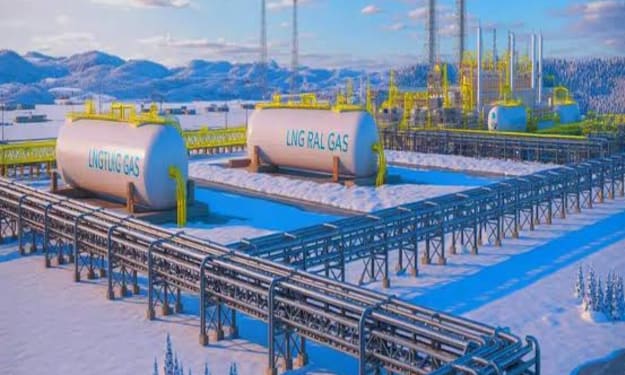
Natural Gas Prices Soar as Arctic Cold to Blast Upper Midwest and Descend Across U.S.
As an Arctic blast threatens to sweep across the Upper Midwest and beyond, natural gas prices in the U.S. have spiked sharply, reflecting concerns about rising energy demand amid extreme winter conditions. This chilling forecast comes as millions brace for plummeting temperatures, heavy snow, and the potential for widespread disruption to heating and power infrastructure. A Polar Vortex on the Horizon Meteorologists have confirmed that a polar vortex pattern will push frigid air from the Arctic southward, engulfing states such as Minnesota, Wisconsin, Michigan, and Illinois, before spreading across the broader U.S. heartland. Temperatures are expected to drop 20–30 degrees below normal in many areas, triggering an unprecedented surge in energy consumption as residents and businesses scramble to stay warm. This cold snap is not only a human concern but also a market-moving event. The increased demand for natural gas, the primary heating fuel for millions of American homes, is driving futures prices to new seasonal highs. Analysts warn that households relying on gas-fired heating systems could see higher energy bills in the coming weeks, and cities may need to implement conservation measures to prevent shortages. Why Natural Gas Prices Are Rising Natural gas markets are highly sensitive to temperature fluctuations. When the Arctic cold settles in, utilities ramp up consumption to maintain indoor temperatures, leading to a sharp increase in gas withdrawals from storage. With inventories already below average due to a milder-than-expected start to winter, traders are reacting to the anticipated strain on supplies, causing spot and futures prices to surge. Industry experts highlight several factors behind the current price spike: Limited storage levels: Natural gas storage was already below the five-year average heading into winter, leaving the market more vulnerable to cold snaps. High heating demand: Millions of U.S. households rely on natural gas for heating, and extreme cold can spike usage within days. Production constraints: Some production regions face logistical challenges, limiting the ability to ramp up output quickly. Global energy trends: International demand, particularly from Europe and Asia, has influenced domestic market sentiment, adding upward pressure on prices. The Human and Economic Impact The immediate effect of the cold blast will be felt by residents across the Upper Midwest. Utility companies are urging customers to insulate homes, monitor thermostat settings, and reduce nonessential energy use to help prevent potential outages. Rural areas, where energy infrastructure is less resilient, may face intermittent gas supply disruptions, forcing households to seek alternative heating methods. Emergency services are on alert, with shelters preparing to accommodate those unable to heat their homes. Economically, the surge in natural gas prices can have a ripple effect. Increased heating costs may strain household budgets, while industries reliant on natural gas for production—such as chemical manufacturing and food processing—could face higher operational expenses. Analysts suggest that retail prices for gas-heated utilities could rise by 15–25% during the peak of the cold spell, depending on the severity and duration of the freeze. Preparing for the Cold Utilities and government agencies are taking preemptive measures to mitigate the impact of the Arctic blast: Natural gas suppliers are coordinating to ensure adequate pipeline flow and prioritize critical infrastructure. State authorities are issuing advisories, encouraging residents to stock up on essentials and avoid unnecessary travel during extreme conditions. Energy markets are closely monitoring storage withdrawals and production levels to prevent shortages and stabilize pricing. Forecasters are also emphasizing the importance of long-term preparedness, as climate variability and extreme weather events may continue to test energy infrastructure. Investment in renewable energy, resilient heating systems, and strategic storage facilities is increasingly being seen as vital for ensuring reliable access to energy during future cold snaps. Outlook for the Week Ahead As the Arctic cold descends, natural gas markets will remain volatile, with prices likely to remain elevated until temperatures moderate. Analysts advise consumers and businesses to plan for higher bills, while policymakers evaluate potential interventions, such as short-term subsidies or energy relief programs, to support vulnerable populations. While the Upper Midwest braces for frigid temperatures, heavy snow, and high gas prices, the situation underscores a broader reality: energy markets and weather are increasingly intertwined, and extreme cold events can have immediate, widespread economic and social impacts. Conclusion The upcoming Arctic blast is a stark reminder of how weather can shape energy markets and daily life. With natural gas prices soaring, households, industries, and governments face a delicate balancing act: meeting heating demands while maintaining affordable and sustainable energy supplies. As the cold wave moves across the U.S., residents are urged to stay informed, conserve energy, and prioritize safety, while analysts continue to track market responses to one of the most severe winter threats of the season.
By Fiaz Ahmed 2 months ago in Longevity
The Connection Between ADHD and Genetics.
Commentary An Impulsive Gene? My youngest son jumps from one task to another. Ask him to clean his room, he eventually quits because he becomes fixated on something. He can’t sit still for long. On the other hand, when he’s doing something he likes, he is fixated on it, sometimes barely taking in his surroundings or listening to others.
By Dean Traylor3 days ago in Longevity
A More Human Vocal
When we launched Vocal nearly a decade ago, the world was a very different place. LLMs did not exist, and stories were created one at a time by people sitting down to write, revise, and share something personal. Many of our assumptions about publishing, trust, and participation were built for a world where effort and output were inseparable.
By Justin @ Vocal5 days ago in Resources



Comments
There are no comments for this story
Be the first to respond and start the conversation.