
The Softening Practice: Meeting Yourself Where You Are


In the whirlwind of modern life, it’s easy to approach ourselves with judgment. We measure our worth by productivity, our value by outcomes, and our happiness by comparisons. Amid this constant striving, self-compassion often takes a backseat. Meditation offers an antidote — a space to soften, slow down, and meet ourselves exactly where we are, without trying to fix, change, or resist.
The practice of softening begins with awareness. Notice how you are holding tension — in your jaw, your shoulders, or your chest. Perhaps your mind is chattering, replaying yesterday’s mistakes or anticipating tomorrow’s challenges. Rather than pushing these sensations and thoughts away, gently invite them into consciousness. A simple inward acknowledgment — I see you, I feel you — is the first step toward self-embrace.
This practice isn’t about forcing kindness or pretending everything is okay. It’s about creating space for your current experience, allowing it to exist without judgment. In meditation, this might mean sitting quietly and letting emotions or physical sensations arise, noticing them as they are. You might encounter restlessness, sadness, or fatigue — all of which deserve acknowledgment, not avoidance.
Softening also involves connecting with the breath. Your inhale can act as an invitation to presence; your exhale, a release of resistance. Imagine each breath as a gentle wave, washing over tension, soothing the edges of stress, and guiding your awareness back to your body. The simple act of breathing in this way cultivates a sense of ease that can extend beyond the cushion.
As you continue, notice how this internal softening influences your outward actions. When the mind is less harsh, your responses become more patient, your conversations more present, and your interactions more compassionate. Meeting yourself with care allows you to meet others with care as well — the internal climate often mirrors the external one.
The practice of softening isn’t limited to formal meditation. It can be woven into daily life: pausing before responding to an email, noticing your posture during a meeting, or simply taking a moment to feel your feet on the ground. Each act of awareness and acceptance strengthens the ability to meet life gently, without unnecessary force or struggle.
Resistance often arises because we fear what we might discover when we soften — the grief, the regret, the parts of ourselves we’d rather ignore. Meditation teaches us that facing these sensations with curiosity rather than fear transforms them. Tension becomes information; discomfort becomes guidance; challenge becomes an opportunity for self-connection.
To deepen this journey, resources like https://meditation-life.com/wisdom-philosophy offer guided practices, reflections, and tools to support a compassionate relationship with yourself. They provide encouragement for cultivating awareness, easing self-criticism, and developing an ongoing dialogue with your inner life.
Ultimately, the softening practice is about returning home to yourself. It’s about noticing the parts of you that are weary, tight, or anxious and offering them a gentle welcome. Over time, this consistent attentiveness fosters resilience, clarity, and a deeper sense of ease.
Meeting yourself where you are does not mean stagnation. On the contrary, it creates a fertile ground for growth. By embracing your present experience, you cultivate trust in your inner wisdom. You learn that stillness, acceptance, and gentle awareness are not passive states but powerful tools for navigating the complexities of life.
So, the next time you feel tension or judgment arising, pause and practice softening. Let your attention rest on what is present, breathe into discomfort, and allow yourself the grace to simply be. In doing so, you discover that the truest form of strength often lies not in striving, but in the quiet courage to meet yourself with kindness.
About the Creator
Keep reading
More stories from Victoria Marse and writers in Longevity and other communities.
Feet as Teachers: Rooting Awareness in the Ground
In a world that constantly urges us to move faster, higher, and further, it’s easy to forget the simple act of standing still. Yet our feet — humble, quiet, and steadfast — hold profound lessons about presence. They are the body’s foundation, the first to meet the earth and the last to leave it. Every step we take, every shift in balance, begins and ends through them. When we bring awareness to this grounded contact, we awaken a deep intelligence that modern life often forgets — the wisdom of being rooted.
By Victoria Marse5 months ago in Longevity
Met Office Forecasts Dry Weather for Sindh
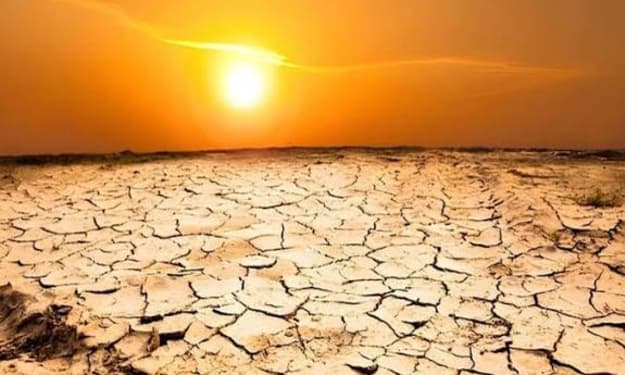
The Pakistan Meteorological Department has issued a forecast indicating that Sindh province is expected to experience a prolonged period of dry weather over the coming weeks. Meteorologists say the region will see little to no rainfall, with temperatures remaining above seasonal averages, raising concerns about agriculture, water resources, and public health. According to the Met Office, a high-pressure system over the Arabian Sea and the Indian subcontinent is likely to dominate weather patterns in Sindh for the next fortnight. This atmospheric configuration inhibits cloud formation, leading to clear skies and minimal precipitation. Forecasts predict daytime temperatures in major cities, including Karachi and Hyderabad, to hover between 28°C and 34°C, slightly above the long-term average for this period. Nighttime temperatures are expected to remain mild, ranging from 18°C to 22°C. The dry spell comes at a critical time for the agricultural sector. Sindh is a major contributor to Pakistan’s wheat, sugarcane, and rice production. Farmers are being advised to monitor soil moisture levels carefully and consider supplemental irrigation for crops at sensitive growth stages. Prolonged dry conditions can affect germination, yield, and quality, particularly for wheat crops that rely on moderate rainfall in the final stages before harvest. Water resource management is also expected to become a key challenge. Reservoirs and canals in Sindh, which depend on upstream flows from the Indus River system, are already operating at variable levels due to reduced inflows and increased water demand. Local authorities are monitoring water distribution closely, emphasizing conservation measures and urging residents to avoid excessive usage. In some districts, water rationing plans may be activated if the dry period persists. Public health officials have cautioned about potential heat-related risks. Although the current temperatures are not extreme, prolonged dry conditions can exacerbate health issues, particularly for vulnerable populations such as the elderly, children, and people with preexisting medical conditions. Heat stress, dehydration, and respiratory issues may become more common if residents do not take appropriate precautions. Health authorities recommend staying hydrated, avoiding prolonged exposure to the sun during peak hours, and ensuring access to cool environments. The Met Office also noted that dust storms and haze could occur in some areas due to the dry conditions combined with occasional strong winds. These phenomena can reduce visibility and impact road traffic, aviation, and outdoor activities. Residents are advised to take safety precautions, particularly when traveling, and to follow local advisories regarding dust and air quality. Economists have warned that the dry spell could have indirect effects on local markets. Reduced crop output may drive up food prices, especially for wheat, rice, and vegetables, affecting household budgets and contributing to inflationary pressures. Traders and suppliers are being advised to monitor market conditions and plan accordingly to avoid shortages or sudden price hikes. Despite the dry weather, meteorologists have noted that this pattern is part of a natural seasonal variation. Sindh typically experiences dry periods during the pre-monsoon and post-winter seasons, and occasional heat waves are not unusual. However, experts also emphasize that climate change may be altering rainfall patterns, leading to longer dry spells and more unpredictable weather events. Continuous monitoring and early warning systems are essential to mitigate risks to agriculture, water supplies, and public health. Authorities in Sindh have urged residents and local businesses to remain vigilant. Farmers should adopt efficient irrigation practices, municipal agencies should ensure water distribution networks function effectively, and the public should take measures to protect health and safety. Collaboration between government departments, meteorological agencies, and the community will be crucial in managing the impacts of this dry period. Looking ahead, the Met Office expects the dry spell to continue into late March, with little relief from rainfall until the onset of the pre-monsoon showers. While temperatures are likely to remain moderate, the persistence of dry weather underscores the need for careful planning and resource management in Sindh. Residents are encouraged to stay updated with official forecasts and advisories to minimize the effects of prolonged dry conditions on daily life and livelihoods.
By Fiaz Ahmed a day ago in Longevity
4 Surprising Truths About Nanoparticles In Your Soda
The Unseen World in Your Grocery Cart Imagine grabbing a can of soda or a packaged snack from your pantry. It's a simple, everyday act. Yet, hidden within that familiar fizz and sweetness is a technological frontier most of us never consider: the world of nanomaterials. Current research reveals that many of the foods and drinks we consume may contain engineered or unintentionally formed particles so small they are invisible to the naked eye. This article will explore four of the most surprising and impactful facts we are learning about nanotechnology in our food system, based on current research and analysis.
By The INFORMER6 days ago in Longevity
Pearl
1980 something. we all hung out at Pearl and you and i were nothing special, or so i thought. i mean we all danced, drenched in our own sweat, our own saline solution of fear, too many beers, shots, laughter, tears, fucks in the bathroom and i don't know when we began to be afraid. do you?
By ROCK aka Andrea Polla (Simmons)6 days ago in Fiction



Comments
There are no comments for this story
Be the first to respond and start the conversation.