
The Slow Art of Returning: Presence as a Practice, Not a Destination


We live in a world that celebrates speed. Fast communication, fast solutions, fast achievements — we are rewarded for moving quickly, adapting instantly, and getting ahead. But presence, the simple act of being with ourselves in this moment, does not operate on those terms. It is not a finish line we cross, not a box to be checked off, and certainly not a place where we arrive once and for all. Presence is something softer, something slower — a gentle art of returning, again and again, to what is already here.
The very word practice tells us something important: it is ongoing. To practice presence is not to master it once but to begin afresh countless times. Some days we may feel grounded and still; other days, scattered and restless. Both are part of the path. The key is learning how to return, not with judgment or frustration, but with the quiet recognition that this is the nature of the mind.
The Myth of Arrival
One of the greatest misconceptions about meditation or mindfulness is that it leads to a permanent state of peace. People often imagine that with enough practice, their thoughts will stop, their minds will quiet forever, and they will finally arrive. But the truth is less dramatic and far more human. Thoughts do not vanish. Emotions do not dissolve permanently. We don’t graduate into an untouchable serenity.
Instead, what we cultivate is the ability to notice. We begin to recognize when the mind has wandered, when the heart has tightened, when the body is carrying tension. And then we learn the art of returning — not once, not twice, but endlessly. Far from being a failure, this repetition is the practice itself. Presence is not a destination but a continual homecoming.
This is why meditation can feel humbling: it reveals just how restless we are. But humility is not defeat. It is a gentle truth-telling — the reminder that we are human, wired for thought, pulled by distraction, yet always capable of coming back.
The Gentle Gesture of Returning
When we return to presence, the act is usually small. We notice the breath. We feel the weight of the body on the ground. We listen to the sounds around us without naming them. These gestures are not dramatic, but they carry immense power. Each return is like lighting a candle in a dark room: small in scale, yet enough to shift the space entirely.
The danger comes when we expect our practice to be smooth. We may judge ourselves for being distracted, or feel impatient when our minds do not settle. But presence does not ask us to control the mind — only to accompany it. To sit beside our wandering thoughts the way we might sit beside a restless child. Firm, steady, compassionate.
This is where true practice begins. It is not the absence of wandering but the willingness to return without resistance. And over time, these countless returns shape us into more patient, grounded people — not because we’ve perfected stillness, but because we’ve befriended the movement between distraction and awareness.
The Discipline of Softness
It may sound paradoxical, but returning requires discipline and softness in equal measure. Discipline to keep showing up, even when the mind feels impossible to quiet. Softness to release the harsh judgments that often accompany distraction.
The more we balance these two, the more sustainable our practice becomes. Too much discipline, and meditation becomes rigid, another task to “get right.” Too much softness, and we may drift into passivity, forgetting to return at all. But together, they create a rhythm that carries us. We are firm enough to continue and tender enough to forgive.
This is also where the body can guide us. Rather than fighting the mind, we can ground ourselves in sensation: the rise and fall of the chest, the warmth of the hands, the contact of feet on the floor. Presence is rarely a lofty, abstract state. It lives in the body, in the simple, tangible moments we often overlook.
Returning as a Way of Life
Over time, this slow art of returning extends beyond meditation. We notice when we’ve drifted away during a conversation, lost in our own story, and gently return to listening. We catch ourselves scrolling without intention and return to what truly nourishes us. We find our attention tangled in worry about the future, and we return to the steady anchor of the present moment.
Each return, however small, is an act of care. It says to ourselves: You are here. This is enough.
And this is where the deeper wisdom of presence emerges. By practicing the art of returning, we begin to see that life itself is not about reaching a single point of arrival. It is about moving with the rhythm of departure and return, wandering and remembering, forgetting and coming back. This rhythm is not a flaw in the design — it is the design.
Practicing the Art
If presence feels elusive, know that this is not a sign you are failing. It is a sign you are alive. The wandering mind is not the enemy; it is the teacher that invites you to return, again and again, with kindness.
In fact, one of the most profound shifts in meditation comes when we stop measuring our practice by how still we remained, and start measuring it by how many times we returned. Each return is a brushstroke in the larger art of awareness. Together, they create a life painted with attention, gentleness, and care.
Meditation is not about achieving perfection but about embracing process. As explored deeply in this reflection on meditation
, the act of returning to the present moment is itself transformative. We do not need to chase an ideal state — we need only to remember, again and again, the ground beneath us, the breath within us, and the stillness that waits quietly for us to return.
About the Creator
Keep reading
More stories from Black Mark and writers in Longevity and other communities.
What the Body Remembers: Somatic Awareness as a Path to Presence
We often live primarily in our heads, navigating the world through thoughts, plans, and mental narratives. The body becomes an afterthought — a vessel to be maintained or ignored, but rarely fully listened to. Yet the body remembers. It holds the echoes of past experiences, the imprints of stress, the subtle residues of joy and trauma. Somatic awareness — the practice of tuning into these bodily signals — offers a pathway to presence, grounding us in the moment and reconnecting us with ourselves.
By Black Mark7 months ago in Longevity
Two People Die After Paid Plasma Donation at Clinics in Canada
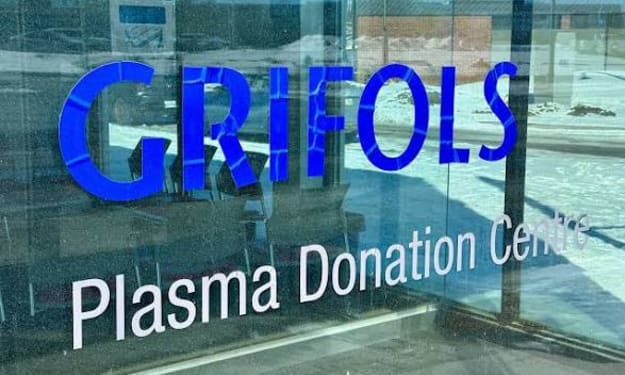
Two people have died in Canada after giving plasma at for‑profit donation clinics, prompting a federal probe and renewed debate over donor safety, industry regulation, and the ethics of paid plasma collection. The deaths—described by officials as “fatal adverse reactions”—occurred months apart and involved the same chain of clinics operating under a private model that compensates donors. Health Canada, the federal department responsible for regulating plasma donation centers, confirmed it has received reports of two deaths connected to plasma collection procedures at for‑profit clinics in Winnipeg, Manitoba. The first occurred in October 2025, and the second in January 2026. Both deaths are now the subject of active review by federal inspectors as authorities seek to determine whether the procedures or equipment used contributed to the incidents. Officials have not publicly identified the individuals involved, but friends of one victim told local media she was a 22‑year‑old international student who was donating plasma when she suddenly went into distress and subsequently died. The clinics where the donations took place are operated by the Spanish healthcare company Grifols, which runs approximately 17 paid plasma donation centers nationwide. Grifols has stated it is cooperating with Health Canada’s investigation, and insists it “has no reason to believe there is a correlation” between the deaths and the plasma donation process. How Paid Plasma Donation Works in Canada Plasma—the liquid component of blood—contains proteins essential for manufacturing medicines that treat conditions such as hemophilia, immune deficiencies, and certain neurological disorders. Unlike whole blood, plasma can be donated more frequently because the other components are returned to the donor’s body during the procedure. Until recently, paid plasma donation was illegal in several parts of Canada. However, starting in the early 2020s, Grifols entered into agreements with Canadian Blood Services and provincial health authorities that allow the company to offer financial compensation—typically up to about C$100 per visit—to donors in select provinces including Manitoba and Saskatchewan. The arrangements have expanded as domestic demand for plasma products has grown. Canadian Blood Services notes that local plasma collection still only meets a fraction of the country’s need for these critical medical materials. While voluntary (unpaid) blood and plasma donation remains the standard in provinces such as Quebec and British Columbia, paid plasma centers have opened in others under regulatory exemptions and agreements designed to boost supply. The practice is controversial, with advocates for a voluntary system warning that payments can encourage frequent or risky donation behavior among donors who may be financially vulnerable. Investigation and Safety Concerns Health Canada has dispatched inspectors to the Winnipeg clinics following the reported fatalities. Preliminary information indicates that both incidents occurred during or shortly after individuals underwent the standard plasma donation process, and were categorized by authorities as “fatal adverse reactions,” requiring mandatory reporting to the federal regulator. Regulatory records for the clinics have also drawn scrutiny. Recent inspections in provinces where Grifols operates identified deficiencies including incomplete record‑keeping, lapses in donor screening, and inconsistent maintenance of equipment—issues that raise questions about compliance with the Food and Drugs Act and federal blood regulations. Critics argue that the string of problems, including two deaths, illustrates deeper structural weaknesses in how paid plasma donation is overseen. “When you have a private company operating these clinics, you lose control over much of the industry,” said a blood safety advocate. “Public accountability and transparency should be paramount when people’s lives are literally at stake.” For many Canadians, memories of the tainted blood scandal of the 1980s—when thousands were infected with HIV and hepatitis C through contaminated blood products—still loom large. That crisis led to major reforms and strict safeguards to protect donors and recipients. Some experts fear the renewed reliance on paid, private plasma collection may erode that hard‑won trust in the system. Response Grifols has reaffirmed that it follows stringent screening protocols and that donors undergo health evaluations before each appointment. The company says it has implemented corrective plans to address any non‑compliance identified by inspectors and is focused on preventing future issues. Canadian Blood Services expressed sorrow over the deaths but emphasized that safety remains its highest priority. The national body highlighted that plasma donation, when properly regulated and monitored, is generally considered safe and that serious adverse reactions are rares. Patient advocates and public health groups, however, are calling for greater transparency and stricter oversight. With paid plasma donation still a relatively new phenomenon in Canada, many are urging regulators to release more detailed information on the causes of the deaths and whether systemic changes are needed to protect donors. What Happens Next Health Canada’s investigation could take weeks or months to complete as officials review medical records, equipment logs, and operational procedures at the affected clinics. If regulatory breaches are found to have contributed to the fatalities, authorities could impose penalties, require corrective action plans, or even suspend operations at the centers. For now, the tragic deaths underscore the importance of robust safety standards in medical donation settings and have reignited debate over the role and regulation of for‑profit clinics in Canada’s blood and plasma landscape.
By Fiaz Ahmed about 19 hours ago in Longevity
End of the Line: What Happens to Old Cruise Ships
Cruise ships are among the most recognizable symbols of leisure travel — enormous floating hotels that host thousands of passengers on vacations across the globe. But like all machines, they eventually reach a point when they can no longer operate profitably or safely. When that time comes, cruise ships face a stark reality: a long final voyage to dismantling yards where they are stripped, scrapped, and recycled. Why Cruise Ships Are Retired Cruise ships are retired for a number of reasons. Over time, they experience wear and corrosion, mechanical systems become outdated, and newer vessels with more efficient engines, amenities, and environmental technologies make older ships less competitive. Ships may also be decommissioned because meeting modern safety or emissions regulations becomes too costly relative to their value. When owners decide a vessel has reached the end of its economic life, it is often sold to intermediaries who resell it to ship breaking firms. These buyers determine the most cost‑effective way to recoup value from the ship’s components and materials. The Final Voyage to the Breaking Yard Most retired cruise ships make their final journey under their own power or are towed from their last port to one of the world’s major ship breaking yards. These facilities are concentrated primarily in South Asia — especially in India, Pakistan, Bangladesh, and Turkey — where large tidal beaches or specialized dry docks make ship dismantling possible. One of the largest and most well‑known is the Alang Ship Breaking Yard in India, which has handled a vast number of decommissioned ships over the decades. Here, vessels are deliberately run aground on a tidal beach in a process known as “beaching.” The rising tide lifts the ship close enough to shore that it can be worked on as the tide recedes. Other yards, such as Gadani in Pakistan and recycling facilities in Aliağa, Turkey, also receive retired cruise ships, where dismantling is carried out either on beaches or more controlled slipways using cranes and mechanical tools. Cruise Hive Shipbreaking: A Labor‑Intensive Process Once a ship arrives at a yard, any salvaged equipment is removed first — everything from furniture, fittings, fixtures, and even electrical components can be sold or reused. Small retailers often purchase these items locally, making a living by selling ship artifacts and materials. Then begins the painstaking dismantling phase. Workers using torches and cutting tools slice through the ship’s superstructure and hull, gradually reducing the massive vessel to its core materials. This process is labor‑intensive and can take months, during which steel plates, pipes, and other materials are separated and prepared for recycling. The vast majority of the ship’s steel and metal components are recycled — melted down and re‑rolled for use in construction, manufacturing, and other industries. As much as 85–90 % of the material from decommissioned ships is salvaged this way. Environmental and Safety Concerns Ship scrapping has long been associated with environmental and labor challenges. Older vessels often contain hazardous materials such as asbestos, heavy metals, toxic paints, and oils. Without proper safeguards, these substances can contaminate soil, coastal waters, and air, posing risks to nearby communities and ecosystems. Workers in traditional breaking yards sometimes operate with minimal protective equipment, increasing the risk of serious injuries and chronic health problems. Recognizing these hazards, the Hong Kong Convention for the Safe and Environmentally Sound Recycling of Ships was adopted to improve safety and environmental practices in ship recycling facilities worldwide. Though adopted years ago, it only entered force recently, and implementation varies among ship breaking locations. Facilities in Turkey’s Aliağa zone have invested in more modern recycling methods, using dry docks and mechanical equipment to reduce direct contact with hazardous materials and limit environmental impact — but such practices are still not universal. Alternative Futures for Retired Ships Not all cruise ships end up scrapped. Some are sold to other cruise lines or repurposed for other uses. A few historic vessels have been transformed into floating hotels, museums, or tourist attractions — preserved as monuments to maritime history rather than dismantled. However, these alternative futures are rare, and the vast majority of cruise ships end their days on the beaches of recycling yards, cut apart and reborn as steel and materials that fuel other industries. In that sense, even in retirement, these massive vessels continue to make an impact long after their final passengers disembark.
By Fiaz Ahmed 4 days ago in Longevity
Bomb Scare
It was 2027, and the world never thought it would happen. A missle hit the United States, but it wasn't where they had anticipated. A little town in the northeast was hit by a missile strike, they didn't know why, and they didn't know exactly where it hit, but they did know it was a coastal community, somewhere between Maine and Delaware.
By Gregory Payton7 days ago in Fiction



Comments
There are no comments for this story
Be the first to respond and start the conversation.