
The SARS-CoV-2 virus can infect the inner ear, according to a new study.
It's unclear how often auditory symptoms are in Covid-19 users, although an infection of the inner ear could cause hearing and balance issues.
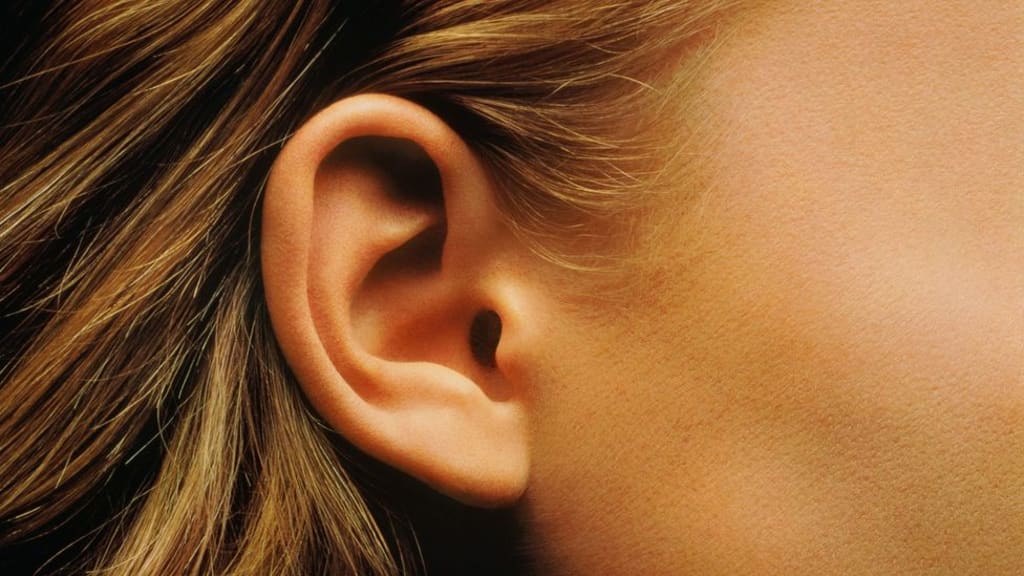
Many Covid-19 patients have complained of ear problems such as hearing loss and tinnitus. Dizziness and balance issues have also been reported, implying that the SARS-CoV-2 virus can infect the inner ear.
The virus can infect cells of the inner ear, including hair cells, which are important for hearing and balance, according to a recent study from MIT and Massachusetts Eye & Ear. The researchers also discovered that the infection pattern shown in human inner ear tissue matches the symptoms described in a study of ten Covid-19 patients who complained of a variety of ear-related problems.
For their tests, the researchers used newly constructed cellular models of the human inner ear as well as difficult-to-find adult human inner ear tissue. Previous studies of Covid-19 and other viruses that can cause hearing loss have been hampered by a lack of such tissue.
"Having the models is the first step," says Lee Gehrke, the Hermann L.F. von Helmholtz Professor in MIT's Institute for Medical Engineering and Science, who co-led the study. "This work offers a road now for working with not only SARS-CoV-2 but also other viruses that damage hearing."
The study was co-led by Konstantina Stankovic, a former associate professor at Harvard Medical School and former chief of otology and neurotology at Massachusetts Eye and Ear, who is now the Bertarelli Foundation Professor and chair of Stanford University School of Medicine's Department of Otolaryngology – Head and Neck Surgery. The lead author of the paper, which appears today in Communications Medicine, is Minjin Jeong, a former postdoc in Stankovic's group at Harvard Medical School who is now at Stanford Medical School.
Ear infection models
Prior to the Covid-19 pandemic, Gehrke and Stankovic collaborated on a research to create cellular models for studying infections of the human inner ear. Viruses including the cytomegalovirus, the mumps virus, and the hepatitis virus can all cause deafness, although the exact mechanism is unknown.
The researchers changed their plans once the SARS-CoV-2 virus was discovered in early 2020. Stankovic began seeing patients with hearing loss, tinnitus, and dizziness who had tested positive for Covid-19 at Massachusetts Eye & Ear. "Because hearing loss and tinnitus are so frequent, it was really unclear at the time whether this was causally related or coincidental," she says.
She and Gehrke decided to research SARS-CoV-2 infection using the model system they were working on. Their cellular models were produced by converting human skin cells into induced pluripotent stem cells. They were then able to trigger those cells to differentiate into hair cells, supporting cells, nerve fibers, and Schwann cells, which insulate neurons, all of which are found in the inner ear.
These cells could be grouped into three-dimensional organoids or grown in a flat, two-dimensional layer. Furthermore, the researchers were able to get samples of difficult-to-find inner ear tissue from patients undergoing surgery for a disease that causes severe vertigo attacks or a tumor that causes hearing loss and dizziness.
The researchers discovered that certain types of cells — hair cells and Schwann cells — display the proteins required for the SARS-CoV-2 virus to enter the cells in both human inner ear samples and stem-cell-derived cellular models. The ACE2 receptor, which is located on cell surfaces, as well as two enzymes named furin and transmembrane protease serine 2, which assist the virus merge with the host cell, are among these proteins.
The scientists next demonstrated that the virus may infect the inner ear, namely hair cells and, to a lesser extent, Schwann cells. They discovered that SARS-CoV-2 infection did not affect the other cell types in their experiments.
The researchers looked at vestibular hair cells in humans, which are essential in perceiving head motion and maintaining balance. In a cellular model, cochlear hair cells, which are involved in hearing, are significantly more difficult to obtain or create. However, the researchers discovered that proteins in mouse cochlear hair cells allow SARS-CoV-2 to enter.
Connection that has gone viral
The infection pattern discovered by the researchers in their tissue samples appears to match the symptoms reported by a group of 10 Covid-19 patients who experienced ear-related symptoms after infection. Nine of the patients had tinnitus, six of them had vertigo, and they all had modest to substantial hearing loss.
Damage to cochlear hair cells, which can lead to hearing loss, is typically assessed by listening to otoacoustic emissions, which are sounds produced by sensory hair cells in response to auditory stimulation. Otoacoustic emissions were reduced or nonexistent in all six Covid-19 patients who undertook this testing in the trial.
While this research strongly implies that Covid-19 can cause auditory and balance problems, the overall percentage of Covid-19 patients who have had ear problems is unknown.
"At first, this was because routine testing was not readily available for patients diagnosed with Covid, and also, when patients were experiencing more life-threatening complications, they weren't paying much attention to whether their hearing was reduced or if they had tinnitus," Stankovic explains. "We don't know what the incidence is, but our data strongly suggest that persons who have been exposed to Covid should pay more attention to audiovestibular symptoms."
The Eustachian tube, which connects the nose to the middle ear, is one possible pathway for the virus to reach the ears. According to Stankovic, the virus may also be able to escape from the nose through microscopic gaps around the olfactory nerves. This would allow it to infect cranial nerves, including the one that connects to the inner ear, and penetrate the brain area.
"This article provides very compelling evidence that Sars-CoV-2 infects the inner ear and may be causally related to hearing and balance symptoms in a number of patients with Covid-19 infection," says Yuri Agrawal, an otolaryngology-head and neck surgery professor at Johns Hopkins School of Medicine who was not involved in the study. "The utilization of 2D and 3D in vitro organoids to observe Sars-CoV-2 infection of the inner ear is another interesting advancement for our science." This gives a tremendous platform for studying the impact of a variety of other exposures on the inner ear, such as various infections, poisons, and malignancies."
The researchers intend to utilize their human cellular models to explore potential treatments for SARS-CoV-2 and other viruses-related inner ear infections.
The National Institutes of Health, the Remondi Foundation, the Nancy Sayles Day Foundation, and the Barnes Foundation all contributed to the study.
- Sonavel https://www.digistore24.com/redir/367547/LaknaSureshiSenarathne/
About the Creator
Keep reading
More stories from Lakna Senarathne and writers in Longevity and other communities.
Day 4 of Quitting
If this is how sobriety feels, maybe it’s better to go through life a little buzzed… this, along with other hits like, I want to kill myself, I wish I was dead, and I’m going to throw myself off a bridge have been the only thoughts on rotation these past few days. I promise myself that if, in a month, I still feel like this (‘this’ meaning despondent, full of rage, and simultaneously numb) I can go back to smoking. Until mid-February though? Nicotine is off the table.
By sleepy drafts11 days ago in Longevity
The Hidden Danger of Visceral Fat
Did you know that carrying excess body fat can dramatically increase your risk of serious diseases—even if you appear slim? Research has shown that women with higher body fat over 13 years had a three-fold increase in breast cancer risk. And it’s not just breast cancer—visceral fat has been linked to 14 other cancers, from colon to ovarian to prostate. This is the fat that hides deep inside your body, around your organs, quietly sabotaging your health.
By Edward Smith5 days ago in Longevity



Comments
There are no comments for this story
Be the first to respond and start the conversation.