
The Rise of Online Education: Is It Here to Stay
Exploring the Impact, Benefits, and Challenges of Virtual Learning in a Post-Pandemic World


Not long ago, “online school” was considered a backup plan — a secondary option reserved for distance learners or professionals juggling work and study. But everything changed in 2020. The COVID-19 pandemic didn’t just disrupt education; it rewired it.
Millions of students, educators, and institutions were thrust into a new learning reality almost overnight. Zoom became the new classroom, and assignments turned into Google Docs. What started as a short-term emergency solution has now evolved into a long-term shift. But now that the dust has settled and the world is returning to a new version of “normal,” one question lingers:
Is online education here to stay?
The answer is more complex — and exciting — than you might think.
________________________________________
📚 From Temporary Fix to Permanent Fixture
When schools and universities closed during the pandemic, the education system had to pivot fast. Teachers were learning how to screen-share while students learned from kitchen tables and bedrooms. It was chaotic, imperfect — but it worked.
Over time, virtual learning tools became more sophisticated. Platforms like Zoom, Google Classroom, Canvas, and Microsoft Teams evolved. New apps popped up. Teachers adapted. Students got more comfortable. Some even thrived.
Post-pandemic, many institutions are not abandoning online education—they’re expanding it. Hybrid models, asynchronous classes, and fully online degrees are becoming increasingly common.
Why? Because online learning isn’t just convenient—it can be transformative.
________________________________________
💡 The Upside: Flexibility, Accessibility, and Personalization
Online education offers something traditional classrooms often struggle with: flexibility. Students can learn at their own pace, rewatch lectures, and access materials anytime, anywhere. This is especially powerful for:
• Working professionals who want to upskill.
• Parents juggling family responsibilities.
• Students in rural or underserved areas with limited access to physical schools.
It also levels the playing field. A student in Kenya can take the same coding class as a peer in California. An aspiring writer in a small town can attend a live masterclass from an Ivy League professor.
Online education is also more customizable. From AI-powered tutoring to gamified learning apps, students can now shape their own educational journeys based on their needs and learning styles.
________________________________________
🧠 But Let’s Be Honest: It’s Not Perfect
While the benefits are real, online education isn’t a one-size-fits-all miracle.
Many students struggle with motivation, focus, and screen fatigue. Not everyone thrives without in-person interaction or structured routines. For younger students, especially in primary school, social development, hands-on learning, and in-person mentorship are crucial.
Then there's the digital divide—millions of students around the world still lack reliable internet access or devices. And let’s not forget the challenges faced by educators: managing virtual classrooms, battling Zoom fatigue, and keeping students engaged through a screen.
So while online education has immense potential, it's not without its flaws. The challenge moving forward is blending the best of both worlds—digital convenience with human connection.
________________________________________
🔄 Hybrid Is the Future
Rather than replacing traditional education, online learning is reshaping it. The future looks hybrid—where in-person classes are complemented by online resources, flipped classrooms, and interactive tech.
Imagine this: A high school biology student watches a short video lesson at home, then spends class time doing hands-on experiments. Or a university offers a mix of in-person lectures and recorded ones, letting students customize their schedules. Even workplaces are shifting toward “lifelong learning” with on-demand courses and certifications.
This hybrid model isn’t just a compromise — it’s an upgrade.
________________________________________
🌍 The Global Impact of Going Digital
Online education has also democratized knowledge on a global scale. Platforms like Coursera, edX, Udemy, and Khan Academy have made world-class education accessible for little or no cost. You no longer need to live near a top university to learn from it.
This shift is empowering people worldwide to build new careers, launch businesses, and improve their lives through education. That’s not a trend. That’s a revolution.
________________________________________
🧭 So, Is Online Education Here to Stay?
Yes — but not in the way we first imagined.
Online education is not a temporary fix. It’s a tool. A powerful, evolving tool that, when used wisely, can enhance how we learn, teach, and grow.
It won’t replace teachers. It won’t erase classrooms. But it will reshape the role they play. The future of learning is dynamic, digital, and deeply human — and online education will be right at the center of it.
________________________________________
🎓 Final Thought
Education is no longer confined to a classroom or a lecture hall. It’s a podcast on your commute, a coding class in your living room, a Zoom seminar with a global expert. It’s on your phone, your tablet, your time.
The rise of online education is not the end of traditional learning — it’s the beginning of something bigger.
About the Creator
Keep reading
More stories from Muhammad Hashim and writers in Longevity and other communities.
The Ultimate Guide to Getting Fit Without Burning Out
I still remember the first Monday of January last year. I had just signed up for a gym membership, bought brand-new workout clothes, and downloaded three fitness apps. I was convinced this was the year I would finally get in shape. Fueled by YouTube fitness influencers and pre-workout drinks, I dove headfirst into daily HIIT sessions, 6 a.m. runs, and calorie counting to the decimal.
By Muhammad Hashim9 months ago in Motivation
Day 4 of Quitting
If this is how sobriety feels, maybe it’s better to go through life a little buzzed… this, along with other hits like, I want to kill myself, I wish I was dead, and I’m going to throw myself off a bridge have been the only thoughts on rotation these past few days. I promise myself that if, in a month, I still feel like this (‘this’ meaning despondent, full of rage, and simultaneously numb) I can go back to smoking. Until mid-February though? Nicotine is off the table.
By sleepy drafts10 days ago in Longevity
Collectibles Market Size and Forecast 2025–2033
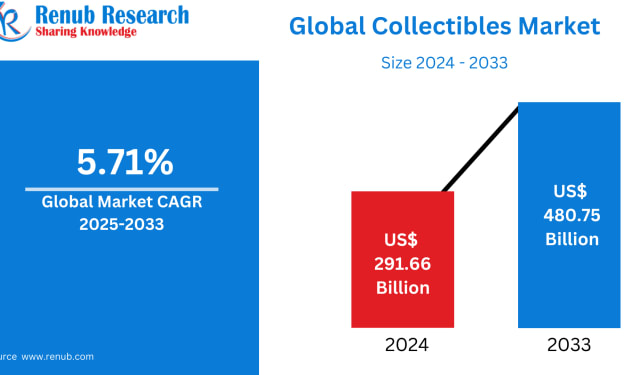
Collectibles Market Outlook 2025–2033 The global Collectibles Market is expected to reach US$ 480.75 billion by 2033, expanding from US$ 291.66 billion in 2024, at a CAGR of 5.71% from 2025 to 2033. This steady rise reflects a powerful convergence of emotional value, investment potential, and technological innovation. From fine art and rare coins to trading cards, pop culture memorabilia, and digital collectibles, the industry continues to broaden its appeal across age groups, geographies, and income levels.
By Renub Research4 days ago in Longevity
Do You have a Support Network?
Life is harder when you’re on your own. Human beings are social creatures, and we usually feel better when we have support from a strong social network around us. For most people, it’s our families that hold us together like glue.
By Elizabeth Woodsabout 22 hours ago in Psyche


Comments
There are no comments for this story
Be the first to respond and start the conversation.