
The Power of Rituals: Psychological Anchors in a Chaotic World
(How rituals make ordinary things feel special.)
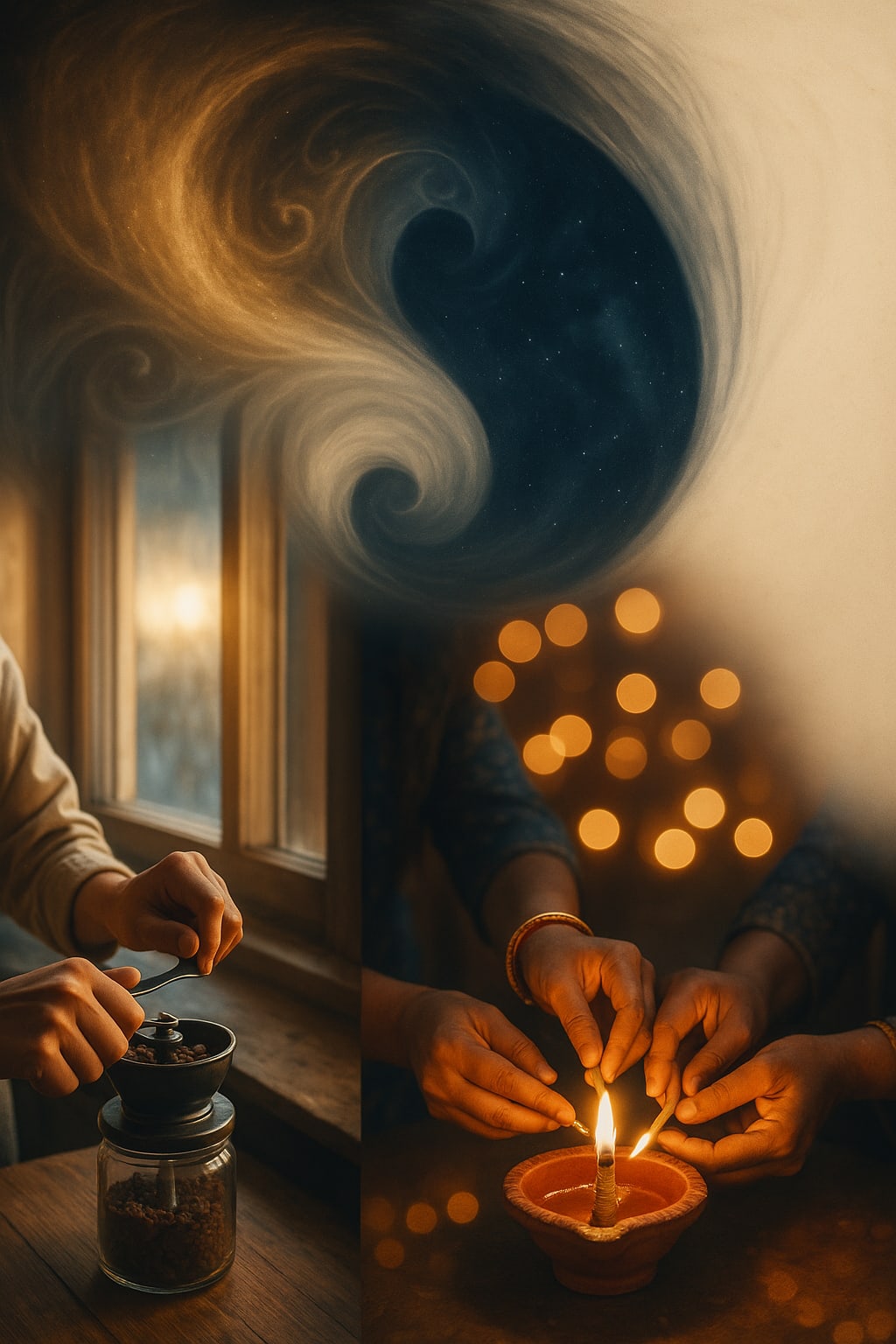
Imagine waking up to a world with no routines—no morning coffee, no bedtime stories, no weekly family dinners, no sacred prayers. Just an endless stream of unpredictable moments, each demanding a new decision, a fresh response. How long before exhaustion sets in? Before anxiety creeps in like an uninvited guest?
We live in an era of relentless change—technology evolves overnight, social norms shift unpredictably, and global crises emerge without warning. Yet, amid this turbulence, humans have always sought stability. Not in grand, sweeping philosophies, but in the quiet, deliberate repetition of rituals.
From the way we sip our tea to the way we celebrate milestones, rituals are the invisible architecture of our sanity. They are psychological anchors, grounding us when the tides of chaos rise. But why do they hold such power? How do simple, repeated actions shape our minds, our identities, and even our societies?
This is the science and soul of rituals—the silent force that turns randomness into meaning.
The Brain’s Love for Predictability: Rituals as Cognitive Shortcuts
Neuroscience reveals that our brains are prediction machines. They crave patterns because patterns reduce cognitive load. Every time we engage in a ritual—whether it’s a morning run, a prayer, or a pre-game superstition—we signal to our brain: This is familiar. This is safe.
Studies show that rituals lower cortisol levels (the stress hormone) and activate the prefrontal cortex, the brain’s control center for decision-making and emotional regulation. This is why athletes perform pre-game routines, why students revise notes in a particular order before exams, and why soldiers follow strict drills—rituals create a mental fortress against uncertainty.
Rituals as Emotional Alchemy: Turning the Mundane into the Sacred
Rituals transform ordinary actions into emotional landmarks. A simple cup of coffee becomes a meditative pause. A family dinner becomes a sacred gathering. A nightly journal entry becomes a conversation with the soul.
Anthropologist Bronisław Malinowski observed that rituals emerge most strongly in times of uncertainty—birth, death, love, and war. They provide a script when life has no script.
Identity and Belonging: The Tribal Power of Shared Rituals
Humans are tribal creatures. We find meaning in shared experiences—religious prayers, national anthems, birthday traditions, even sports chants. These collective rituals reinforce identity, creating a sense of "we" in a fragmented world.
Sociologist Émile Durkheim argued that rituals are the glue of society. They remind us that we are part of something larger than ourselves.
Rituals in the Modern World: Crafting Personal Sanctuaries
In a digital age where attention is fragmented and loneliness is epidemic, personal rituals have become acts of rebellion—a way to reclaim agency over our time and emotions.
The Rise of Digital Detox Rituals: No-phone mornings, gratitude apps, and "tech sabbaths" are modern attempts to counter digital overwhelm.
Workplace Rituals: Stand-up meetings, Friday recaps, and even casual "watercooler chats" create psychological safety in professional environments.
How to Harness the Power of Rituals:
Start Small: A 5-minute breathing exercise, a nightly reflection, or a weekly walk in nature.
Add Meaning: Attach intention. A morning coffee isn’t just caffeine—it’s "my time to think."
Consistency Over Grandeur: The magic lies in repetition, not complexity.
Conclusion: The Quiet Revolution of Rituals
Rituals are not relics of the past—they are psychological lifelines in an age of chaos. They remind us that even in a world spinning out of control, there are moments we can shape, rhythms we can trust, and identities we can anchor.
The next time you light a candle, tie your shoes a certain way, or whisper a prayer, remember: you’re not just going through motions. You’re building a fortress of calm in the storm. You’re telling your brain, your heart, and the universe: Here, in this act, I am grounded. Here, I am whole.
And perhaps, that is the greatest power of all.
About the Creator
Keep reading
More stories from Maaz Ahmad and writers in Longevity and other communities.
Silent Threads: Weaving the Unspoken Art of Kindness
Imagine you’re standing at the edge of a bustling train station. Faces blur in motion—luggage wheels clattering, distant laughter, a melody drifting from a street musician’s guitar. Yet in this sea of strangers, a single warm smile reaches you, and the world seems kinder, quieter, more alive. That moment of silent understanding is the magic of unspoken etiquette—small, invisible gestures that bind us, comfort us, and remind us that we’re never truly alone.
By Maaz Ahmad8 months ago in Longevity
Day 4 of Quitting
If this is how sobriety feels, maybe it’s better to go through life a little buzzed… this, along with other hits like, I want to kill myself, I wish I was dead, and I’m going to throw myself off a bridge have been the only thoughts on rotation these past few days. I promise myself that if, in a month, I still feel like this (‘this’ meaning despondent, full of rage, and simultaneously numb) I can go back to smoking. Until mid-February though? Nicotine is off the table.
By sleepy drafts11 days ago in Longevity
What You See Is Not a Ship: At 385 Metres Long, Havfarm Is the World’s Largest Offshore Salmon Farm
At first glance, Havfarm looks like a massive industrial ship drifting across the open sea. Stretching an astonishing 385 metres in length, it rivals some of the world’s largest oil tankers and aircraft carriers. But Havfarm is not a ship at all. It is the world’s largest offshore salmon farm, a floating giant designed to transform the future of global aquaculture.
By Fiaz Ahmed Brohi7 days ago in Longevity



Comments
There are no comments for this story
Be the first to respond and start the conversation.