
The Micro-Movement Revolution
Why Tiny Bursts of Activity Could Be the Key to a Longer, Healthier Life

Introduction
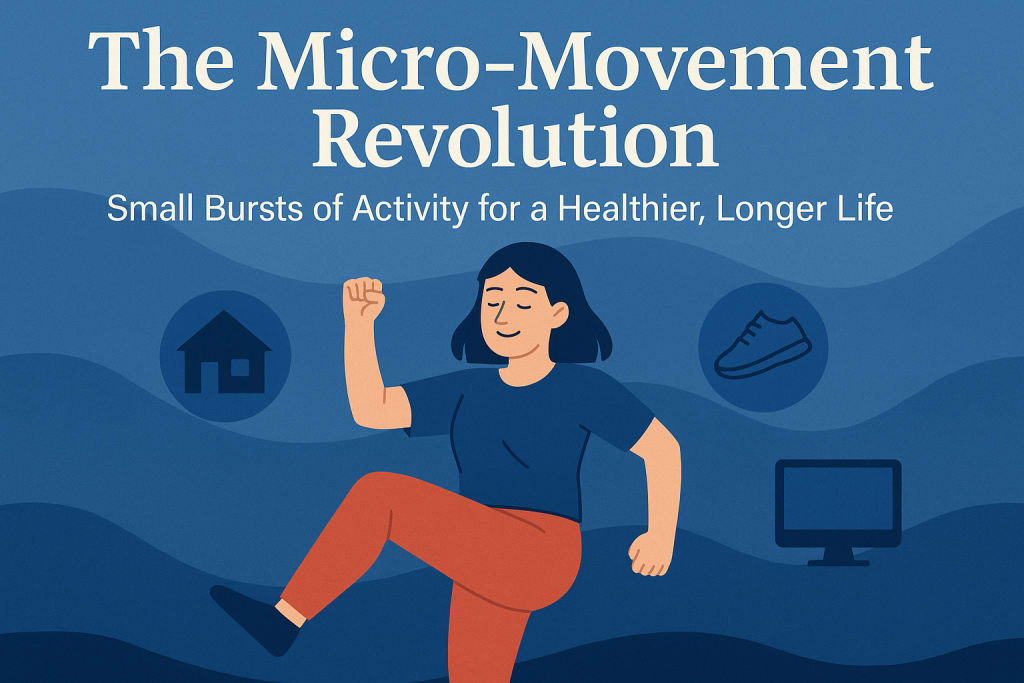
When most people think of exercise, they picture sweating it out in the gym for an hour or going for a long run. But in the field of longevity, a different perspective is emerging—one that challenges the idea that fitness must come in big, structured chunks. Instead, researchers are uncovering the benefits of micro-movements—small, intentional bursts of physical activity sprinkled throughout the day. These movements, often lasting less than a minute, may be one of the most underestimated strategies for extending both lifespan and healthspan.
The Science Behind Micro-Movements
Micro-movements work by disrupting long periods of sedentary behavior, which is one of the most damaging habits for our health. Sitting for hours on end has been linked to a higher risk of cardiovascular disease, type 2 diabetes, and even premature death. When you stand up, stretch, or take a quick walk, you instantly activate muscles, improve circulation, and trigger metabolic changes that counteract the negative effects of sitting. Studies have shown that even short bouts of activity—such as a 20-second stair climb or a set of squats—can improve insulin sensitivity and cardiovascular health if repeated regularly.
Examples of Micro-Movement Practices
The beauty of micro-movements is their simplicity. You don’t need a gym membership, special clothing, or even a big time commitment. For example, set a timer to remind yourself to stand up every 30 minutes, and when you do, knock out 10 bodyweight squats or march in place. If you work from home, keep a resistance band nearby and perform a few rows or presses between tasks. Even household chores like sweeping, lifting laundry, or gardening count toward your daily activity when done with intention. Over time, these little moments accumulate into a significant amount of exercise without ever feeling overwhelming.
Why This Matters for Longevity
One of the main drivers of aging is the gradual decline in muscle mass and strength, known as sarcopenia. This loss of physical capability increases the risk of falls, fractures, and reduced independence later in life. Micro-movements help maintain muscle engagement throughout the day, which is crucial for slowing sarcopenia. Additionally, they keep the cardiovascular system active and blood sugar levels more stable, reducing the risk of age-related diseases. In other words, they help you not just live longer, but live better.
How to Build a Micro-Movement Routine
The key to making micro-movements stick is to integrate them seamlessly into your existing lifestyle. Instead of relying on willpower, link them to cues you encounter every day. Waiting for your coffee to brew? Do calf raises. On a phone call? Pace the room. Watching TV? Do a plank during commercial breaks. These tiny actions require minimal mental effort but can produce long-term health benefits. If you like structure, you can use an app or smartwatch to track movement streaks and remind you to keep going.
The Hidden Mental Benefits
While micro-movements are often discussed in the context of physical health, they also have profound effects on mental well-being. Short bursts of movement can improve mood, boost focus, and reduce stress by stimulating the release of endorphins. For people working at desks or spending long hours in front of screens, this is a game-changer. Instead of feeling sluggish or foggy in the afternoon, these brief activity breaks can provide an instant mental reset. Over time, this contributes to better cognitive performance and resilience against age-related decline.
Overcoming Common Barriers
Some people dismiss micro-movements because they seem too small to matter. This is a misunderstanding of how the body works. The human body responds to frequency and consistency—regular small inputs can have a compounding effect. Another barrier is self-consciousness; people might feel awkward doing a set of squats in the office. The solution? Find discreet movements like seated leg lifts, shoulder rolls, or even isometric holds that can be done without drawing attention. The point is not perfection, but persistence.
The Bigger Picture
Micro-movements are not a replacement for more intense exercise like strength training or cardio—they are a complement. Think of them as the foundation of an active lifestyle, especially for people who struggle to find time for the gym. They keep the body “switched on” throughout the day, making structured workouts more effective and recovery faster. In the context of longevity, they are a low-cost, low-effort insurance policy against the toll of modern sedentary living.
Conclusion
Longevity isn’t built in the gym alone—it’s built in the small decisions you make from the moment you wake up to the moment you go to sleep. Micro-movements may seem insignificant in isolation, but they accumulate into powerful health dividends over years and decades. By weaving tiny bursts of activity into the fabric of your daily life, you create a rhythm of movement that supports strength, energy, and vitality well into old age. In a world obsessed with quick fixes, the humble micro-movement stands out as a quiet, sustainable path to living longer and living better.
About the Creator
Kyle Butler
Sharing fascinating facts and insights from every category, with a special passion for longevity and healthy living. Join me on a journey to discover the secrets of a longer, better life.
Keep reading
More stories from Kyle Butler and writers in Longevity and other communities.
Calm for Life
The Hidden Cost of Chronic Stress Stress is not inherently bad. In short bursts, it can sharpen focus, fuel motivation, and help us handle challenges. But when stress becomes a constant background hum, it takes a toll on both mind and body. Chronic stress floods the body with cortisol and adrenaline, hormones designed for short-term emergencies, not daily living. Over time, this constant activation wears down the immune system, increases inflammation, raises blood pressure, and accelerates cellular aging. Even if you eat well and exercise, unmanaged stress can quietly undo much of your hard work toward a long, healthy life.
By Kyle Butler7 months ago in Longevity
Caffeine and Anxiety: How Much Is Too Much for Students?
Coffee before class. Energy drink before assignments. Another coffee for night study. Sound familiar? For many students, caffeine feels like survival. But what if your daily cup is quietly making your anxiety worse?
By Being Inquisitive6 days ago in Longevity
Why You Wake Up Tired Even After 8 Hours of Sleep
You slept for 8 hours. Your alarm rings. And somehow… you still feel exhausted. If you’re constantly waking up tired, you’re not lazy. And you’re definitely not alone. Many students struggle with feeling tired after 8 hours of sleep, and the problem usually isn’t the number of hours — it’s the quality of sleep.
By Being Inquisitive5 days ago in Longevity
A Historic Declaration
We the People of the Husbands of the United States of America, in Order to form a more perfect Union, and I mean you...with me...establish Justice, insure domestic Tranquility, provide for the common defence, promote the general Welfare, and secure the Blessings of Liberty to ourselves, after Puberty, do ordain and establish this Declaration of Co-Dependence.
By Gerard DiLeo5 days ago in Humans



Comments
There are no comments for this story
Be the first to respond and start the conversation.