

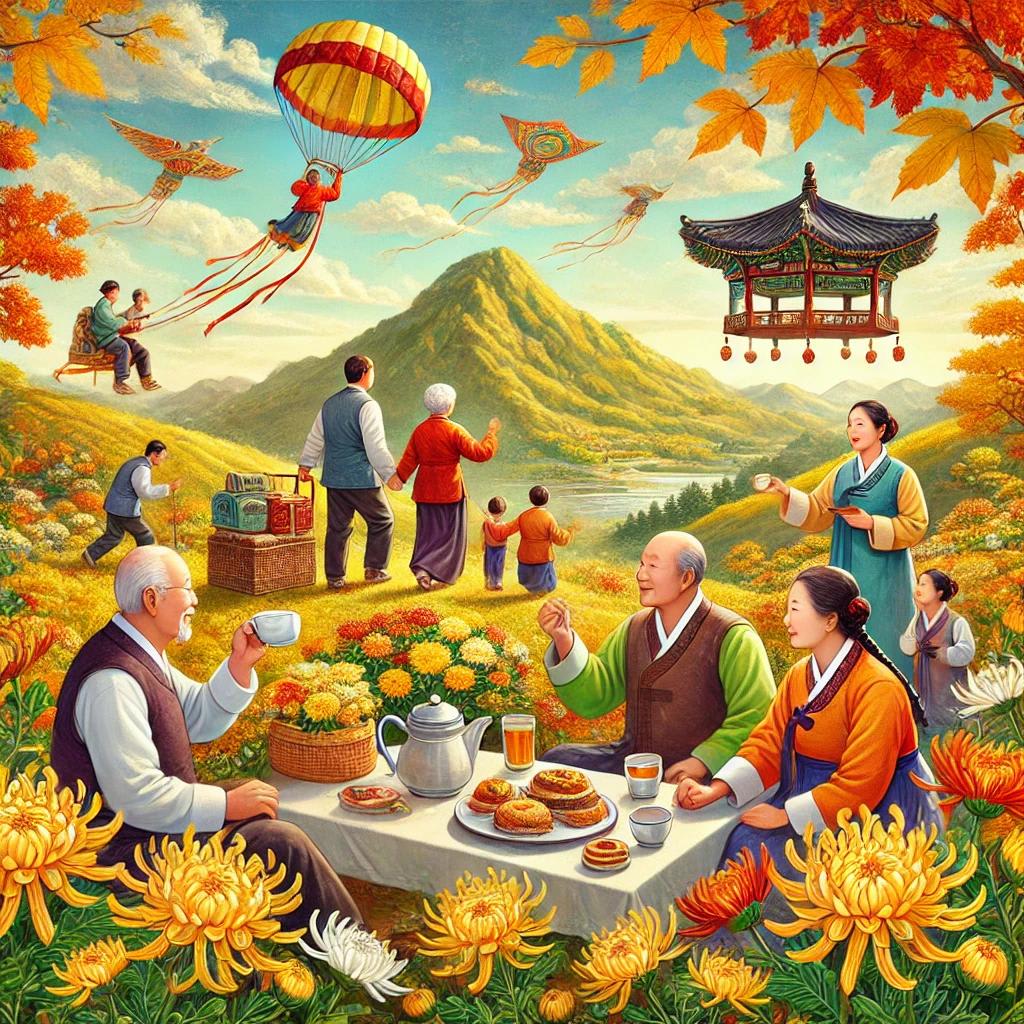
The Double Ninth Festival, also known as Chongyang Festival (重阳节), is a traditional Chinese holiday celebrated on the ninth day of the ninth month in the lunar calendar, which typically falls in October. This ancient festival has deep cultural significance, representing themes of longevity, respect for elders, and the pursuit of health and happiness. Its origins can be traced back over 2,000 years to the Han Dynasty (206 BCE–220 CE), and it remains a meaningful day in Chinese society, blending customs of remembrance, well-being, and family togetherness.
Historical Origins
The festival derives its name from the combination of the number nine, which is considered yang (阳) or positive in traditional Chinese cosmology, associated with strength and vitality. In Taoist thought, the doubling of this "yang" energy (ninth day of the ninth month) creates a powerful force that needs to be balanced, which is where the traditions of dispelling bad luck and honoring health emerge.
A popular legend associated with the festival involves a man named Huan Jing. During the Han Dynasty, a wise man told Huan Jing that a disaster was approaching on the ninth day of the ninth month. Huan Jing took his family to the mountains to avoid the disaster, and when they returned, they found that everything had been destroyed. This story contributed to the custom of climbing mountains to avoid misfortune.
Traditions and Customs
Several customs are observed during the Double Ninth Festival, all of which are centered around family, health, and respect for elders.
Climbing Mountains (登高): Traditionally, people would climb mountains or visit high places to ward off evil and to celebrate longevity. Today, the act of climbing symbolizes aspirations for a long, healthy life. In more urban settings, people might visit parks or scenic areas, keeping the spirit of the custom alive.
Chrysanthemum Symbolism: The chrysanthemum flower plays an important role in the festival. Chrysanthemum displays and drinking chrysanthemum tea or wine are popular practices. Chrysanthemums symbolize longevity, and their association with this time of year makes them a key part of the celebration.
Kite Flying: In some regions, people fly kites on the Double Ninth Festival as a way to enjoy the autumn weather and send their best wishes to the sky.
Wearing Cornel (插茱萸): Another tradition involves wearing cornel (zhuyu, 茱萸), a type of plant believed to have protective properties. It is often worn to ward off evil spirits or illness.
Honoring Ancestors and Elders: In many parts of China, the Double Ninth Festival has evolved into a day to honor and care for the elderly. Families gather to show their respect for older generations, often bringing them gifts or organizing family meals. Visiting the graves of ancestors to pay respects and offer sacrifices is also common, similar to the Qingming Festival in the spring.
Modern Significance
In contemporary China, the Double Ninth Festival has been designated as Elderly Day (敬老节, Jìnglǎo Jié), placing an emphasis on the care and appreciation of senior citizens. This reflects the Confucian value of filial piety, which is central to Chinese culture. The festival serves as a reminder to appreciate and support the elderly, who are considered the custodians of family wisdom and tradition.
While some of the older customs like wearing cornel are less practiced in modern times, the core values of family togetherness, health, and respect for elders remain strong. Schools, community organizations, and local governments often organize special events to honor senior citizens, reinforcing the significance of the festival.
Foods and Drinks
Chrysanthemum wine (菊花酒) is the most famous beverage associated with the Double Ninth Festival. In ancient times, people believed that chrysanthemum wine could cleanse the body and prolong life. Alongside this, double ninth cakes (重阳糕), also known as chrysanthemum cakes, are often eaten. These cakes are sometimes made with layers to symbolize the climbing of mountains and the pursuit of higher aspirations.
Double Ninth Around the World
The Double Ninth Festival is also observed in other parts of East Asia, such as in Japan, where it is known as Kiku no Sekku or the Chrysanthemum Festival. In Korea, the day is celebrated as Jungyangjeol, with similar themes of health and longevity.
Conclusion
The Double Ninth Festival is a deeply rooted celebration of life, health, and family, blending ancient traditions with modern values. While it began as a way to ward off danger and misfortune, it has evolved into a day to honor the elderly and reflect on the importance of maintaining a harmonious and healthy life. As families climb mountains, drink chrysanthemum wine, and pay respects to ancestors, they are participating in rituals that have persisted for millennia, ensuring that this rich cultural legacy continues into the future.
About the Creator
Darkos
Alien
writing in the moment
channels: https://www.youtube.com/@Healingestures
For HSP mainly : patreon.com/healingawakening
Day 4 of Quitting
If this is how sobriety feels, maybe it’s better to go through life a little buzzed… this, along with other hits like, I want to kill myself, I wish I was dead, and I’m going to throw myself off a bridge have been the only thoughts on rotation these past few days. I promise myself that if, in a month, I still feel like this (‘this’ meaning despondent, full of rage, and simultaneously numb) I can go back to smoking. Until mid-February though? Nicotine is off the table.
By sleepy drafts14 days ago in Longevity
Vitamin K2 Market Size and Forecast 2025–2033: A Rapidly Expanding Global Nutraceutical Opportunity
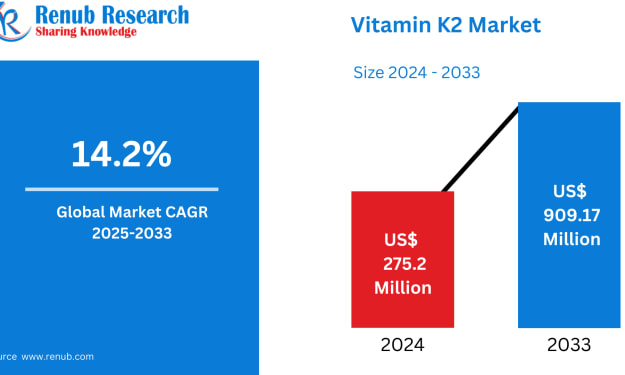
Global Vitamin K2 Market Outlook The global Vitamin K2 market is witnessing a transformative growth phase, driven by rising consumer awareness of preventive healthcare, expanding scientific validation of its health benefits, and the increasing adoption of functional foods and nutraceuticals. According to Renub Research, the global Vitamin K2 market is expected to reach US$ 909.17 million by 2033, up from US$ 275.2 million in 2024, registering a robust CAGR of 14.2% from 2025 to 2033.
By Marthan Sir40 minutes ago in Longevity
Smart phones, Humans and Aliens.
WARNING. I will be tapping into one of your favorite creative tensions: The absurdity of humans worshipping their glowing rectangles as if they were tiny oracles. There’s something deliciously poetic about that contradiction, and it lends itself beautifully to an instructive proviso.
By Novel Allen5 days ago in Poets


Comments
There are no comments for this story
Be the first to respond and start the conversation.