
The Dental Implant Process: From Consultation to Your New Smile
A Step-by-Step Guide to Restoring Your Confidence and Oral Health

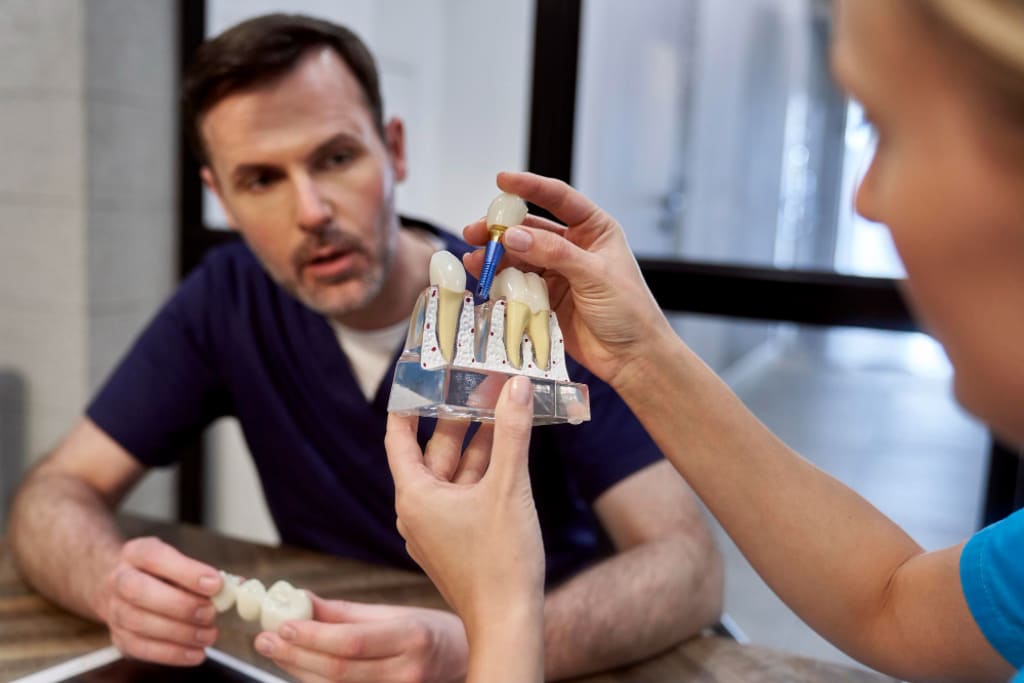
Missing teeth may not only have a significant impact on your facial appearance and dentition. Still, they may also affect your speech, ability to chew, and even self-confidence.
Dental implants are a form of long-term, natural-looking dental solution that can not only reclaim your smile but also help you retain the health of your jawbone.
But what exactly happens from the moment you decide on implants to the day you walk out with a new smile? Let’s break it down step by step.
Step 1: The Initial Consultation
Your journey begins with a thorough consultation. This visit will entail your dentist taking a medical history, reviewing your dental history, and discussing your goals for your dental care.
To assess how well your jawbone is holding, there is normally an X-ray or 3D scan taken to understand the situation of your jawbone and how well it will support an implant. This is also the perfect time to ask questions—about the procedure, the expected timeline, and your dentist’s experience with implants.
If you have underlying oral conditions, such as gum (periodontal) disease, these will need to be treated before proceeding.
Step 2: Treatment Planning
If you’re a suitable candidate, your dentist will create a personalised treatment plan. This plan outlines the number of implants you need, the type of implant, and whether additional procedures—such as a bone graft or sinus lift—are required.
Planning is a vital step since it provides the best stable and functional position of the implant. Advanced technology like computer-guided implant placement may be used for optimal accuracy.
Step 3: Preparatory Procedures (If Needed)
Not everyone needs preparatory work, but for those who do, this step ensures the best possible outcome. Common preparatory procedures include:
- Bone Grafting: Strengthens and thickens the jawbone if it’s too thin or soft to hold an implant securely.
- Sinus Lift: Builds up bone in the upper jaw region around the sinuses when additional height is needed.
- Tooth Extraction: Removes any damaged teeth before implant placement.
These procedures require a healing period before moving on to the implant surgery itself.
Step 4: Implant Placement Surgery
This is where the transformation begins. Your dentist will fit a titanium post-implant into the jawbone through a small incision that has been made in the gum through the use of local anaesthesia (and occasionally through the use of sedation to make they feel comfortable).
Titanium is biocompatible, meaning it fuses naturally with your bone in a process called osseointegration.
Once the implant has been put in place, the gum is sutured back, and a healing cap can be inserted over the region. Most patients report that discomfort after surgery is manageable with over-the-counter pain relief.
Step 5: Healing and Osseointegration
This stage requires patience but is essential for long-term success. In the following three to six months, your jawbone will develop around the implant, rooting it completely in place.
While you wait, you may receive a temporary restoration so you can smile and chew with confidence. In between these periods, frequent visits to check the progress of the healing process guide your dentist and prevent the development of any complications.
Step 6: Abutment Placement
Once osseointegration is successful, an abutment is then added to your post, a small connector that links your implant post to your final crown. This is usually done under local anaesthesia.
After the abutment is placed, the gums need a short healing period before the crown is fitted.
Step 7: The Final Restoration
Lastly, your permanent crown, bridge, or denture is freehand-made to fit precisely the colour, shape and size of your natural teeth. As soon as it is fixed to the abutment, your dental implant will appear and perform like an actual tooth.
This is the moment many patients describe as life-changing—not just because of the new smile, but because of the restored ability to eat, speak, and live without worrying about missing teeth.
Caring for Your New Smile
While dental implants are highly durable, they still require care to maintain their longevity. Here’s how to keep them in top shape:
- Brush twice daily with a soft-bristle toothbrush.
- Clean around the implant with floss or interdental brushes.
- Smoking is to be avoided as it would prevent the healing and stability of implants.
- Visit your dentist frequently to have your teeth checked and cleaned professionally.
Dental implants may last many decades or longer with proper care, usually a lifetime.
The Benefits of Choosing Dental Implants
- Natural Look and Feel: They are replicas of natural teeth in appearance and use.
- Long-Term Solution: Unlike dentures or bridges, implants are designed for long-term stability.
- Preserve Bone Health: They prevent jawbone shrinkage, which often occurs after tooth loss.
- Enhanced Comfort and Confidence: No slipping or shifting like traditional dentures.
Final Thoughts
The dental implant process may seem lengthy, but each step is designed to ensure the best possible outcome for your oral health and smile. From your first consultation to the day you leave with a fully restored smile, your dentist will guide you through the process with care and precision.
If you’re ready to take the first step toward a complete smile, we can help. Book your consultation today for dental implants in Leederville and discover how life-changing this treatment can be.
About the Creator
Dentists on Vincent Leederville
Leederville dentist, your trusted family dentists providing advanced dentistry and same day emergency care. Call us on (08) 9242 4400 or visit us at 322 Vincent St, Leederville WA 6007
Keep reading
More stories from Dentists on Vincent Leederville and writers in Longevity and other communities.
Day 4 of Quitting
If this is how sobriety feels, maybe it’s better to go through life a little buzzed… this, along with other hits like, I want to kill myself, I wish I was dead, and I’m going to throw myself off a bridge have been the only thoughts on rotation these past few days. I promise myself that if, in a month, I still feel like this (‘this’ meaning despondent, full of rage, and simultaneously numb) I can go back to smoking. Until mid-February though? Nicotine is off the table.
By sleepy drafts18 days ago in Longevity
How Himalayan Salt Bricks Naturally Help With Breathing
We breathe air without even thinking about it. However, the air we breathe in will impact our health. Pollution and allergies are making more people aware of how important it is to take care of our airways. Himalayan salt bricks are an interesting and beautiful option. These salt bricks not only create a warm and inviting atmosphere, but they are also good for your breathing.
By Emily Rosie5 days ago in Longevity




Comments
There are no comments for this story
Be the first to respond and start the conversation.