
The Day My Grandmother Turned Forty—Again
In a world where age resets every 80 years, one family discovers that immortality comes with more than just fine lines and regrets.

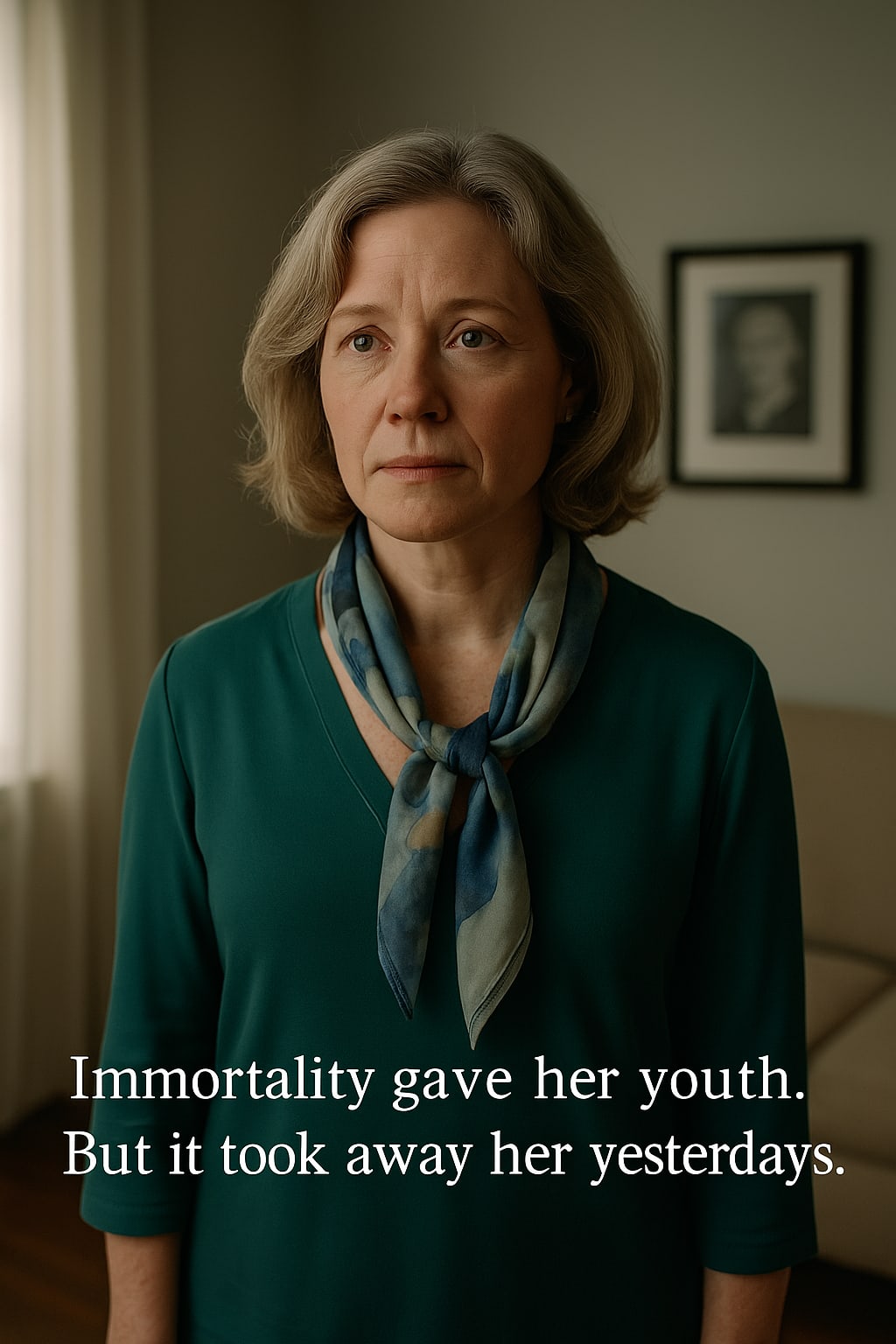
They called it “The Renewal.”
At first, it was reserved for the ultra-rich—the kind of people who named yachts after ex-wives and drank water from Himalayan glaciers. But by the time I was born, it had become a birthright.
Every citizen, upon turning 80, was granted Renewal: a state-backed biological reset that returned the body to its 40-year-old prime. Not a clone. Not a simulation. You. Just younger. Again.
No more funerals. No more nursing homes. No more goodbyes.
It was the death of death.
And somehow, the beginning of everything else.
My grandmother, Ezel, was preparing for her third Renewal.
She’d already seen the fall of paper money, the invention of taste-neutral food, and the global banning of sarcasm (which she regularly violated). At 239, she was spry, sharp, and terribly bored.
“You know what the worst part is?” she asked me one morning, sitting on the kitchen counter like she owned the place—which she did.
“You’ve forgotten what cake tastes like?” I guessed.
She scoffed. “No. I remember too much. Every damn thing. You think it’s fun carrying three lifetimes of birthdays in your head? Three lifetimes of people forgetting to call? Three lifetimes of ‘I promise I’ll be there next year’?”
I stirred my coffee awkwardly. “But you’re healthy. Strong. You can run a marathon if you wanted.”
“I have. Four times. And I hate running.”
The world worshipped longevity.
Magazines featured glowing 40-somethings with 180-year-old eyes. Celebrities casually mentioned their fourth-century memoirs. Children were told that if they behaved, they’d live forever—because now, they actually could.
But something felt... stuck.
People stopped taking risks. Why start a business when you had forever to do it? Why fall in love if heartbreak might haunt you for centuries? Why forgive, if resentment could become tradition?
The Renewal had saved us from death. But it hadn’t taught us how to live.
Grandmother’s Renewal was scheduled for Tuesday.
She wore her favorite silk scarf—the one from her “original” youth, as she called it. We arrived at the center, sleek and sterile, filled with the scent of citrus and nostalgia.
They greeted her with polite smiles, verified her identity through retinal scan, and led her to the waiting room labeled “Personal Reclamation Suite.”
I sat outside.
Two hours passed.
Three.
Finally, the door opened.
But it wasn’t her.
Not exactly.
She emerged looking radiant, rejuvenated, and utterly disoriented. Her skin was smooth, her voice lighter, but her eyes… her eyes held a hesitation I didn’t recognize.
She blinked at me. “And you are…?”
I laughed, thinking she was joking.
She wasn’t.
Turns out, after 240 years, even Renewal has its cost. Memory degradation, emotional blunting, identity drift. They call it “Cognitive Overlap Fatigue.” A polite term for losing yourself one layer at a time.
She remembered history. Geography. How to play the violin.
But not me. Not my mother. Not the dog we buried in the backyard.
In preserving her body, we had sacrificed the woman who raised me.
Back home, she walked the hallways with distant curiosity. She examined photos of birthdays she didn’t remember and touched furniture she no longer recognized.
“Did I like tea?” she asked.
“You loved it,” I said.
She nodded. “I’ll try again.”
That night, I opened an old journal of hers. Inside were pages of reflections from her second life. Regrets. Hopes. Sketches of inventions she never finished. A list of people she missed. My name was on it, circled three times.
I wanted to cry. But I didn’t.
Grief felt inappropriate when the person was still alive, smiling at you with polite unfamiliarity.
Two months later, she started painting.
Not landscapes, but abstract fragments—blurs of memory, flickers of something almost remembered. One canvas had the words “Did I dance at your wedding?” scrawled across it.
“You didn’t,” I said softly. “But you gave the toast.”
She smiled. “Sounds like me.”
People think immortality is a gift. A miracle.
But sometimes I wonder if death wasn’t a form of mercy—a natural punctuation to a sentence we weren’t meant to endlessly edit.
My grandmother is forty now.
Again.
And every morning, she asks for my name.
And every morning, I tell her.
About the Creator
Ahmet Kıvanç Demirkıran
As a technology and innovation enthusiast, I aim to bring fresh perspectives to my readers, drawing from my experience.
Keep reading
More stories from Ahmet Kıvanç Demirkıran and writers in Longevity and other communities.
“Which Heart Health Checks Should We Get at 60? I Went on a Quest to Find Out”
Your sixties can be a decade of wisdom — and proactive heart care. Turning 60 felt like crossing an invisible milestone. Friends joked about reading glasses and retirement dreams, but for me, the day also triggered a serious question: What do I need to do to keep my heart healthy now that I’m officially a senior? I dove into medical research, spoke with cardiologists, and sifted through health guidelines to find out which heart health checks really matter at 60 — and why they might save your life. Why 60 Is a Crucial Age for Heart Health Heart disease remains the leading cause of death worldwide, and the risk increases with age. By age 60, many of us have lived with decades of lifestyle influences — diet, stress, activity levels, sleep patterns — that quietly affect cardiovascular function. Dr. Anita Reynolds, a cardiologist based in Boston, told me: “By 60, most adults benefit from a structured review of their heart health. Early detection of risk factors like high blood pressure or cholesterol can prevent serious events like heart attacks or strokes.” With that in mind, I compiled a checklist of essential heart health assessments recommended by leading experts. 1. Blood Pressure Screening — The Foundation of Heart Health High blood pressure — often called the “silent killer” — has no symptoms but significantly increases the risk of heart disease, stroke, and kidney failure. At 60, it’s crucial to: Check blood pressure at least once a year (more often if elevated) Maintain a home log if readings are borderline Discuss medication options if readings consistently exceed 130/80 mmHg According to the American Heart Association, nearly half of adults over 60 have high blood pressure, and early detection saves lives. 2. Cholesterol Panel — Knowing Your Lipid Levels A full lipid panel measures: Total cholesterol LDL (“bad”) cholesterol HDL (“good”) cholesterol Triglycerides Elevated LDL and triglycerides are major risk factors for plaque buildup in arteries, which can lead to coronary artery disease. Women and men over 60 should get this test at least every 4–6 years, or more frequently if previous results were abnormal. 3. Blood Glucose / Diabetes Screening Diabetes is a silent contributor to heart disease. High blood glucose damages blood vessels and the heart over time. Tests include: Fasting glucose Hemoglobin A1c (average blood sugar over 3 months) The CDC recommends diabetes screening for all adults over 45, and annual checks after age 60, especially if you have risk factors like family history or elevated BMI. 4. Body Mass Index (BMI) and Waist Circumference Weight alone doesn’t tell the full story. Abdominal fat — measured by waist circumference — is more closely tied to heart risk than weight or BMI alone. A waist circumference over: 40 inches in men 35 inches in women is associated with higher cardiovascular risk. 5. Electrocardiogram (ECG or EKG) An ECG records the electrical activity of your heart and can spot: Arrhythmias (irregular beats) Previous silent heart attacks Early signs of heart disease Many doctors recommend a baseline ECG around age 60, especially if you have symptoms like palpitations, shortness of breath, or chest discomfort. 6. Advanced Imaging – When Needed Not everyone requires imaging tests, but for those with family history or abnormal routine tests: Coronary Calcium Scan assesses calcium deposits in arteries Echocardiogram evaluates heart structure and function These tools can uncover early disease before symptoms arise. 7. Stress Testing If you are active or have symptoms with exertion, a stress test (treadmill or pharmacologic) gauges how your heart performs under stress and can detect blockages. Beyond Numbers – Lifestyle and Risk Assessment Doctors also evaluate: Diet and physical activity Smoking history Stress levels Family history of heart disease These factors influence heart risk as much as test results. My Biggest Takeaways At 60, heart health isn’t about fear — it’s about empowerment. I learned that: Prevention works when risks are identified early Regular checkups are not optional — they’re protective Small lifestyle changes make measurable differences Heart health is a lifelong journey. Turning 60 reminded me that it’s never too late to start the right screenings and conversations with our doctors. If you haven’t had these checks yet, consider talking to a cardiologist or your primary care provider about creating your personalized heart health plan.
By Fiaz Ahmed 2 days ago in Longevity
The BAFTA Awards
By now, in a stunning departure from recent years, most of the world is aware of what happened at the BAFTA film awards. Social Media Headlines will tell you the bare bones: that John Davidson, a Tourette's Syndrome advocate, shouted a racial slur at two Actors of Colour, Michael B Jordan and Delroy Lindo.
By Natasja Rose5 days ago in Psyche



Comments (3)
very interested written
Interesting Read!
If only we’d stop again at 40! Great work!