
Tending the Inner Garden: Cultivating Presence Like a Practice of Care
Presence isn’t a state to achieve — it’s something we gently grow, moment by moment


We often imagine presence as a fixed state: calm, clear, rooted. As if one day we’ll arrive and stay there forever — undisturbed, unshakeable. But presence isn’t a destination. It’s a living thing. And like anything alive, it needs care. Attention. Nourishment.
Think of your inner life as a garden. It has soil, seeds, weeds, wildness. You don’t control it, but you can tend to it. You can water what matters. You can pull what chokes. You can sit beside it quietly and learn how it grows.
This is what it means to practice presence not as performance, but as care.
The Myth of Constant Clarity
It’s tempting to believe that presence should feel like total stillness. But even the most grounded person has moments of restlessness, irritation, distraction. The goal isn’t to eliminate these experiences — it’s to meet them with gentleness.
You don’t yell at a garden for being overgrown. You get your hands in the dirt. You pull, prune, compost. You tend.
Presence works the same way. When we sit down to meditate or pause during a busy day, we’re not trying to become perfect. We’re showing up to care for what’s already here.
That care is the practice. Not the outcome.
The Daily Acts of Attention
In the same way that plants need light and water, presence needs small, consistent moments of attention. A slow breath in the middle of a conversation. A kind inner whisper instead of critique. A pause before reacting.
These aren’t grand gestures. They’re subtle, soft movements toward awareness — and they accumulate.
You don’t grow a garden overnight. You show up with a watering can and patience.
Maybe today, your soil feels dry. Maybe thoughts come fast and loud. That’s not failure — it’s feedback. Your presence isn’t broken; it’s simply inviting you back.
Making Space for What Grows
Real presence includes the full spectrum of experience. Grief, confusion, joy, boredom — all of it belongs. The garden isn’t always in bloom, and that’s not a problem. It’s a cycle.
When we approach our inner life with curiosity instead of control, we start to see what’s truly growing beneath the surface. Sometimes, it's resilience. Sometimes, it’s a need for rest. Sometimes, it’s an old belief ready to be released like a dead leaf falling.
We don’t always need to fix. We just need to notice.
The Role of Patience
In a culture that values speed and productivity, presence can feel slow, inefficient, indulgent. But tending a garden is never wasted time — even if the growth is invisible for a while.
Meditation, journaling, mindful walking — these are not escapes. They’re forms of inner gardening. And patience is the path. The more we resist rushing the process, the more deeply it takes root.
And eventually, something blossoms.
Presence as a Kind of Devotion
To be present is to say: This moment matters. Not because it’s extraordinary, but because it’s real. To care for your attention is to honor your life. To sit quietly and breathe is to plant something that might one day nourish you in ways you can’t yet imagine.
This is what makes presence sacred: not that it’s perfect, but that it’s chosen. Again and again.
You are the gardener,
and the soil,
and the seed.
Water gently.
Wait kindly.
Let it grow.
About the Creator
Keep reading
More stories from Marina Gomez and writers in Longevity and other communities.
The Sound of Stillness: Meditating with Ambient Noise
Many people imagine meditation as a practice that requires perfect silence: a quiet room, no distractions, no interruptions — just stillness. And when that environment proves impossible to find, they assume they can’t meditate at all. But what if the presence of ambient noise isn’t a hindrance? What if it’s part of the practice?
By Marina Gomez8 months ago in Longevity
Microsoft's Purposeful Marketing Deception About AI's Ability To Beat Physicians In Diagnosis
When you look at the world of scientific research... If you are not careful... You will be fooled into believing things that are not actually supported by the data.
By Dr. Cody Dakota Wooten, DFM, DHM, DAS (hc)a day ago in Longevity
Two People Die After Paid Plasma Donation at Clinics in Canada
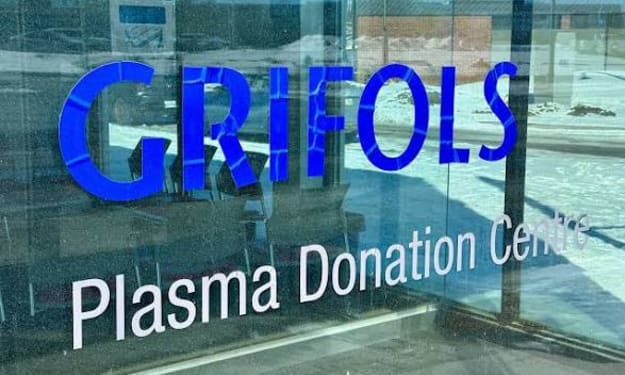
Two people have died in Canada after giving plasma at for‑profit donation clinics, prompting a federal probe and renewed debate over donor safety, industry regulation, and the ethics of paid plasma collection. The deaths—described by officials as “fatal adverse reactions”—occurred months apart and involved the same chain of clinics operating under a private model that compensates donors. Health Canada, the federal department responsible for regulating plasma donation centers, confirmed it has received reports of two deaths connected to plasma collection procedures at for‑profit clinics in Winnipeg, Manitoba. The first occurred in October 2025, and the second in January 2026. Both deaths are now the subject of active review by federal inspectors as authorities seek to determine whether the procedures or equipment used contributed to the incidents. Officials have not publicly identified the individuals involved, but friends of one victim told local media she was a 22‑year‑old international student who was donating plasma when she suddenly went into distress and subsequently died. The clinics where the donations took place are operated by the Spanish healthcare company Grifols, which runs approximately 17 paid plasma donation centers nationwide. Grifols has stated it is cooperating with Health Canada’s investigation, and insists it “has no reason to believe there is a correlation” between the deaths and the plasma donation process. How Paid Plasma Donation Works in Canada Plasma—the liquid component of blood—contains proteins essential for manufacturing medicines that treat conditions such as hemophilia, immune deficiencies, and certain neurological disorders. Unlike whole blood, plasma can be donated more frequently because the other components are returned to the donor’s body during the procedure. Until recently, paid plasma donation was illegal in several parts of Canada. However, starting in the early 2020s, Grifols entered into agreements with Canadian Blood Services and provincial health authorities that allow the company to offer financial compensation—typically up to about C$100 per visit—to donors in select provinces including Manitoba and Saskatchewan. The arrangements have expanded as domestic demand for plasma products has grown. Canadian Blood Services notes that local plasma collection still only meets a fraction of the country’s need for these critical medical materials. While voluntary (unpaid) blood and plasma donation remains the standard in provinces such as Quebec and British Columbia, paid plasma centers have opened in others under regulatory exemptions and agreements designed to boost supply. The practice is controversial, with advocates for a voluntary system warning that payments can encourage frequent or risky donation behavior among donors who may be financially vulnerable. Investigation and Safety Concerns Health Canada has dispatched inspectors to the Winnipeg clinics following the reported fatalities. Preliminary information indicates that both incidents occurred during or shortly after individuals underwent the standard plasma donation process, and were categorized by authorities as “fatal adverse reactions,” requiring mandatory reporting to the federal regulator. Regulatory records for the clinics have also drawn scrutiny. Recent inspections in provinces where Grifols operates identified deficiencies including incomplete record‑keeping, lapses in donor screening, and inconsistent maintenance of equipment—issues that raise questions about compliance with the Food and Drugs Act and federal blood regulations. Critics argue that the string of problems, including two deaths, illustrates deeper structural weaknesses in how paid plasma donation is overseen. “When you have a private company operating these clinics, you lose control over much of the industry,” said a blood safety advocate. “Public accountability and transparency should be paramount when people’s lives are literally at stake.” For many Canadians, memories of the tainted blood scandal of the 1980s—when thousands were infected with HIV and hepatitis C through contaminated blood products—still loom large. That crisis led to major reforms and strict safeguards to protect donors and recipients. Some experts fear the renewed reliance on paid, private plasma collection may erode that hard‑won trust in the system. Response Grifols has reaffirmed that it follows stringent screening protocols and that donors undergo health evaluations before each appointment. The company says it has implemented corrective plans to address any non‑compliance identified by inspectors and is focused on preventing future issues. Canadian Blood Services expressed sorrow over the deaths but emphasized that safety remains its highest priority. The national body highlighted that plasma donation, when properly regulated and monitored, is generally considered safe and that serious adverse reactions are rares. Patient advocates and public health groups, however, are calling for greater transparency and stricter oversight. With paid plasma donation still a relatively new phenomenon in Canada, many are urging regulators to release more detailed information on the causes of the deaths and whether systemic changes are needed to protect donors. What Happens Next Health Canada’s investigation could take weeks or months to complete as officials review medical records, equipment logs, and operational procedures at the affected clinics. If regulatory breaches are found to have contributed to the fatalities, authorities could impose penalties, require corrective action plans, or even suspend operations at the centers. For now, the tragic deaths underscore the importance of robust safety standards in medical donation settings and have reignited debate over the role and regulation of for‑profit clinics in Canada’s blood and plasma landscape.
By Fiaz Ahmed 4 days ago in Longevity



Comments
There are no comments for this story
Be the first to respond and start the conversation.