
Story of Holi- The festival of colors and Joy
Why is Holi celebrated ( Indian Mythology)

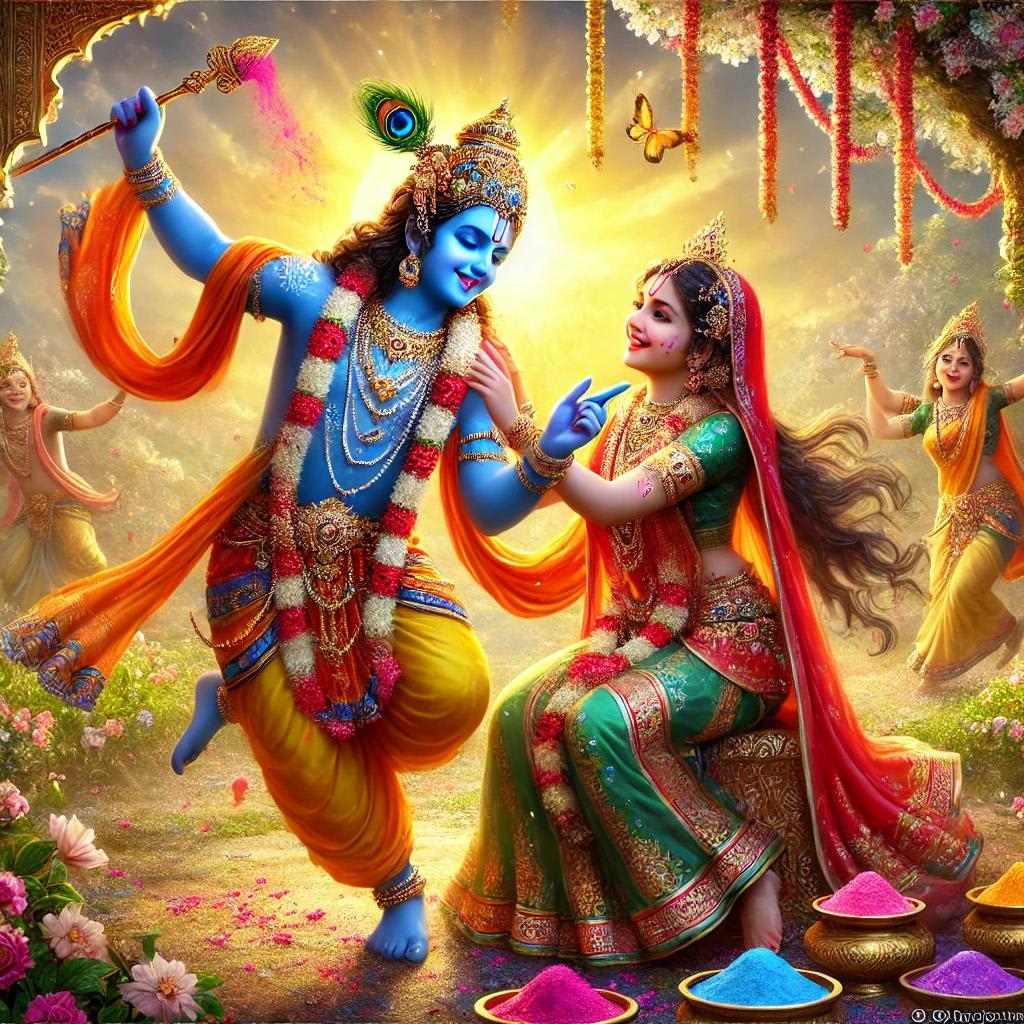
Holi, the festival of colors, is one of the most joyful celebrations in India and many parts of the world. It is a time for people to come together, spread happiness, and celebrate love and togetherness. The festival is not just about playing with colors; it has deep mythological significance and many stories behind its celebration. Let’s explore the most well-known stories associated with Holi.
The Legend of Prahlada and Holika
One of the most well-known stories associated with Holi is the legend of Prahlada and Holika. This story originates from Hindu mythology and revolves around the unwavering devotion of a young boy named Prahlada to Lord Vishnu.
Hiranyakashipu’s Tyranny
Hiranyakashipu was a powerful and arrogant demon king who had received a boon from Lord Brahma that made him nearly invincible. He could not be killed by man or beast, during the day or night, inside or outside, on land, in water, or in the sky. This made him feel invincible, and he began to believe that he was superior to the gods. He ordered everyone in his kingdom to worship him instead of any deity, but his own son, Prahlada, refused to obey him.
Prahlada’s Devotion
Despite his father’s warnings, Prahlada remained devoted to Lord Vishnu. His unwavering faith and devotion angered Hiranyakashipu, who tried to change his son’s mind by punishing him in various ways. Prahlada was subjected to cruel treatments—he was thrown into a pit of venomous snakes, trampled by elephants, and even given poison. However, Lord Vishnu always protected him, and he survived each ordeal unharmed.
The Trial by Fire
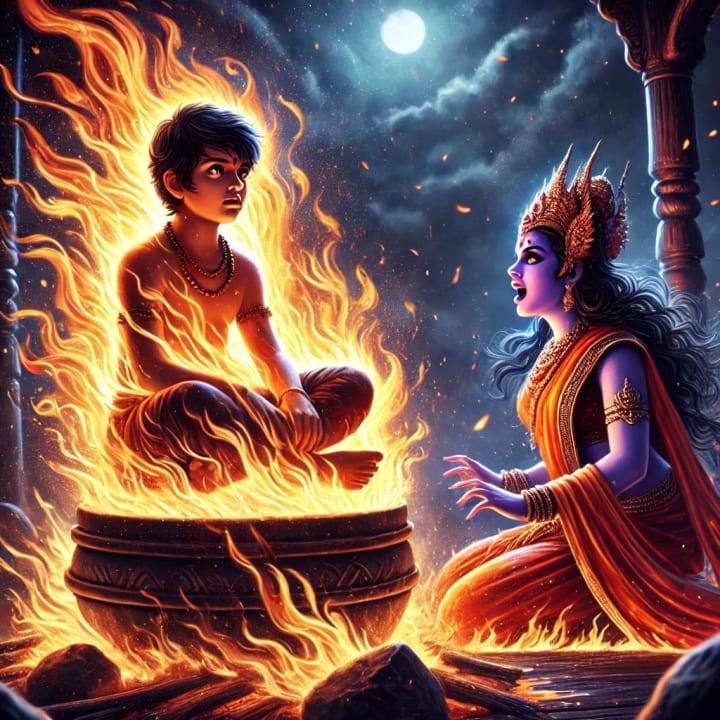
Frustrated and desperate, Hiranyakashipu sought the help of his sister, Holika. Holika had been granted a special boon that made her immune to fire. She devised a plan to kill Prahlada by sitting with him on a burning pyre while wearing a fireproof shawl, believing that she would remain unharmed while Prahlada would perish in the flames.
However, when the pyre was lit, divine intervention took place. A strong gust of wind blew the fireproof shawl off Holika and onto Prahlada, shielding him from the flames. As a result, Holika was burned to ashes, while Prahlada emerged unscathed. This event symbolizes the victory of good over evil and is commemorated by lighting bonfires on the eve of Holi, known as Holika Dahan.
The Love Story of Radha and Krishna
Another beautiful legend associated with Holi is the divine love between Lord Krishna and Goddess Radha. This story is especially popular in the regions of Vrindavan and Mathura, where Krishna spent his childhood.
Krishna’s Complexion and Radha’s Fairness
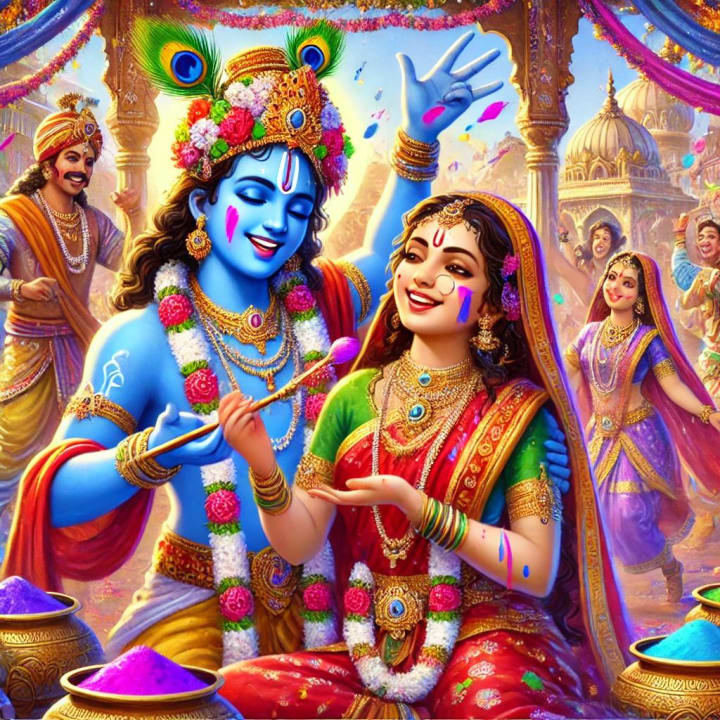
According to Hindu mythology, young Krishna, known for his playful nature, was troubled by the fact that his skin was dark, while Radha, his beloved, had a fair complexion. Feeling insecure, he asked his mother, Yashoda, why Radha was so fair while he was dark. To comfort him, Yashoda playfully suggested that he could apply color to Radha’s face so that she would look like him.
The Playful Tradition of Holi
Taking his mother’s advice, Krishna playfully smeared colors on Radha’s face, making her complexion match his own. This playful act became a tradition, and over time, it evolved into the grand celebration of Holi. Even today, people commemorate this legend by applying colors to each other’s faces as a symbol of love, unity, and joy.
In Vrindavan and Mathura, the festival of Holi is celebrated with great enthusiasm, including unique traditions like Lathmar Holi, where women playfully hit men with sticks, mimicking Radha and the Gopis teasing Krishna.
The Sacrifice of Kamadeva
Holi is also linked to the story of Kamadeva, the god of love, and his great sacrifice. This legend is particularly significant in South India, where people honor Kamadeva for his selfless act.
Lord Shiva’s Deep Meditation
After the tragic self-immolation of Goddess Sati, Lord Shiva went into deep meditation, withdrawing from the world. His absence created an imbalance in the universe, as he was needed for cosmic harmony.
Kamadeva’s Bold Act
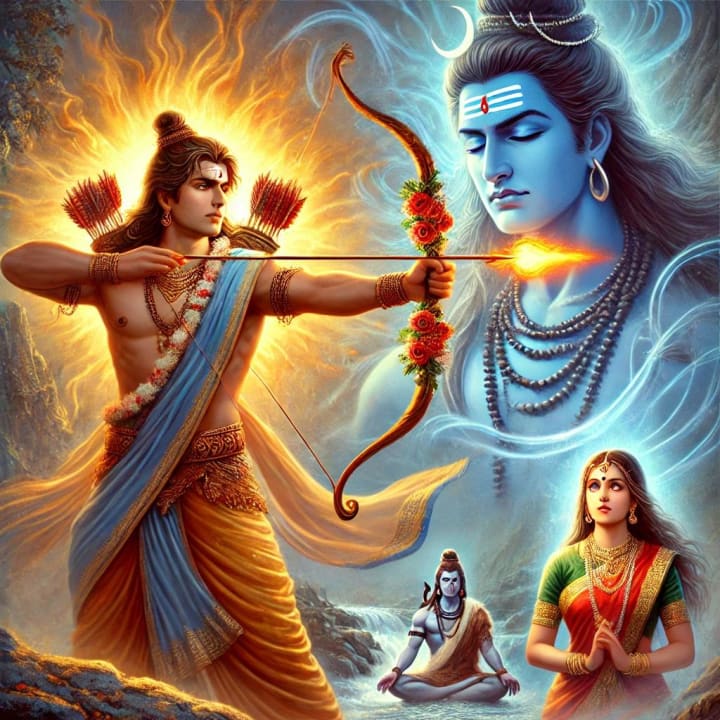
To bring Shiva back to his senses, the gods sought the help of Kamadeva, the god of love and desire. Kamadeva bravely shot an arrow of love at Shiva to awaken him from his deep meditation.
Shiva’s Wrath
However, Kamadeva’s act enraged Shiva, who opened his third eye in fury. The fiery energy from Shiva’s third eye burned Kamadeva to ashes, leaving his wife, Rati, heartbroken.
Kamadeva’s Resurrection
Later, upon seeing Rati’s deep sorrow, Shiva relented and revived Kamadeva, but only in a formless, spiritual essence. This event is believed to represent the power of sacrifice and the triumph of devotion. In South India, Holi is celebrated as Kama Dahanam, in honor of Kamadeva’s sacrifice..
Holi is not just a festival of colors; it carries the deep message of love, devotion, and the victory of good over evil. Whether through Prahlada’s unwavering faith, Krishna and Radha’s playful love, or Kamadeva’s sacrifice, Holi brings people together in a joyful celebration. The festival reminds us to spread happiness, forgive past mistakes, and enjoy the beauty of life with family and friends.
About the Creator
Sujeet M Sonar
An artist, teacher, and lifelong learner influenced by philosophers like J Krishnamurti & Socrates, and writers like Premchand and Kahlil Gibran. Inspired by Swami Vivekananda’s, I believe inner growth leads to outward expansion and Wisdom.
Keep reading
More stories from Sujeet M Sonar and writers in Longevity and other communities.
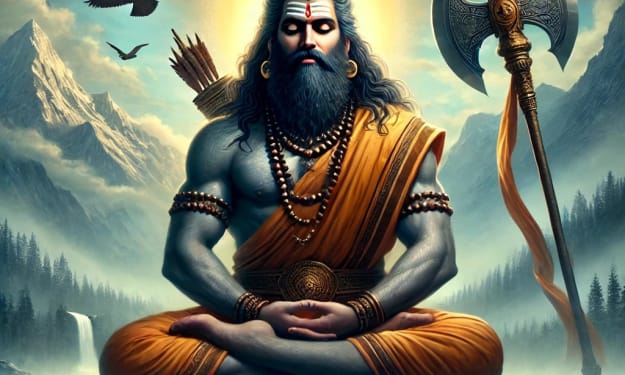
Lesser-Known Facts About Parashurama: The Warrior Sage of Hindu Mythology
Parashurama, the sixth avatar of Lord Vishnu, is a fascinating figure in Hindu mythology. Unlike other Vishnu avatars such as Rama or Krishna, Parashurama is not a Purna Avatar (complete incarnation) but rather an Ansha Avatar (partial incarnation), manifesting for a specific purpose—to eradicate the oppression of Kshatriya rulers and restore balance to the world. Here are some lesser-known but remarkable facts about him:
By Sujeet M Sonarabout a year ago in Longevity
Microsoft's Purposeful Marketing Deception About AI's Ability To Beat Physicians In Diagnosis
When you look at the world of scientific research... If you are not careful... You will be fooled into believing things that are not actually supported by the data.
By Dr. Cody Dakota Wooten, DFM, DHM, DAS (hc)a day ago in Longevity
A Transparent Look at Vocal Challenges and Top Stories
Almost three years ago, we shared a resource article that served as a place for people to suggest new challenge prompts. We thought it would be a good idea to refresh that thread, and take the opportunity to answer a few common questions about top stories, how challenges are judged and how submissions are reviewed.
By Vocal Curation Team4 days ago in Resources



Comments
There are no comments for this story
Be the first to respond and start the conversation.