
“Starving for Peace: The Silent Hunger Crisis in Palestine
A Nation in Shadows: Food as a Casualty of Conflict

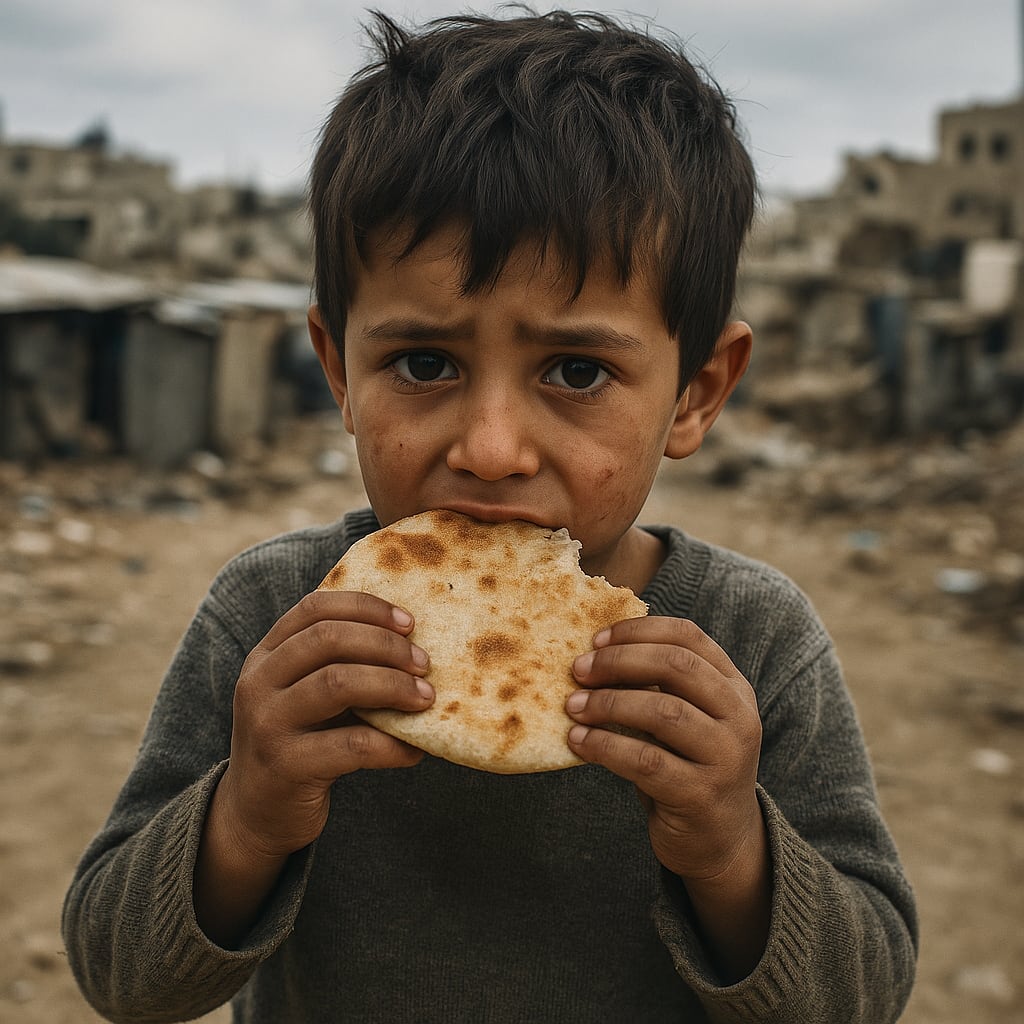
In the heart of occupied Palestine, behind concrete walls and military checkpoints, another battle rages silently—one that doesn’t make headlines as often as the bombs or the ceasefires. It’s a war of empty stomachs, of children going to bed without dinner, of mothers drinking water to quiet the pain of hunger. In Gaza, in the West Bank, and even in parts of East Jerusalem, food insecurity has reached emergency levels. But this is not just a story about hunger—it’s a story about dignity, endurance, and the human cost of a decades-long siege.
A Nation in Shadows: Food as a Casualty of Conflict
In Gaza, where over two million people live on a sliver of land sealed off by blockades, food is more than a necessity—it’s a symbol of control. According to the United Nations, over 80% of Gazans rely on humanitarian aid to survive. In many homes, meals consist of little more than bread and tea, if that. Fruits, vegetables, and meat are luxuries. Israel's restrictions on goods and mobility, coupled with the near-total collapse of the economy, have created a humanitarian nightmare.
Every day, families line up outside distribution centers operated by UNRWA or local charities. Children cling to their mothers as they wait for bags of flour, lentils, or oil—basic staples that may be all they eat for days. The humiliation is not in the waiting; it's in the knowing—that dignity has become a casualty of politics.
The Daily Fight to Feed a Family
In the West Bank town of Hebron, 34-year-old Ahmad works odd jobs just to bring home a bag of rice. Once a carpenter, he lost his workshop when access to materials was blocked. Now, he digs wells and fixes broken doors, anything that offers a few shekels. His wife, Lina, has become an expert at stretching meals. She makes soup from onion peels and crushed tomatoes, saving the good ingredients for their children.
“Our son, Sami, is six. He’s growing too slowly,” Lina says, her voice trembling. “I know it’s because we can’t feed him enough, but what can we do? I give him my portion. I can handle hunger. He can’t.”
They are not alone. Palestinian children face some of the highest rates of stunting and malnutrition in the region. Food prices are rising, jobs are scarce, and access to farmland is often restricted by Israeli military zones and settlements. A simple act like farming becomes dangerous when soldiers or settlers confront Palestinians with weapons and threats.
Mothers Skip Meals So Children Can Eat
Mothers across Gaza and the West Bank are making the ultimate sacrifice—choosing hunger for themselves so their children might eat. Fadwa, a widow from Khan Younis, lost her husband in an airstrike two years ago. Since then, she has raised three children on a widow’s pension and food aid.
“There are days I pretend I’m not hungry,” she says. “I tell my kids I already ate so they’ll eat the little food we have. At night, I cry into my pillow—not just from hunger, but from helplessness.”
She’s not alone. This has become the norm for thousands of Palestinian women, who bear the burden of hunger quietly. In many homes, it is the mother’s body that pays the price, her nutrition sacrificed so the next generation might survive.
Hope on Empty Stomachs: Stories of Resilience and Resistance
Despite the hunger, despite the pain, hope has not vanished from Palestine. Communities have organized food drives, established rooftop gardens, and created underground kitchens that feed hundreds daily. Local NGOs, despite dwindling funds, continue to distribute meals and groceries. And while international attention often fades, the people persist.
Take the story of Nour, a 22-year-old university student in Nablus. She started a community kitchen in her neighborhood during Ramadan. With donations from local shops and the help of neighbors, they prepared 200 meals a day for struggling families.
“We are not beggars,” she says. “We are people caught in a system that denies us our basic rights. But we help each other. That’s how we resist—with kindness, with unity, with love.”
In the refugee camps of the West Bank, children learn to grow herbs in recycled bottles. In Gaza, fathers build makeshift ovens from cinder blocks to bake bread when electricity is cut. In Jerusalem, Christian and Muslim families share meals across faith lines during holidays. These are not acts of desperation—they are acts of defiance against the systems that want to see them starve.
Conclusion: Starving for More Than Food
The hunger in Palestine is not only for food—it is for justice, for peace, for a life lived without fear or fences. As long as the siege continues, as long as checkpoints block trade and aid, and as long as the occupation remains, the hunger will grow—not just in bellies, but in hearts.
But Palestine endures. Not because it is strong, but because its people have learned to find strength in each other. In shared meals, in whispered prayers, in the hands that reach out instead of turning away.
To be Palestinian today is to fight for survival every single day. Not just against bombs, but against the slow death of hunger. It’s time the world listened—not just to the noise of war, but to the silence of an empty plate.
About the Creator
Saqib Ullah
Saqib Ullah is a content creator and writer on Vocal.media, sharing SEO-friendly articles on trending news, lifestyle, current affairs, and creative storytelling. Follow for fresh, engaging, and informative reads.
Keep reading
More stories from Saqib Ullah and writers in Longevity and other communities.
6 Morning Yoga Poses to Instantly Boost Peace, Positivity, and Energy Every Day
Introduction: Wake Up to Wellness Let’s be honest: most of us wake up feeling more drained than refreshed. Whether it’s the weight of yesterday’s stress or the chaos of a packed schedule ahead, it’s easy to start the day feeling irritable and exhausted. But what if a simple shift in your morning routine could change everything?
By Saqib Ullah10 months ago in Longevity
The Best Time To Eat Breakfast for Blood Sugar and Energy
Eating breakfast within 1–2 hours of waking up can help support blood sugar and provide energy and nutrients to start your day. Eating breakfast at a consistent time is important. Changing meal times can disrupt the body’s internal clock, which helps regulate blood sugar. A balanced breakfast with complex carbs, protein, and healthy fats helps support blood sugar.
By Good health to everyone5 days ago in Longevity
Why Protein Is Essential for the Elderly
As people age, maintaining good nutrition becomes increasingly important for health and independence. One nutrient that often receives special attention in elderly nutrition is protein. While protein is important at every stage of life, it becomes especially crucial in older adulthood.
By Being Inquisitive2 days ago in Longevity
Author’s Advice
If you would’ve asked me 20 years ago did I know I’d become a writer and an author, I would’ve said “nope, ain’t happening”. As fate would have it I did become an author and I can honestly say I’m loving it so far. It really does feel good to be a writer. I’ve learned a lot on this journey and I feel like with even me being as new to this world as I am, there’s some wisdom I need to share with every other aspiring author.
By Joe Patterson2 days ago in Journal



Comments (1)
This is a heartbreaking situation. It's hard to fathom the daily struggle for basic food items. How can we, as a global community, ensure that the restrictions on goods and mobility are lifted? And what more can be done to support local economies so people like Ahmad can get back to their normal livelihoods? It's time for real change.