
Say goodbye to BMI — there is a better body mass index.
Researchers propose a low-complexity RFM index that measures body fat quite well. Will it displace BMI and other popular measurement methods?


BMI, a commonly used index, has one advantage — simplicity. Just divide your weight in kilograms by your height in meters squared. The result is supposed to roughly reflect whether your weight is within the normal range; the correct range is between 18.5 and 25.
The wording “roughly” is key here. Each of us has a slightly different build, some have thicker bones, others more muscle. And BMI, for example, treats muscle mass the same as body fat, so athletes may be overweight (bodybuilders even obese). In addition, this indicator does not reflect abdominal obesity, a situation in which we have a fairly slim build, but carry a belly in front of us — research shows that this is more dangerous to health than, for example, light overweight.
BMI and other indicators of better and worse measuring our weight
It is interesting to note that the forerunner of the BMI index was another, proposed in the 1920s — weight was to be divided by height raised to the cube. It had the advantage that the result in a healthy person should oscillate around the number 12. It is not known why it was abandoned. It is better than BMI — statistically it shows more agreement with actual overweight (or underweight).
There are other ratios that statistically predict disease risk quite well, especially cardiovascular and diabetes. For example, the ratio of waist circumference to height (should not exceed 0.48 in women and 0.52 in men, higher indicates overweight or obesity) or another ratio: how much we measure at the waist to how much we have at the hips (in women, this ratio should be less than 0.8, in men 0.9). But their simplicity also does not translate into statistical reliability.
It would be best to measure body fat empirically. But popular methods, such as measuring biompendication, measuring skinfold thickness, or ultrasound, have a very large range of error, making them essentially useless for scientific research purposes, such as collecting epidemiological statistics.

Better measurement methods are more expensive, but… less useful
Accurate methods for measuring body fat are complicated and, above all, expensive. It is possible to calculate the amount of body fat with the help of appropriate formulas. The problem is that this requires knowledge of the density (specific gravity) of the person, and this is difficult to determine without measuring the volume. The subjects must be weighed underwater or placed in a sealed capsule from which the body expels air. More recent techniques include DXA, or X-ray absorptiometry at different energies, which requires specialized equipment. All of these methods are used in scientific research, but for doctors and epidemiologists, for example, they are completely useless.
RFM, a new, simple formula
Researchers at California’s Cedars-Sinai Medical Center are proposing a better index than BMI, which they have named RFM — from Relative Fat Mass. Its advantage is that it is not particularly complicated. Men should subtract 20 times the ratio of height to waist circumference from the number 64 (i.e., the formula is 64–20 x height : waist circumference), and ladies should subtract 76 (i.e., 76–20 x height : waist circumference).
The researchers reviewed 350 different ratios (hard to believe, but that’s how many have been proposed so far in the scientific literature). They compared the calculations based on their proposed formula with a study of 3,500 people by X-ray and found that the above formula reflected the amount of body fat as a percentage quite well. They published a paper on this topic this summer in Scientific Reports.
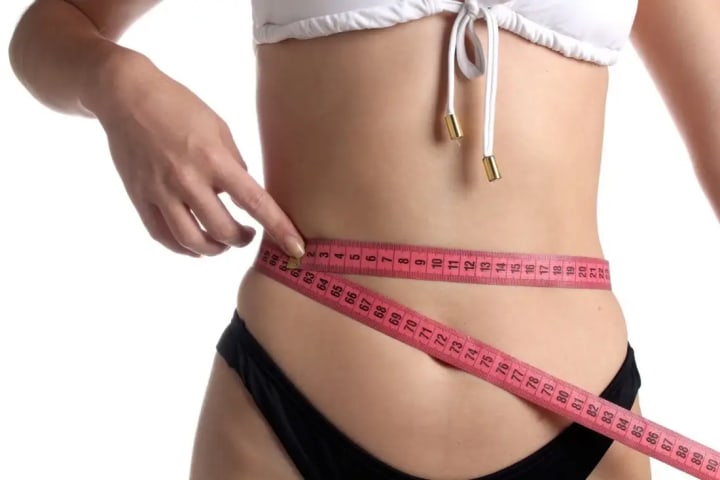
Will RFM replace the BMI?
For the curious, the formula has the advantage of being able to approximate how much “hostile” fat they have. It’s a joke, of course, because we all need some body fat. Men between 2 and 5 percent of body weight, between 6 and 13 percent is the norm for athletes, between 14 and 17 percent is considered to be in good physical shape, 18–24 percent is considered average, and above 25 percent of body weight is considered obese. Women need more body fat (10–13 percent), female athletes should have 14 to 20 percent, ladies in good shape between 21 and 24 percent, 25 to 31 percent is considered the norm, and more than 32 percent of body weight is considered obese.
The disadvantage of BMI is that it gives a completely abstract number. In the case of the new index, we can count ourselves how much (approximately, of course) body fat we carry on ourselves. Will we say goodbye to BMI because RFM will replace it? It is hard to say, but it is good to know that it is better than 350 other indices.
About the Creator
The Power of Black Coffee: Benefits, Nutrients, and Uses (Heath Tips)
Introduction: Black coffee is one of the most popular drinks in the world. Millions of people enjoy it every day, especially in the morning, because it helps them feel fresh, active, and focused.
By Health Tipsa day ago in Longevity




Comments
There are no comments for this story
Be the first to respond and start the conversation.