
Saudi Arabia Diabetic Food Market Size and Forecast 2025–2033
Rising Health Awareness and Dietary Innovation Fuel a Fast-Growing Functional Food Segment

Saudi Arabia Diabetic Food Market Overview
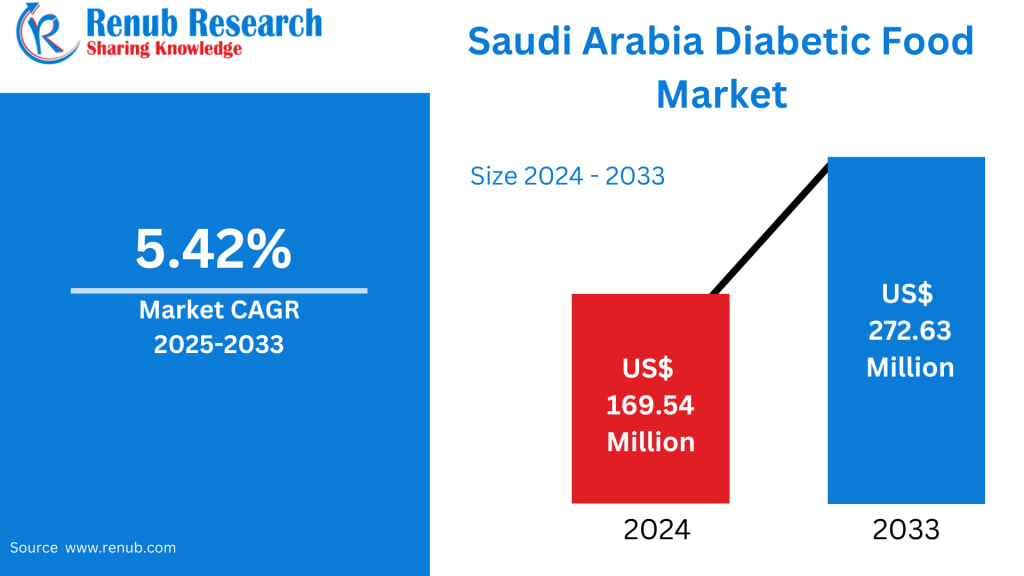
The Saudi Arabia Diabetic Food Market is experiencing steady and sustainable growth, reflecting the Kingdom’s increasing focus on health, wellness, and preventive nutrition. According to Renub Research, the market is expected to grow from US$ 169.54 million in 2024 to US$ 272.63 million by 2033, expanding at a compound annual growth rate (CAGR) of 5.42% between 2025 and 2033.
This expansion is primarily driven by the rising prevalence of diabetes, growing health consciousness among consumers, and increasing demand for low-sugar, sugar-free, and functional food products. Urbanization, lifestyle changes, and greater access to organized retail and e-commerce platforms are further reshaping dietary preferences across Saudi Arabia.
As diabetes management increasingly shifts beyond medication toward long-term dietary control, diabetic-friendly foods are becoming an essential component of everyday consumption rather than niche medical products.
Saudi Arabia Diabetic Food Industry Overview
The diabetic food industry in Saudi Arabia is evolving in response to rising lifestyle-related disorders and heightened nutritional awareness. With diabetes now recognized as a long-term health challenge, consumers are actively seeking food products that help regulate blood sugar levels while supporting overall wellness.
Low-sugar and sugar-free offerings across bakery products, dairy alternatives, snacks, beverages, and confectionery are gaining traction. Manufacturers are reformulating products using natural sweeteners, fiber-rich ingredients, and functional nutrients, aligning with global clean-label trends.
In addition, expanding modern retail formats, pharmacy chains, and digital commerce platforms have significantly improved access to diabetic food products. E-commerce, in particular, has emerged as a crucial channel, enabling consumers to explore specialized food options conveniently.
Government-backed health awareness initiatives and nutrition education campaigns further support market growth, creating an ecosystem where innovation, regulation, and consumer demand converge to strengthen the diabetic food segment.
Key Factors Driving the Saudi Arabia Diabetic Food Market
Rising Prevalence of Diabetes
One of the most influential drivers of market growth is the increasing number of diabetic patients across Saudi Arabia. Sedentary lifestyles, changing dietary habits, and urban living have contributed to higher diabetes incidence, intensifying demand for dietary solutions that aid glucose management.
Healthcare professionals increasingly emphasize dietary intervention as a cornerstone of diabetes management, encouraging patients to adopt sugar-free and low-glycemic food alternatives. As diabetes requires lifelong management, demand for diabetic-friendly foods remains consistent and resilient, providing long-term stability to the market.
Growing Awareness of Health and Wellbeing
Health consciousness in Saudi Arabia has expanded beyond individuals with diabetes to include a broader population focused on preventive healthcare. Consumers are becoming more attentive to nutritional labels, sugar content, and functional benefits, driving demand for foods that support balanced living.
Younger consumers and urban professionals are particularly attracted to clean-label, plant-based, and naturally sweetened products. Wellness campaigns, media coverage, and nutrition-focused education have transformed diabetic food products into lifestyle-oriented choices rather than solely medical necessities.
This broader appeal continues to fuel sustained growth across multiple product categories.
Rising Disposable Income and Lifestyle Shifts
Saudi Arabia’s expanding middle class and rising disposable income levels have strengthened consumer purchasing power. Premium and specialized food categories, including diabetic foods, are increasingly viewed as worthwhile investments in long-term health.
Busy urban lifestyles have boosted demand for convenient, packaged, and nutritionally optimized foods, with consumers willing to pay a premium for trusted brands and scientifically formulated products. This shift has positioned diabetic foods as a high-growth segment within the Kingdom’s evolving food and beverage landscape.
Challenges Facing the Saudi Arabia Diabetic Food Market
Regulatory and Labeling Complexities
Strict regulatory standards surrounding sugar claims, nutritional labeling, and ingredient disclosure pose ongoing challenges for manufacturers. Ensuring compliance with evolving regulations requires significant investment, particularly for international brands entering the Saudi market.
Inconsistent labeling practices and unclear claims regarding glycemic impact can erode consumer trust. Addressing these issues through transparent labeling and regulatory alignment remains essential for long-term market credibility.
Supply Chain and Distribution Limitations
While diabetic food availability is strong in major cities, access remains limited in smaller towns and semi-urban regions. Distribution inefficiencies, import-related delays, and higher logistics costs restrict product availability beyond key metropolitan centers.
As a result, many consumers outside major cities continue relying on traditional diets that may not support optimal diabetes management. Strengthening nationwide distribution networks is critical for unlocking untapped market potential.
Saudi Arabia Diabetic Food Market by States
Dhahran Diabetic Food Market
Dhahran represents a strong regional market due to its educated population, international exposure, and emphasis on corporate wellness. Consumers actively seek diabetic-friendly foods that align with broader health goals.
Retail pharmacies, supermarkets, and online platforms offer a wide selection of products, while awareness campaigns further encourage adoption. Dhahran’s professional and family-oriented demographic profile supports sustained demand growth.
Riyadh Diabetic Food Market
Riyadh is the largest and most dynamic diabetic food market in Saudi Arabia. High population density, advanced healthcare infrastructure, and elevated diabetes prevalence drive strong demand.
Retailers in Riyadh stock diverse diabetic food categories, from sugar-free snacks to fortified dairy alternatives. Government-led wellness programs and nutrition awareness initiatives further reinforce consumer adoption, positioning Riyadh as a central hub for market expansion.
Jeddah Diabetic Food Market
Jeddah’s multicultural environment and openness to global health trends make it a key growth center for diabetic foods. Rising awareness of dietary management and increasing lifestyle-related health concerns support steady demand.
Modern retail networks and e-commerce platforms ensure broad product accessibility, while public health initiatives continue to promote healthier eating habits. Jeddah’s working population and family-oriented households contribute to consistent market growth.
Market Segmentation
By Product Type
Confectionery
Snacks
Bakery Products
Dairy Products
Others
By Distribution Channel
Supermarkets and Hypermarkets
Specialty Stores
Online Stores
Others
By States
Dhahran
Riyadh
Khobar
Jeddah
Dammam
Others
Competitive Landscape and Key Companies
The Saudi Arabia diabetic food market features strong participation from both multinational and established food manufacturers. Key players focus on product reformulation, clean-label innovation, and functional nutrition to maintain competitive advantage.
Major companies operating in the market include Nestlé, Unilever, The Kellogg Company, Conagra Brands, Inc., Tyson Foods, The Hershey Company, and Hain Celestial Group.
These companies emphasize innovation, partnerships, and compliance with regional dietary standards to strengthen market presence.
Final Thoughts
The Saudi Arabia Diabetic Food Market is positioned for consistent growth through 2033, supported by rising diabetes prevalence, increasing nutritional awareness, and evolving consumer lifestyles. With the market projected to reach US$ 272.63 million by 2033, diabetic-friendly foods are transitioning from niche medical products to mainstream dietary solutions.
As government initiatives, healthcare guidance, and food innovation converge, the market offers strong opportunities for manufacturers, retailers, and investors. Companies that prioritize transparency, accessibility, and functional nutrition will be best positioned to capitalize on Saudi Arabia’s growing demand for healthier food alternatives.
About the Creator
Renub Research
Renub Research is a Market Research and Consulting Company. We have more than 15 years of experience especially in international Business-to-Business Researches, Surveys and Consulting. Call Us : +1-478-202-3244
Keep reading
More stories from Renub Research and writers in Longevity and other communities.
United States Wound Care Market Size and Forecast 2025–2033
United States Wound Care Market Outlook The United States wound care market is entering a sustained phase of expansion as healthcare systems respond to the growing burden of chronic diseases, an aging population, and increasing surgical procedures nationwide. According to Renub Research, the market is expected to grow from US$ 6.45 billion in 2024 to US$ 10.4 billion by 2033, registering a compound annual growth rate (CAGR) of 5.44% from 2025 to 2033.
By Renub Research4 days ago in Longevity
Day 4 of Quitting
If this is how sobriety feels, maybe it’s better to go through life a little buzzed… this, along with other hits like, I want to kill myself, I wish I was dead, and I’m going to throw myself off a bridge have been the only thoughts on rotation these past few days. I promise myself that if, in a month, I still feel like this (‘this’ meaning despondent, full of rage, and simultaneously numb) I can go back to smoking. Until mid-February though? Nicotine is off the table.
By sleepy drafts4 days ago in Longevity
Seven Health Tips To Promote Longevity
I love chatting with older folks who look better than younger folks and have more energy than younger folks. They're magnetic because they're doing life differently. Most people age out of healthy habits, physiques, and energy. But a small sector of folks defy the odds and maintain pristine health as they age. Here are some tips I received from some older folks who looked better than most of the people at the gym:
By Destiny S. Harris5 days ago in Longevity




Comments
There are no comments for this story
Be the first to respond and start the conversation.