
Rewilding the Mind: Forest Bathing-Inspired Meditations
How nature-based mindfulness helps restore clarity, calm, and creative flow


Your mind wasn’t built for inboxes, concrete, and push notifications.
It was built for birdsong, wind in trees, and the subtle crackle of leaves underfoot.
But in our fast-paced, screen-dominated world, we’ve become disconnected—from the earth, and from ourselves.
Rewilding the mind is a movement toward reconnection. A return to the rhythms of the natural world—not by escaping life, but by remembering how to be fully alive within it.
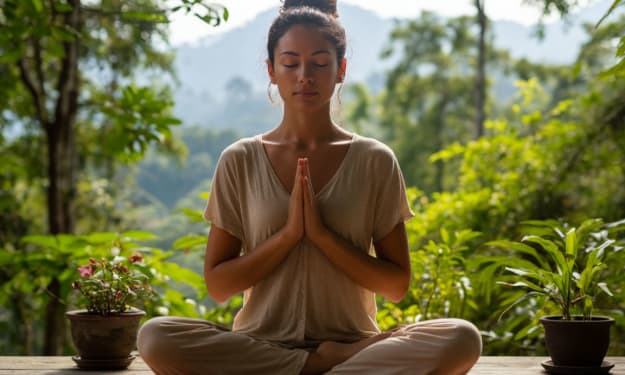
At the heart of this practice is forest bathing, a Japanese mindfulness ritual known as Shinrin-yoku, and the meditative presence it invites. Whether you have access to a wild forest, a quiet park, or a single tree outside your apartment window, forest-inspired meditation offers a way to re-tune your nervous system and let your inner wildness breathe again.
What Is Forest Bathing?
Developed in Japan in the 1980s, forest bathing is not about hiking or exercising. It’s the simple act of immersing yourself in a natural setting and engaging your senses with mindful attention.
The benefits, backed by science, include:
Lower cortisol (stress hormone) levels
Improved heart rate variability
Boosted immune function
Enhanced mood and mental clarity
Reduced symptoms of anxiety and depression
Unlike meditation apps or guided visuals, forest bathing grounds you in the real, physical world. It’s a meditation with your body, with your breath, and with the living landscape around you.
Rewilding the Mind: Why Nature Matters
Modern life often keeps us in our heads: analyzing, optimizing, reacting. But nature speaks to a deeper part of us. When you sit beneath a tree or walk slowly through a wooded path, something ancient stirs.
You don’t need to “figure anything out.”
You don’t need to silence your thoughts.
You simply need to be present to what is already alive and speaking to you through the wind, the rustling branches, and the sunlight dappling the ground.
This is rewilding: remembering your place in the ecosystem—not as a master of it, but as a participant.
A Simple Forest Bathing-Inspired Meditation
Whether you’re in a park, a backyard, or near a single plant, try this meditation:
10-Minute Rewilding Practice
Arrive and ground. Stand or sit in stillness. Feel your feet on the earth.
Tune in. Close your eyes. What can you hear? What can you smell? Let the senses awaken.
Open your eyes slowly. Let your gaze rest without focus. Notice color, texture, shadow.
Pick one element to observe. A leaf, a breeze, a stone. Breathe with it. Let it anchor you.
Stay present. When your mind drifts, gently return to the sound of wind, the scent of soil.
Close with gratitude. Whisper thank you—to the tree, the sky, or the quiet itself.
No headphones. No screens. Just you and the living world, remembering each other.
Even If You’re Indoors...
Can’t access a forest? You can still practice forest-inspired mindfulness:
Sit by an open window and listen to birds or rain
Light a pine-scented candle or use essential oils like cedarwood or cypress
Look at a plant, not as décor, but as a living presence
Use natural textures—stones, wood, soil—as meditation anchors
Recall a memory of being in nature, and let it fill your senses
Rewilding doesn’t require a remote cabin. It requires attention, presence, and a willingness to slow down.
Final Thought: The Forest Inside You
Rewilding the mind isn’t about escaping the modern world.
It’s about softening your nervous system enough to feel alive within it again.
It’s about remembering that the wild isn’t somewhere you go—it’s something you carry.
Each time you pause, breathe, and notice a tree or the sound of birdsong, you rebuild a bridge between your inner and outer ecosystems.
And in that reconnection, you may find something you didn’t realize you’d lost:
Your natural rhythm. Your creative clarity. Your untamed peace.
About the Creator
Keep reading
More stories from Victoria Marse and writers in Longevity and other communities.
7 Essential Foods for Healthy Aging
As people grow older, their bodies go through many natural changes. Metabolism slows down, appetite may decrease, and nutrient absorption can become less efficient. Because of these changes, nutrition becomes even more important during the later stages of life.
By Being Inquisitive4 days ago in Longevity



Comments
There are no comments for this story
Be the first to respond and start the conversation.