
Protocol in Question
COVID-19 Test Or Vaccine Required for Entry

Just this past week, articles such as the BBC News, Billboard, The New York Post, The Chicago Tribune and many others have reported about ticketmaster's suggested Post-COVID screening framework. From the Billboard website article published by Dave Brooks on Nov.11, 2020, twice it has stated Ticketmaster's goal for anyone gaining entry into concerts. Unless attendees have taken the vaccine or have provided proof that they have been tested 24-72 hrs prior, they cannot be granted access into the concert event.
After purchasing a ticket for a concert, fans would need to verify that they have already been vaccinated (which would provide approximately one year of COVID-19 protection) or test negative for coronavirus approximately 24 to 72 hours prior to the concert. The length of coverage a test would provide would be governed by regional health authorities -- if attendees of a Friday night concert had to be tested 48 hours in advance, most could start the testing process the day before the event. If it was a 24-hour window, most people would likely be tested the same day of the event at a lab or a health clinic.
- Billboard Article Published 11/11/2020 written by Dave Brooks
In light of this news update here's something to consider. Just recently, in an article written by Dina Temple-Raston published in NPR , officals admitted how faulty the CDC Coronavirus test kit had a failure rate of 33% and knew it before releasing the test nationwide.
The New York City Public Health Laboratory was in that first wave of labs receiving the kits, and its director, Jennifer Rakeman, said her technicians began trying to verify the test right away. Verification is a standard protocol; it involves following detailed instructions to ensure the tests work the same way in an outside lab as they do at the CDC labs in Atlanta...
By Feb. 8, hours after her lab started verifying the test kits, Rakeman said she began receiving panicked emails from colleagues...
The FDA had required a particular protocol be followed when designing the test, and the lab didn't seem to be using the correct one, it said. "The first round of [quality control] for final kit release used an 'incorrect' testing procedure," it said. "Later in the timeline, detection of a 33 percent kit failure" using the correct quality control protocols "did not result in a kit recall or a performance alert."


As Ticketmaster is constructing this model moving forward and due to the newly found inaccuracy of these test kits, the questions people should be bare in mind are...
- What happens if a case occurs where customers purchased their ticket, test positive, are restricted from entry, and then later find out the results were false?
- Would customers have to schedule a re-examination at free testing-sites to verify the results before the date of the event?
- If results remain the same, do customers have to file a claim for a refund days prior to the event, then have to wait certain business day periods before receiving that refund?
- Do customers get a credit for the amount paid towards the next event and are waived from the testing requirement prior to attending the next upcoming event?
The details are still being worked out but what we do know for sure is that for the sake of everyone's “safety”, vaccinations are being considered as part of their entry requirements. It is likely that other venues could possibly adopt Ticketmaster's model to it's future patron's (whether it's proven effective or not) to which they must either get vaccinated or tested.
It should raise concern on how quickly these vaccines in less than 9 months post COVID-19 outbreak has been developed. According to an article published in The Guardian by Robin Mckie on Oct. 25, 2020...
A total of 198 Covid vaccines are now under development across the globe with four key versions undergoing final phase 3 trials. These include Pfizer’s BNT162b2 and the Oxford AstraZeneca vaccine.
The article then quotes an editorial in Nature from a World Health Organzation director, Kanta Subbarao stating...
The problem is that early vaccine trials are not likely to show how well these products work in these populations.
In the same article it also mentions...
Scientists have warned that early adoption of a Covid vaccine with only moderate effectiveness could disrupt efforts to test and create improved versions. Immunising against the disease is not going to be a simple business of turning off the virus once the first vaccine appears, they say. In fact, there could be considerable confusion as researchers struggle to pinpoint the best versions for different vulnerable groups, such as the elderly.
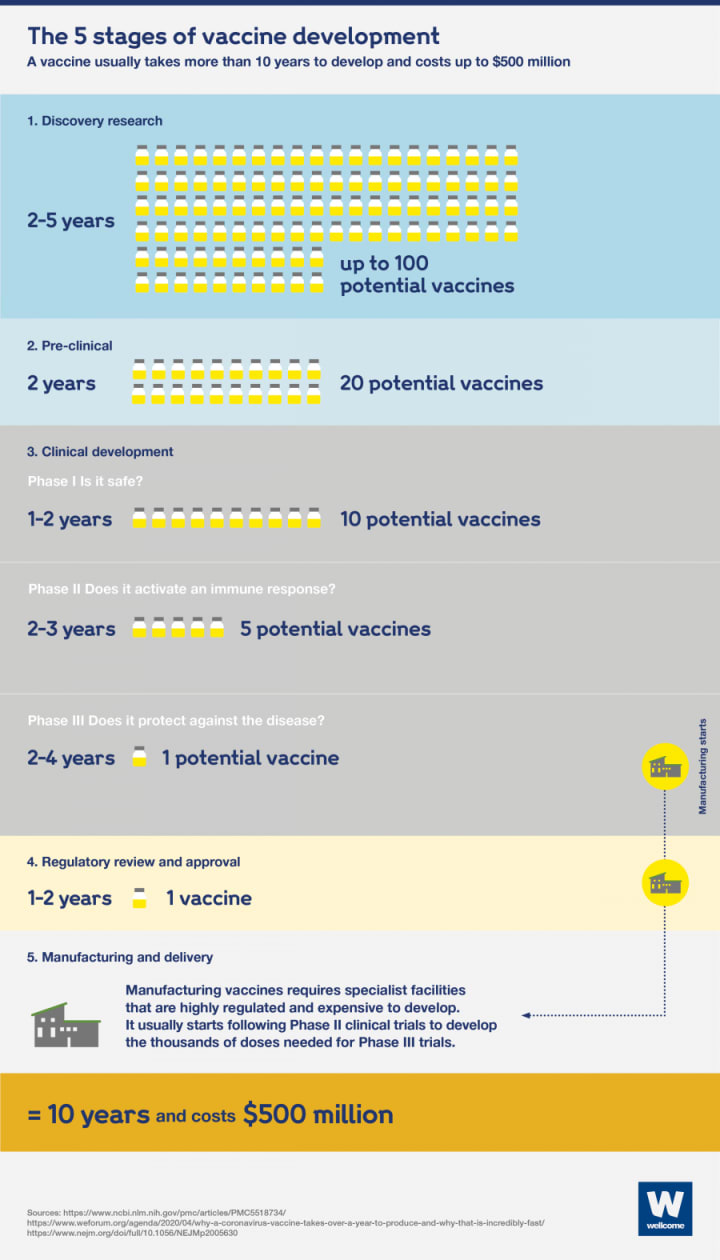
Embarking on this road to a speedy introduction of COVID-19 vaccines to the masses is rather skeptical given the fact vaccines typically take years to develop. As a matter of fact in a Table shown from an article written by Douglas Broom in the World Economic Forum there are 5 stages in a Vaccine Development that can take at least 10 years before manufacturing and delivering vaccines to specialist facilities.
Furthermore, according to an NBC News update via Kaiser Health News article written by Liz Szabo and JoNel Aleccia it is mentioned...
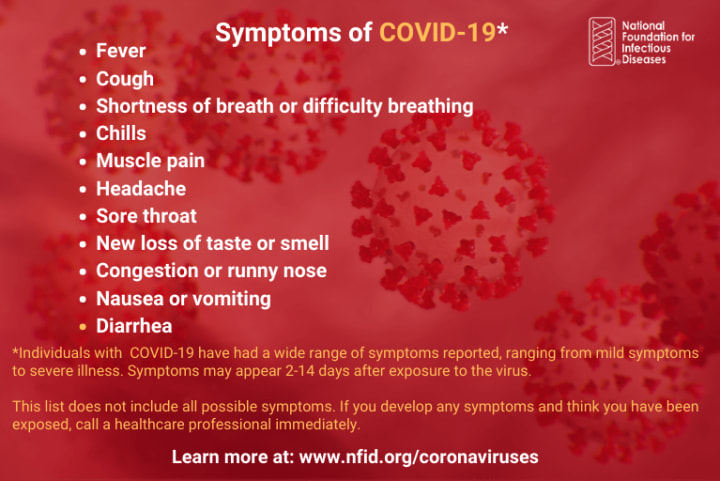
The vaccine, and likely most others, will require two doses to work, injections that must be given weeks apart, company protocols show. Scientists anticipate that the shots will cause enervating flu-like side effects — including sore arms, muscle aches and fever — that could last days and temporarily sideline some people from work or school. And even if a vaccine proves 90 percent effective, the rate Pfizer touted for its product, 1 in 10 recipients would still be vulnerable. That means, at least in the short term, as population-level immunity grows, people can't stop social distancing and throw away their masks.
Alarmingly, in the same news update it was also mentioned...
Pfizer is expected to seek federal permission to release its Covid-19 vaccine by the end of November
It is wise to be cautious towards the rapid vaccine development and possible release to the public. Earlier it was established the admission by health officials despite their awareness of the test kits inaccuracy rate, it still proceeded to release it to the public. Whom is to say the faultiness won't repeat itself in this speedy release for the vaccine? In midst of rushing for immunization, are officials unconsciously not considering the overall health risks that can effect the livelihood for those receiving vaccinations?
More importantly, shouldn't there be more precaution taken by experts considering the 3 known side effects of the vaccine mentioned from Kaiser Health News article appear similar (if not exact) to the current listed symptoms of the COVID-19 virus?
It should be implored to both the experts and the general public to further educate themselves and thoroughly examine these pieces of information surrounding Post-COVID health measures and risks. Again, the idea other Live Entertainment companies may look to adopt Tickmaster's model is not that far out of the realm of possibility. Therefore it is necessary re-evaluate this approach since there is less knowledge about the vaccine and it's effectiveness. It is imperative to considering the safety of their newly and recurring customers before conducting this model or any future protocols in such haste. Understanding that COVID-19 is a serious matter, it's best not to repeat another serious error and other following errors thereafter.
About the Creator
Alexander Lambert
I am a hobby-writer who takes pride in digging beneath the surface of certain topics that are often too contraversial to discuss or isn't discussed on a mainstream level.
Keep reading
More stories from writers in Longevity and other communities.
Day 4 of Quitting
If this is how sobriety feels, maybe it’s better to go through life a little buzzed… this, along with other hits like, I want to kill myself, I wish I was dead, and I’m going to throw myself off a bridge have been the only thoughts on rotation these past few days. I promise myself that if, in a month, I still feel like this (‘this’ meaning despondent, full of rage, and simultaneously numb) I can go back to smoking. Until mid-February though? Nicotine is off the table.
By sleepy drafts18 days ago in Longevity
Official and Confirmed: Heavy Snow Is Set to Begin Late Tonight, With Alerts Warning of Major Disruptions and Widespread Travel Chaos
Winter is about to make its presence felt in a big way. Official weather agencies have confirmed that heavy snow will begin late tonight, and authorities are issuing alerts warning of major disruptions and widespread travel chaos. This sudden surge in winter weather is expected to affect millions of people, from daily commuters to travelers and local businesses. What to Expect Meteorologists predict that snowfall will intensify overnight, particularly in mountainous and northern regions. Some areas are likely to see several inches of accumulation, while plains and valleys may experience wet, slippery conditions. According to the latest reports: Snow is expected to begin late tonight and continue into the early morning hours. Major disruptions are expected on roads, highways, and airports. Travel authorities have issued alerts for all commuters, urging caution and preparedness. Officials warn that this is not just a light dusting of snow — the intensity and coverage could significantly affect travel and daily life. Travel Chaos Ahead Heavy snow often brings immediate disruptions, and experts are advising the public to plan ahead. 1. Road Travel Roads in affected regions are likely to become icy and slippery. Traffic jams and accidents are expected as drivers struggle with reduced visibility and slick surfaces. Authorities recommend avoiding unnecessary travel and using public transportation only if essential. 2. Air Travel Airlines have issued flight delays and cancellations for affected airports. Snow accumulation on runways can lead to safety hazards, forcing longer delays and rescheduled flights. Travelers are advised to check flight status frequently and allow extra time for airport procedures. 3. Rail and Bus Services Trains and buses may also face delays or temporary suspensions due to snow-covered tracks and roads. Commuters should plan alternative routes and stay updated with local transit authorities. Safety Alerts and Preparedness Emergency services and local authorities are stepping up to ensure public safety. Alerts include: Snow warnings in all major affected regions. Travel advisories for drivers and commuters. Recommendations to stock up on essential supplies, such as food, water, and warm clothing. Advice to prepare homes for potential power outages due to snow-laden trees or lines. Authorities emphasize that prevention is key. Staying off the roads and following official guidance can prevent injuries and accidents. How Residents Can Stay Safe Winter weather like this can be dangerous, but preparation can make a big difference. Here are some tips for residents: Check Weather Updates Frequently – Use official channels for the most accurate information. Limit Travel – Avoid driving unless absolutely necessary. Prepare Vehicles – Equip cars with snow chains, keep windshields clear, and check brakes and tires. Emergency Supplies – Keep flashlights, batteries, and warm blankets at home. Stay Informed – Follow local news, traffic alerts, and emergency services for updates. Simple precautions can prevent many common winter accidents and reduce stress during snow emergencies. Impact on Daily Life Heavy snow affects more than travel. Businesses, schools, and public services may face disruptions: Schools may close or delay opening to ensure student safety. Local businesses might see lower customer turnout due to travel difficulties. Healthcare services could face challenges as roads become harder to navigate. Communities are encouraged to prepare for temporary disruptions and support vulnerable populations, including the elderly and those with medical conditions. The Science Behind the Storm This winter system is caused by a combination of cold air moving south and moisture from the surrounding regions. Meteorologists explain that: Cold air from the north interacts with moisture-laden winds, producing heavy snow and strong winds. The snow is expected to accumulate quickly, especially in hilly and mountainous areas. Visibility may drop drastically, making travel dangerous even for short distances. Experts note that such snow events are becoming more frequent due to shifting climate patterns, emphasizing the importance of awareness and preparedness. How Authorities Are Responding Government agencies and emergency services are taking proactive measures to minimize damage and disruption: Road crews and plows are being deployed to keep highways clear. Sand and salt trucks are treating icy roads to prevent accidents. Airports and railways are increasing manpower to handle delays and maintain safety protocols. Public advisories are being sent through TV, radio, and social media to ensure residents stay informed. This coordinated response aims to prevent major accidents and ensure essential services remain operational. Key Takeaways for the Public Heavy snow will begin late tonight, with potential for widespread disruption. Travel is expected to be dangerous, so avoid unnecessary journeys. Residents should prepare homes, vehicles, and supplies to face the storm. Stay updated through official weather channels and local authorities. By staying informed and taking precautions, individuals can reduce risks and stay safe during this severe winter event. Conclusion The confirmation of heavy snow starting late tonight signals a challenging night and morning for residents and travelers alike. Authorities are emphasizing caution, preparation, and awareness to mitigate the effects of this major winter storm. As the snow falls, roads become treacherous, flights are delayed, and daily routines are disrupted. Yet, with proper preparation and vigilance, communities can navigate the chaos safely. This winter event serves as a reminder that nature’s forces can disrupt even the best-laid plans, and staying prepared is the most effective way to face the storm head-on.
By Fiaz Ahmed 4 days ago in Longevity


Comments
There are no comments for this story
Be the first to respond and start the conversation.