
Prostate Health and Benign Enlargement: Causes, Symptoms, and a Complete Natural Guide
A Natural and Science-Based Guide to Managing BPH and Supporting Men's Prostate Health
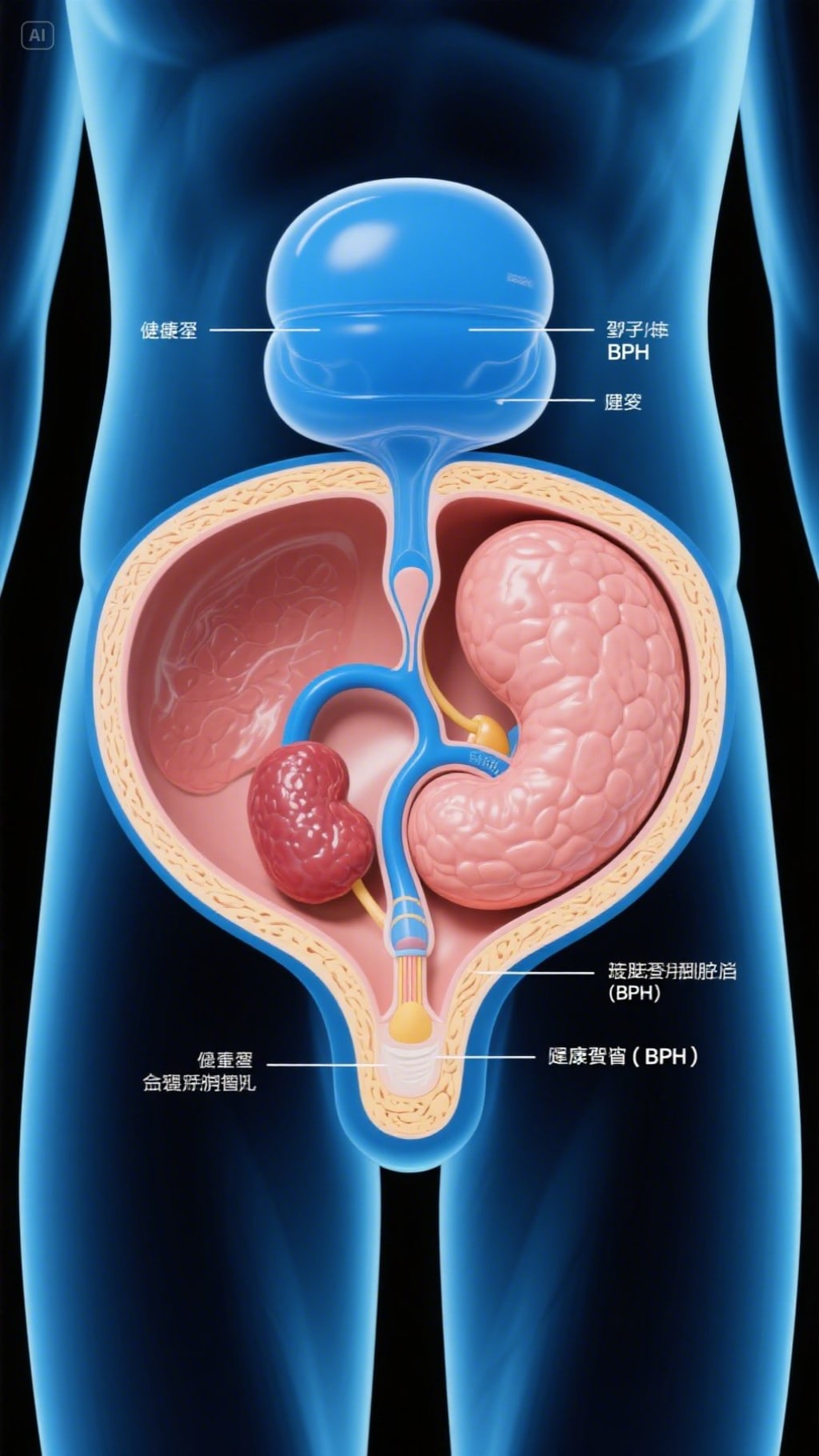
The prostate gland is a vital part of the male body, playing a key role in reproductive and urinary functions. As men age, many face a common issue known as Benign Prostatic Hyperplasia (BPH)—a non-cancerous enlargement of the prostate that can significantly affect quality of life due to its symptoms.
In this article, we’ll explore the causes and effects of prostate enlargement, the roles of hormones and nutrients, and the best natural strategies to maintain a healthy prostate.
---
What Is Benign Prostatic Hyperplasia (BPH)?
BPH simply refers to the enlargement of the prostate gland, which is located below the bladder and surrounds the urethra. As it grows, it can press against the urethra, causing:
Frequent urination, especially at night
Difficulty starting or maintaining urination
Weak urine stream
Feeling of incomplete bladder emptying
Sometimes, urinary retention
These symptoms can reduce quality of life, particularly for older men. Around 50% of men over 60 have BPH, and this rises to 90% in men over 80.
---
Location and Function of the Prostate
The prostate is situated just below the bladder and encircles the urethra. Normally, it's about the size of a walnut, but it can grow significantly with age.
The prostate's main functions are:
Producing fluid that forms part of semen, nourishing and protecting sperm
Acting as a muscle that helps propel semen during ejaculation
---
Hormones and Prostate Enlargement
Testosterone and Dihydrotestosterone (DHT)
Testosterone is responsible for male traits like muscle and hair growth.
It's converted into DHT by the enzyme 5-alpha reductase.
Elevated DHT levels contribute to prostate enlargement and hair loss.
Some medications inhibit this enzyme to lower DHT.
Estrogen’s Role
Estrogen is formed by the conversion of testosterone via the enzyme aromatase.
As men age and body fat increases, aromatase activity rises, boosting estrogen levels.
Estrogen stimulates prostate enlargement and increases prolactin, which also affects prostate growth.
Aromatase activity can be naturally reduced by eating cruciferous vegetables (like cabbage and broccoli), cooked mushrooms, and lemon peel.
---
Nutrition and Prostate Health
Tomatoes: Rich in lycopene, a powerful antioxidant that helps reduce prostate cancer risk. Lycopene is absorbed better from cooked tomatoes (sauce, paste).
Cruciferous Vegetables: Broccoli, cauliflower, cabbage, Brussels sprouts contain compounds that help protect against prostate cancer.
Berries: Strawberries, blueberries, raspberries are high in antioxidants and reduce inflammation.
Fatty Fish: Salmon and sardines are rich in omega-3, which fights inflammation.
Nuts: Almonds, walnuts, and Brazil nuts offer healthy fats and vitamins.
Green Tea: Contains strong antioxidants like EGCG.
Zinc: Essential for prostate health, inhibits 5-alpha reductase, and boosts testosterone. Zinc deficiency is linked to BPH, inflammation, and prostate cancer.
---
Zinc and the Prostate
The prostate holds over 100x more zinc than blood plasma.
Research shows zinc deficiency is associated with prostate enlargement, inflammation, and even cancer.
Causes of deficiency include: low intake of red meat, excess whole grains (due to phytic acid), low stomach acid, certain medications, alcohol, and sugar.
Best sources: oysters and grass-fed red meat.
---
Vitamin D’s Role
Vitamin D deficiency is linked to prostate enlargement and its symptoms.
Taking 2,000–6,000 IU/day may help reduce prostate size and improve symptoms.
Absorption is best with food or fats.
Sunlight exposure is also a key source.
Vitamin D boosts immunity and reduces inflammation.
---
Chronic Pelvic Pain Syndrome (CPPS)
Pelvic floor muscle imbalance caused by poor posture, obesity, weak core muscles, or trauma can lead to chronic inflammation of the prostate.
Symptoms mimic bacterial prostatitis, though no infection is present.
Many doctors prescribe antibiotics or NSAIDs without results.
Effective treatment involves pelvic floor strengthening and stretching exercises.
---
Recommended Pelvic Floor Exercises
Stretches and strengthening like frog pose, leg openings, and knee lifts
These exercises relieve pressure and enhance blood flow to the prostate
Regular practice can greatly improve BPH symptoms
---
General Tips for Prostate Health
Avoid sitting too long, especially on narrow seats (e.g., bicycles)
Reduce processed foods, sugar, and fast food
Maintain a healthy weight and reduce excess body fat
Get quality sleep regularly
Exercise consistently
Monitor zinc and vitamin D levels
See your doctor regularly if urinary symptoms appear
---
Conclusion
Prostate health is influenced by hormones, diet, and lifestyle. Understanding the role of testosterone, DHT, estrogen, and nutrients like zinc and vitamin D can help prevent or treat BPH.
A balanced diet rich in cruciferous vegetables, cooked tomatoes, berries, fatty fish, and nuts—along with pelvic floor exercises and proper nutrient levels—can support prostate health and improve quality of life.
📣 Stay Connected
For more health insights and updates, follow my official Facebook page:
👉 https://www.facebook.com/profile.php?id=100071392628310
About the Creator
Keep reading
More stories from Omer Mohammed and writers in Longevity and other communities.
🌿✨ The Secret to Beautiful Hair: Onion Juice for Hair Growth and Shine! ✨🌿
🌿✨ The Secret to Beautiful Hair: Onion Juice for Hair Growth and Shine! ✨🌿 Hair loss is a common problem that affects millions of people around the world — and it's not just a cosmetic issue. It can deeply impact your confidence, self-esteem, and how you feel about yourself every day. Many people struggle silently, trying countless expensive shampoos, treatments, and medications, often with disappointing results.
By Omer Mohammed6 months ago in Blush
Day 4 of Quitting
If this is how sobriety feels, maybe it’s better to go through life a little buzzed… this, along with other hits like, I want to kill myself, I wish I was dead, and I’m going to throw myself off a bridge have been the only thoughts on rotation these past few days. I promise myself that if, in a month, I still feel like this (‘this’ meaning despondent, full of rage, and simultaneously numb) I can go back to smoking. Until mid-February though? Nicotine is off the table.
By sleepy drafts10 days ago in Longevity
Lung Cancer Diagnostics Market Size and Forecast 2025–2033
Introduction: A Market at the Center of Early Cancer Care Lung cancer remains one of the world’s most challenging public health burdens, accounting for millions of new cases and deaths each year. Yet the narrative around lung cancer is changing. Advances in imaging, molecular diagnostics, and biomarker-driven testing are moving detection earlier, improving treatment selection, and ultimately extending survival. This transformation is reflected in the expanding commercial landscape for diagnostic technologies.
By jaiklin Fanandish4 days ago in Longevity



Comments
There are no comments for this story
Be the first to respond and start the conversation.