
Padel Court
Everything You Need to Know About Dimensions, Layout, and Setup

Padel, a fast-growing racquet sport that combines elements of tennis and squash, is gaining popularity worldwide.
One of the key aspects of the game is the padel court, which has unique dimensions and features that set it apart from other racquet sports.
Whether you're a player, coach, or facility manager, understanding the specifics of a padel court is essential for enjoying and promoting the game.
In this article, we’ll dive into the details of padel court dimensions, layout, and setup, so you can create the perfect playing environment.
What is a Padel Court?
A padel court is a rectangular playing area enclosed by walls, similar to a squash court but with a net in the middle.
The walls are an integral part of the game, as players can use them to keep the ball in play, adding a strategic and dynamic element to the sport.
Standard Padel Court Dimensions
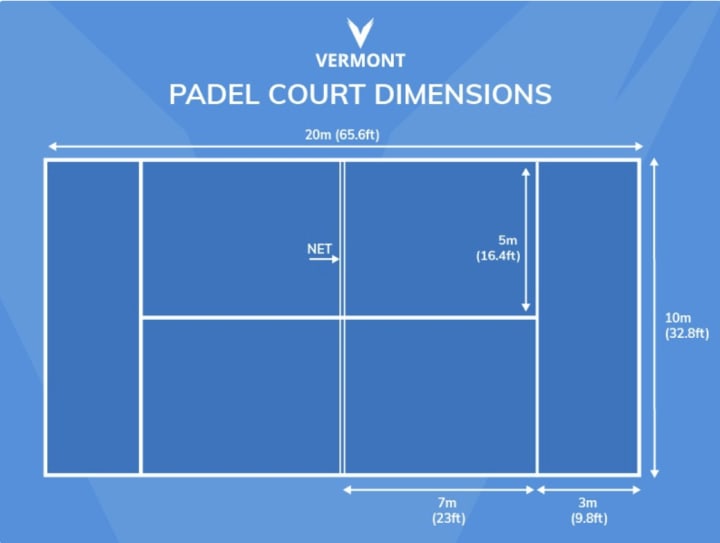
The official dimensions of a padel court are regulated by the International Padel Federation (FIP). Here are the key measurements:
- Length: 20 meters (65.62 feet)
- Width: 10 meters (32.81 feet)
- Total Area: 200 square meters (2,153 square feet)
These dimensions are the same for both singles and doubles play.
Key Components of a Padel Court
1. Playing Surface
The court is divided into two equal halves by a net.
The surface is typically made of artificial turf or concrete, providing a consistent and durable playing area.
2. Walls
The court is enclosed by walls made of glass or solid materials.
The back walls are 3 meters (9.84 feet) high, while the side walls are 4 meters (13.12 feet) high at the ends and taper down to 3 meters at the net.
3. Net
The net is 0.88 meters (2.89 feet) high at the center and 0.92 meters (3.02 feet) high at the ends.
It divides the court into two equal halves.
4. Service Boxes
Each half of the court has two service boxes, marked by lines parallel to the net.
The service boxes are 3 meters (9.84 feet) deep and 5 meters (16.40 feet) wide.
5. Baseline and Sidelines
The baseline is the line at the back of the court, running parallel to the net.
The sidelines run perpendicular to the net and define the width of the court.
Detailed Padel Court Layout
Here’s a breakdown of the court layout with precise measurements:
1. Court Length
- Total Length: 20 meters (65.62 feet)
- Baseline to Net: 10 meters (32.81 feet)
- Net to Service Line: 6.95 meters (22.80 feet)
2. Court Width
Total Width: 10 meters (32.81 feet)
Service Boxes: Each service box is 5 meters (16.40 feet) wide.
3. Walls
Back Walls: 3 meters (9.84 feet) high.
Side Walls: 4 meters (13.12 feet) high at the ends, tapering down to 3 meters at the net.
4. Net Height
Center: 0.88 meters (2.89 feet)
Ends: 0.92 meters (3.02 feet)
Setting Up a Padel Court
1. Choose the Right Location
Ensure you have enough space for the court and additional areas for player movement and seating.
Consider factors like sunlight, wind, and accessibility.
2. Prepare the Surface
The playing surface should be flat and made of artificial turf or concrete.
Ensure proper drainage to prevent water accumulation.
3. Install the Walls
Use high-quality glass or solid materials for the walls.
Ensure the walls are securely anchored and meet the official height requirements.
4. Set Up the Net
Install the net at the correct height and tension.
Use a tensioning system to keep the net tight and at the proper height.
5. Mark the Lines
Use paint or tape to mark the baseline, sidelines, service boxes, and centerline.
Ensure the lines are 5 cm (2 inches) wide and clearly visible.
Padel Court Dimensions for Different Settings
1. Backyard Courts
If space is limited, you can adjust the dimensions slightly, but try to stay as close to the standard size as possible.
Use portable nets and temporary walls for easy setup and storage.
2. Indoor Courts
Indoor courts are typically set up in sports halls or multi-purpose facilities.
Ensure the ceiling is high enough to allow for lobs and overhead shots.
3. Professional Courts
Professional courts must adhere strictly to the official dimensions and specifications.
They often include additional features like spectator seating and lighting for night play.

Tips for Maintaining Your Padel Court
1. Regular Cleaning
Sweep the court regularly to remove dirt and debris.
Pressure wash the surface periodically to keep it clean and safe.
2. Wall Maintenance
Inspect the walls for cracks or damage and repair them as needed.
Clean the walls regularly to maintain visibility.
3. Net Care
Check the net for wear and tear and replace it if necessary.
Keep the net at the correct height and tension.
4. Surface Repairs
Fill any cracks or holes in the surface to prevent injuries.
Resurface the court every few years to maintain optimal playing conditions.
Frequently Asked Questions (FAQs)
1. Can I set up a padel court in my backyard?
Yes, you can set up a temporary court in your backyard using portable nets and walls. Just ensure the surface is flat and safe.
2. What’s the difference between a padel court and a tennis court?
A padel court is smaller (20x10 meters) compared to a tennis court (23.77x8.23 meters for singles). The walls and net height are also unique to padel.
3. How much space do I need for a padel court?
In addition to the court dimensions, allow extra space around the court for player movement and safety. A total area of 30x20 meters is recommended.
4. Can I use a tennis court for padel?
No, a tennis court is not suitable for padel due to the different dimensions and the need for walls.
5. What’s the cost of building a padel court?
The cost varies depending on the surface, materials, and location. A basic outdoor court can cost 20,000−50,000, while a professional-grade court can cost $100,000 or more.
Conclusion
Understanding padel court dimensions and layout is essential for creating a safe and enjoyable playing environment.
Whether you’re setting up a court at home, in a community center, or at a professional facility, following the official measurements and specifications ensures a consistent and fair game.
With the right surface, walls, and net setup, you’ll be ready to serve, volley, and smash your way to padel success.
So grab your padel racket, gather your friends, and start playing on a court that’s built to perfection!
About the Creator
Arctic Plunge Gear
I’m passionate about cold therapy and wellness. Explore more at https://arcticplungegear.com/
Keep reading
More stories from Arctic Plunge Gear and writers in Longevity and other communities.
Scientists Are Shocked: This “Boring” Lifestyle Secret Might Be the Real Key to Living Longer
When people search for ways to live longer, they often expect something groundbreaking—a newly discovered supplement, a futuristic treatment, or a secret used by the ultra-wealthy. The idea that longevity could come down to simple, everyday habits feels almost disappointing.
By Lukáš Hrdlička5 days ago in Longevity
Green Tea: A Cup Full of Wellness 🌿 (Health Tips)
Introduction Green tea is more than just a warm and relaxing drink — it is one of the most loved natural beverages in the world. It is made from the leaves of the plant (Camellia sinensis) a plant known for its rich antioxidants and healing properties.
By Health Tipsa day ago in Longevity
When the Shelter Closes
Across the street from my house, a man slept under a tree, his dog by his side. My first, naive thought: he must be traveling through. But he kept coming back, often sleeping there during the day. Then it hit me—that person might not have a home.
By Bride of Sound5 days ago in Humans


Comments
There are no comments for this story
Be the first to respond and start the conversation.