
Noticing Without Fixing: Observing Emotions Without Control
Learning to Witness Without Becoming the Judge


Most of us live with a deep-rooted reflex: when something feels wrong, we want to fix it. A burst of anger, a sting of jealousy, the dull heaviness of sadness—our first impulse is to act. We analyze, suppress, distract, or search for a solution. But in doing so, we sometimes skip the most healing step: simply noticing what is there, without rushing to control it.
Mindfulness invites us to step into this space. It’s an approach that treats emotions not as enemies to be conquered, but as passing visitors, each with their own story. It is about becoming the witness, not the repairman.
When you observe without fixing, you let your feelings breathe. You allow them to exist without judgment, as if you were watching waves on a shore—rising, cresting, and falling away naturally. This is not passivity; it’s an active choice to meet reality as it is.
Why the Need to Fix Can Harm More Than Help
The compulsion to "fix" comes from a desire to protect ourselves. We fear being overwhelmed, so we rush into action—reframing, rationalizing, or numbing. But emotions are not broken pipes that need urgent repair. They are signals, part of the body’s intricate language.
When you rush to silence sadness, you may miss what it’s trying to reveal about your unmet needs. When you instantly counter anger with forced positivity, you might overlook a boundary that has been crossed. By jumping into problem-solving mode too soon, you risk cutting off the conversation before it has even begun.
It’s like closing a book after reading the first page.
The Power of Pure Observation
Observation without control means stepping into a role that is both compassionate and curious. You notice the tightness in your chest without labeling it as “bad.” You feel the sting of embarrassment and resist the urge to push it away with a joke.
This is not about detachment in the cold, emotionless sense. It’s about intimacy without entanglement. You are present with your inner world, but you don’t drown in it.
A simple practice to begin:
Pause before reacting. When an emotion arises, take one conscious breath.
Name what you feel. Use gentle language—“I notice sadness is here” instead of “I’m sad.”
Let it exist. Do not try to push it away or make it more comfortable. Just be with it.
Over time, this creates a kind of inner spaciousness. Emotions no longer feel like storms that throw you off course—they become weather patterns you can observe from the shore.
A Different Kind of Strength
In many cultures, strength is defined as the ability to “control” yourself. But there is a subtler kind of strength in letting yourself be moved without reacting impulsively. In witnessing without manipulating.
This strength is not about winning a battle with your feelings; it’s about trusting their natural rhythm. Joy will come and go. Fear will rise and fall. Even grief, heavy as it is, will soften if given room to breathe.
The paradox is that by releasing the need to control, you often find more genuine peace than all the “fixing” in the world could offer.
How Meditation Helps
Meditation is a practical training ground for this way of being. By sitting in stillness and observing thoughts and emotions as they pass, you learn that not every inner impulse demands action.
If you want to deepen this practice, explore this approach to mindful awareness which emphasizes compassionate observation over forced change. It’s a gentle reminder that your worth is not tied to how quickly you can “make yourself better,” but to your capacity to be fully present with what is.
Living Without the Urge to Mend Everything
Imagine conversations where you truly listen without rushing to offer advice. Imagine mornings when you feel anxious but still enjoy your coffee, letting the sensation pass without turning it into a crisis. Imagine relationships where emotions are met with space, not quick fixes.
This way of living is not about ignoring problems—it’s about letting emotions be seen and understood before deciding how to respond. Sometimes the act of noticing is enough to dissolve the discomfort. Other times, it gives you the clarity to act from a place of wisdom, not panic.
When you stop trying to fix everything, you discover that much of life doesn’t need fixing—it needs witnessing. And in that quiet shift, you begin to experience a peace that isn’t dependent on controlling what you feel.
About the Creator
Keep reading
More stories from Marina Gomez and writers in Longevity and other communities.
Tending the Inner Garden: Cultivating Presence Like a Practice of Care
We often imagine presence as a fixed state: calm, clear, rooted. As if one day we’ll arrive and stay there forever — undisturbed, unshakeable. But presence isn’t a destination. It’s a living thing. And like anything alive, it needs care. Attention. Nourishment.
By Marina Gomez7 months ago in Longevity
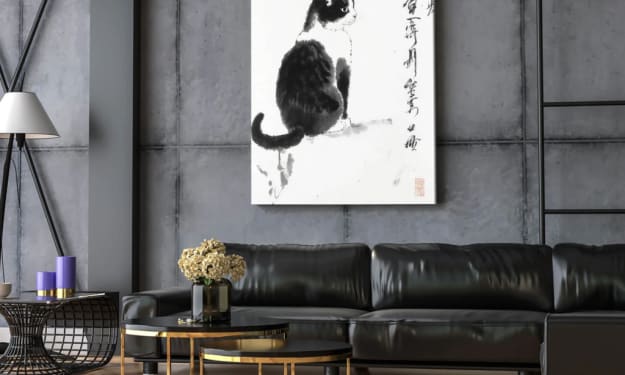
Best Artwork Styles for Contemporary Living Spaces
Contemporary living spaces are defined by simplicity, clean lines, and intentional design choices. Unlike traditional interiors that rely heavily on ornamentation, contemporary homes often embrace openness, neutral palettes, and functional layouts. Because of this minimal foundation, artwork plays an essential role in adding personality, warmth, and visual depth.
By CEO A&S Developers3 days ago in Longevity



Comments
There are no comments for this story
Be the first to respond and start the conversation.