
North America Intraocular Lens Market Size & Forecast 2025–2033
Vision Redefined: How Innovation and Ageing Demographics Are Reshaping the Future of Eye Care in North America


The North American eye care landscape is undergoing a remarkable evolution. With an unprecedented rise in ageing demographics, surging chronic diseases like diabetes, and rapid advancements in ophthalmic surgical technology, the North America Intraocular Lens (IOL) Market has entered a significant growth phase. According to Renub Research, the market, valued at US$ 1.53 billion in 2024, is projected to reach US$ 2.38 billion by 2033, expanding at a CAGR of 5.00% from 2025 to 2033.
This growth surge is not only propelled by necessity but also by innovation. Patients today no longer seek basic vision correction—they demand advanced lens options that reduce dependency on glasses, improve lifestyle freedom, and restore natural-like vision. Governments, healthcare institutions, and NGOs have also played a crucial role in bridging accessibility gaps in eye care, amplifying the momentum for adoption of intraocular lens implants across North America.
Understanding Intraocular Lenses: A Breakthrough in Vision Restoration
When cataracts cloud the natural lens of the eye, vision becomes blurry and distorted, often resulting in complete visual impairment if untreated. For decades, cataract surgery involved removing the affected lens and replacing it with an artificial implant known as an intraocular lens (IOL). Manufactured from biocompatible materials such as silicone, acrylic, and polymethyl methacrylate (PMMA), IOLs restore the eye’s ability to focus light accurately onto the retina.
The scope of visual correction has evolved from traditional monofocal lenses to premium lens types, including:
Multifocal IOLs – providing vision at multiple distances
Toric IOLs – correcting astigmatism
Accommodative IOLs – mimicking natural lens movement
Extended Depth of Focus (EDOF) lenses – offering smoother transitions between near and far vision
These advancements have transformed cataract surgery into a highly personalized, lifestyle-enhancing medical solution.
Key Drivers Powering Market Growth in North America
1. Rapidly Expanding Ageing Population
North America’s population is ageing faster than ever. In the United States alone, more than 10,000 individuals turn 65 daily. Cataracts, as a predominantly age-related condition, have emerged as a leading cause of vision impairment. By 2030, nearly 1 in 5 Americans will be 65 or older, dramatically increasing demand for surgical interventions and IOL implants.
By 2034, adults aged 80+ are expected to grow by nearly 50%, rising from 13.9 million to 20.8 million. This demographic segment represents the highest risk group for cataracts and other vision dysfunctions, making age a defining structural driver of market expansion.
2. Surge in Cataract Surgeries
With better surgical infrastructure and enhanced Medicare coverage in many regions, cataract surgeries have become both accessible and frequent. The National Institutes of Health (NIH) states that over 1.8% of dementia cases in the U.S. (2022) are connected to untreated visual impairment, a figure expected to exceed 250,000 cases by 2050.
Moreover, data reveals disparities among ethnic groups, with 11% of Hispanics experiencing significant visual impairments compared to 8.3% of non-Hispanic Whites and Black populations, further emphasizing the need for larger scale corrective procedures such as IOL implantation.
3. Technological Innovation in Lens Design & Surgical Precision
Modern ophthalmology has reached new heights with innovations such as:
Femtosecond laser-assisted cataract surgery
AI-guided lens measurement tools
Next-gen trifocal and extended depth-of-focus lenses
Aspheric lens designs minimizing visual aberrations
In April 2023, ZEISS Medical Technology received FDA approval for its CT LUCIA 621P Monofocal IOL, distinguished by its aspheric, single-piece C-loop structure, engineered for improved optical performance even in cases of decentered lenses.
4. Rising Diabetes Incidence
North America faces one of the highest diabetes prevalence rates globally. Diabetes significantly increases cataract risks and accelerates lens clouding. As diabetic retinopathy and cataract intersections rise, demand for surgical lens implantation grows in parallel.
5. Government and NGO Efforts Toward Better Accessibility
Organizations across North America are actively initiating campaigns that:
Increase affordability of vision care
Offer public vision screening programs
Educate seniors on cataract treatment options
Subsidize surgical costs through health partnerships
These interventions are essential in driving adoption among underserved and rural populations.
Market Challenges That Must Be Addressed
High Cost of Premium Lenses
While standard monofocal IOLs are usually covered under insurance, premium options such as multifocal, toric, and accommodative IOLs often require considerable out-of-pocket expenditures. These additional costs limit widespread adoption, despite their superior clinical benefits.
Regulatory Approval Bottlenecks
Bringing new IOL designs to market in North America requires rigorous FDA clinical validation, which historically involves long procedural timelines and heavy R&D investments. This slows commercialization of next-gen lens technologies and challenges smaller manufacturers.
Country-Wise Market Insights
United States
The U.S. dominates the North American IOL market due to:
High cataract prevalence
Advanced ophthalmic surgical facilities
Strong insurance penetration
Rapid adoption of premium lens technologies
ZEISS’ FDA approval of the CT LUCIA 621P marks continued innovation dominance in the U.S. lens landscape.
Canada
Canada has witnessed rising demand for IOL implants due to:
Over 1.2 million citizens affected by refractive disorders
Enhanced vision care programs
Higher preference for multifocal and toric lens adoption
Public healthcare coverage and improved surgical infrastructure contribute to steady market expansion.
Mexico
Mexico's IOL market is growing at a promising pace, driven by:
Increasing elderly population
A surge in medical tourism for cataract surgery
Expanded ophthalmology treatment access in urban regions
However, limited rural healthcare access and affordability barriers require ongoing attention to sustain growth.
Market Segmentation at a Glance
By Product
Monofocal IOL
Multifocal IOL
Toric IOL
Accommodative IOL
By Material
Polymethyl Methacrylate (PMMA)
Silicone
Hydrophobic & Hydrophilic Acrylic
Others
By End User
Hospitals
Ambulatory Surgery Centers
Ophthalmology Clinics
Eye Research Institutes
By Country
United States
Canada
Mexico
Rest of North America
Leading Companies in the North America IOL Market
Each profiled across Overview | Key Personnel | Recent Developments | Financial Insights
Alcon Inc.
Bausch Health Companies Inc.
Hoya Corporation
Johnson & Johnson
STAAR Surgical Co
Carl Zeiss Meditec AG
Novartis AG
USIOL Inc.
The Road Ahead: Vision 2033
The future of the North American intraocular lens market is not solely about correcting vision—it’s about elevating quality of life. With an influx of premium lens options, laser-guided surgical precision, and emerging smart lens technologies, patients are gradually shifting from visual recovery to visual enhancement.
However, unlocking the market’s full potential will require:
✅ Better insurance support for premium lenses
✅ Expanded rural healthcare coverage
✅ Faster regulatory approvals
✅ Increased public awareness programs
Final Thoughts
The North American IOL sector is poised for powerful and sustained growth. With a forecasted US$ 2.38 billion market size by 2033, the region will continue to be a global benchmark for ophthalmic innovation. The convergence of ageing demographics, medical advancements, and healthcare investments will not only drive numbers but redefine how the world sees cataract care—literally.
About the Creator
Ben Tom
Ben Tom is a seasoned content writer with 12+ years of experience creating SEO-friendly blogs, web copy, and marketing content that boosts visibility, engages audiences, and drives results.
Day 4 of Quitting
If this is how sobriety feels, maybe it’s better to go through life a little buzzed… this, along with other hits like, I want to kill myself, I wish I was dead, and I’m going to throw myself off a bridge have been the only thoughts on rotation these past few days. I promise myself that if, in a month, I still feel like this (‘this’ meaning despondent, full of rage, and simultaneously numb) I can go back to smoking. Until mid-February though? Nicotine is off the table.
By sleepy drafts10 days ago in Longevity
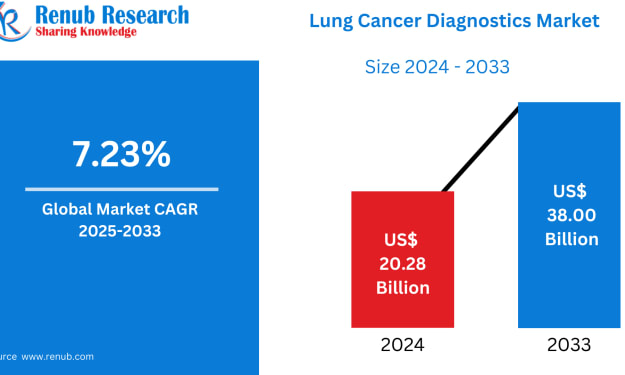
Lung Cancer Diagnostics Market Size and Forecast 2025–2033
Introduction: A Market at the Center of Early Cancer Care Lung cancer remains one of the world’s most challenging public health burdens, accounting for millions of new cases and deaths each year. Yet the narrative around lung cancer is changing. Advances in imaging, molecular diagnostics, and biomarker-driven testing are moving detection earlier, improving treatment selection, and ultimately extending survival. This transformation is reflected in the expanding commercial landscape for diagnostic technologies.
By jaiklin Fanandish4 days ago in Longevity
Center Stage with Paul Stewart
*** I'm keen to republish the interviews I did for my series with Vocal creators. It's been a few years and I thought it might be nice to revisit these wonderful conversations. I'll be releasing them one at a time for a few weeks/months.
By Heather Hubler2 days ago in Interview



Comments
There are no comments for this story
Be the first to respond and start the conversation.