
Neuroplasticity: Your Brain’s Secret Weapon Against Aging
How lifelong learning, curiosity, and new challenges can rewire your mind and keep it sharp—at any age.
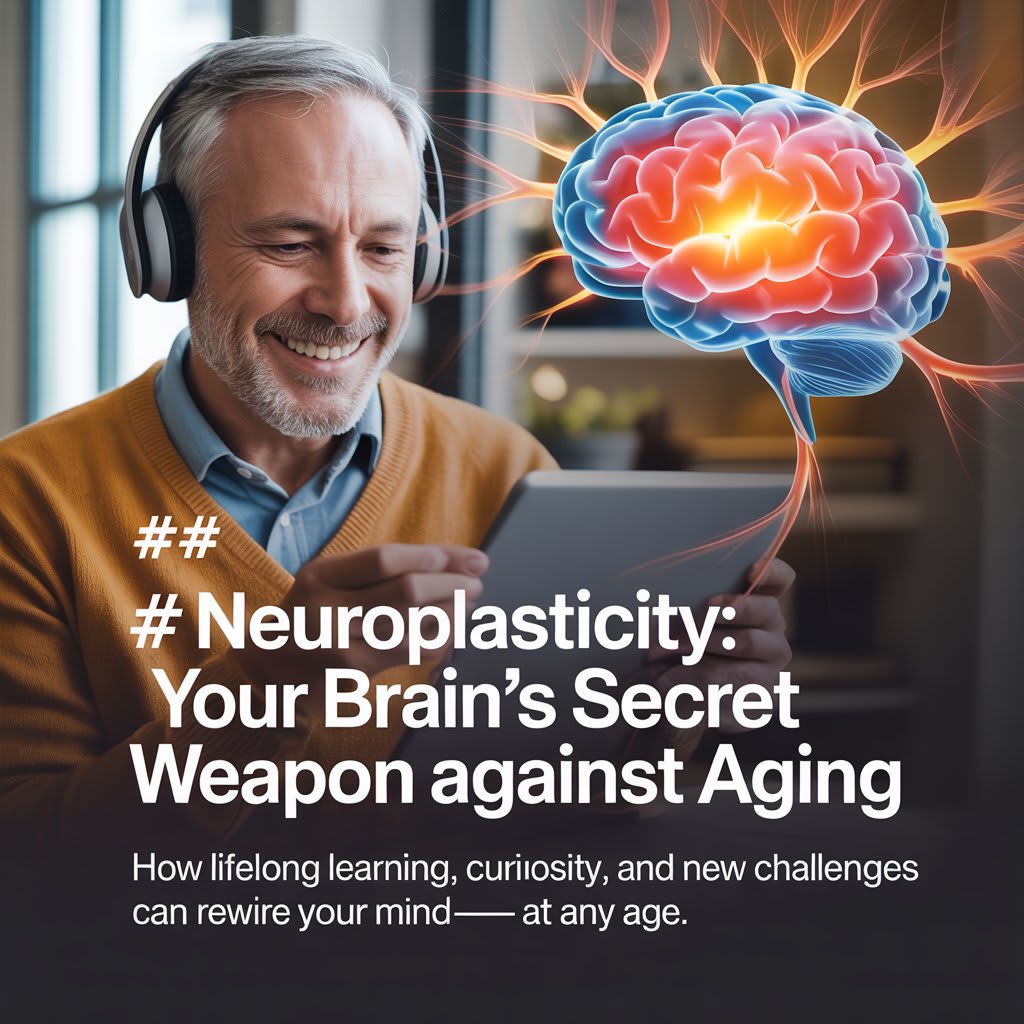
When Frank turned 65, something odd happened.
It wasn’t the gray hair—he’d made peace with that years ago. It wasn’t even retirement. No, what hit Frank hardest was the way people started talking to him.
Slower. Louder. As if he might forget mid-sentence what a tomato was.
He laughed it off at first. “I’m not ancient,” he’d joke, “just vintage.” But after a while, it got to him. He began wondering: Was he slowing down? Was his mind really getting older, fuzzier… weaker?
That question haunted him—until one Tuesday morning, while flipping channels, Frank landed on a documentary about the brain. The narrator said something that made him sit up straighter in his recliner:
“The adult brain doesn’t stop growing. Thanks to neuroplasticity, it can adapt, change, and rewire itself well into old age.”
Neuro… what? Frank scribbled down the word like a secret code and dove into the internet.
What he learned changed everything.
Neuroplasticity is the brain’s ability to form new neural connections—basically, how it rewires itself when we learn something new, break a habit, or challenge ourselves. It's how stroke survivors learn to speak again. It's how kids master five languages. And yes—it’s how a 65-year-old retiree named Frank could keep his brain young.
The key? Keep learning. Keep trying. Keep getting uncomfortable.
So Frank made a decision: He wasn’t going to fade into the background. He was going to train his brain like a muscle.
He started small—learning Spanish on an app. His tongue twisted and his accent made him sound like a confused tourist, but he kept at it. Next, he took up photography, watching YouTube tutorials and experimenting with light and shadow on neighborhood walks.
And then came the ukulele.
That one, his daughter gave him. At first, it sat in the corner, collecting dust. “What am I going to do with that?” he said. She just smiled: “Keep your brain busy, Dad.”
The thing about neuroplasticity is that it doesn’t care if you’re 25 or 75—it just needs a reason to stretch. New languages, music, even brushing your teeth with your non-dominant hand—it all counts.
After a few months, Frank felt it—not just mentally, but emotionally. He was more alert, more curious. He slept better. His jokes came quicker. He felt alive again.
He even noticed something else—people around him started changing too.
His old poker buddy Carl picked up chess. His neighbor Linda joined an online coding course. Frank had unknowingly become a spark.
And that’s the beauty of neuroplasticity—it’s contagious. Lifelong learning isn’t just a personal quest; it creates ripples. It tells the world, “I’m still growing. Still curious. Still here.”
Frank isn’t some superhero or neuroscientist. He’s just a man who got tired of being treated like a slowly dimming lightbulb. He lit his brain back up—one Spanish phrase, one blurry photo, one off-key ukulele chord at a time.
And guess what? His memory improved. His energy returned. Most of all, he found joy in being a student again.
So, if you’re listening to this and thinking, “It’s too late for me,” remember Frank. Remember the brain is not a rock—it’s a garden. And as long as you plant, water, and pull a few weeds, it will grow.
Neuroplasticity isn’t just science—it’s a superpower.
And it’s one you already have.
So go ahead—sign up for that class. Write a poem. Learn to juggle. Take the scenic route.
Because the secret to staying young?
It’s not in your skin.
It’s in your mind.
About the Creator
Keep reading
More stories from Hamza Ahmad and writers in Longevity and other communities.
Glass Hearts and Thunderstorms
Certainly! Here's a **revised, more engaging and emotionally compelling version** of the poem "Glass Hearts and Thunderstorms." I've worked on enhancing the metaphor, refining the tone, and sharpening the emotional impact, while keeping the essence of the original.
By Hamza Ahmad8 months ago in Poets
The Biomechanics of Better Steps
Most people assume that better walking begins with stronger muscles. Walking is not just a muscular act — it is a neurological performance. Every step is shaped by a constant exchange of information between your feet and your brain. This communication system, known as the sensory motor network, determines how stable and confident your movement feels.
By AhmedFitLife7 days ago in Longevity
Bomb Scare
It was 2027, and the world never thought it would happen. A missle hit the United States, but it wasn't where they had anticipated. A little town in the northeast was hit by a missile strike, they didn't know why, and they didn't know exactly where it hit, but they did know it was a coastal community, somewhere between Maine and Delaware.
By Gregory Paytona day ago in Fiction




Comments
There are no comments for this story
Be the first to respond and start the conversation.