
Nebulizer Market Size and Forecast (2025–2033)
Breathing Easier: How Innovation and Home Healthcare Are Powering the Global Nebulizer Market


Introduction
Respiratory health has become a global priority as chronic breathing disorders continue to rise across both developed and emerging economies. From asthma and chronic obstructive pulmonary disease (COPD) to respiratory infections and age-related lung conditions, millions of patients worldwide depend on effective drug delivery systems to manage symptoms and improve quality of life. Among these solutions, nebulizers remain one of the most trusted and widely used respiratory care devices.
According to Renub Research, the Global Nebulizer Market is expected to grow from US$ 1.55 billion in 2024 to US$ 2.61 billion by 2033, expanding at a compound annual growth rate (CAGR) of 5.98% from 2025 to 2033. This steady growth is fueled by an aging global population, increasing prevalence of chronic respiratory disorders, technological advancements, and a strong shift toward home-based healthcare.
Global Nebulizer Industry Overview
The global nebulizer industry is experiencing consistent expansion as respiratory illnesses become more common worldwide. Aging populations, urbanization, rising air pollution, smoking habits, and occupational exposure to harmful particles are all contributing to increased respiratory disease burden.
Technological innovation has transformed traditional nebulizers into more compact, efficient, and patient-friendly devices. Modern nebulizers—particularly mesh and smart nebulizers—offer quieter operation, faster drug delivery, and improved medication adherence. These advancements have expanded nebulizer usage beyond hospitals into homes, emergency centers, and outpatient settings.
The growing acceptance of home healthcare solutions has further accelerated market demand. Patients with chronic conditions increasingly prefer managing treatments at home rather than relying on frequent hospital visits. Although challenges such as device cost and competition from alternative inhalation methods exist, ongoing innovation and rising healthcare awareness continue to strengthen the long-term outlook for the nebulizer market.
Rising Respiratory Disease Burden Driving Market Demand
The growing prevalence of respiratory diseases is one of the strongest drivers of nebulizer market growth. According to the World Health Organization (WHO), COPD caused approximately 3.23 million deaths globally, making it one of the leading causes of mortality worldwide. Asthma affects hundreds of millions of people and remains one of the most common chronic diseases in both children and adults.
In the United States, the Centers for Disease Control and Prevention (CDC) reported in September 2024 that smoking and secondhand smoke exposure result in nearly half a million deaths annually. Environmental pollution, especially in urban and industrial regions, further exacerbates respiratory conditions, driving long-term demand for effective drug delivery systems such as nebulizers.
Global initiatives like the Global Alliance against Chronic Respiratory Diseases (GARD) aim to improve diagnosis, treatment access, and disease awareness, indirectly supporting the adoption of nebulizer therapies worldwide.
Technological Advancements Shaping the Market
Innovation remains a cornerstone of growth in the nebulizer market. Manufacturers are increasingly integrating IoT, artificial intelligence (AI), and smart monitoring features into next-generation nebulizers. These devices allow real-time tracking of medication usage, treatment duration, and patient adherence, significantly improving disease management.
Portable and battery-operated nebulizers are gaining popularity due to their convenience, particularly for elderly patients and those requiring frequent treatment. Mesh nebulizers, known for silent operation and efficient aerosol delivery, are rapidly replacing conventional jet nebulizers in many settings.
For instance, in May 2024, Medline introduced the Hudson RCI TurboMist Small-Volume Nebulizer, designed for both hospital and homecare use. The device reportedly delivers 2.5 times more medication per minute than conventional nebulizers, reducing treatment time to as little as three minutes—an innovation that significantly improves patient comfort and compliance.
Key Factors Driving the Nebulizer Market Growth
1. Shift Toward Home Healthcare
One of the most influential trends shaping the nebulizer market is the global shift toward home healthcare. Advances in device portability, ease of use, and safety have made nebulizer therapy accessible outside traditional hospital environments.
Home-based nebulizers help reduce healthcare costs, minimize hospital readmissions, and empower patients to manage chronic respiratory conditions independently. The COVID-19 pandemic further accelerated this trend, highlighting the importance of self-administered treatments and remote patient monitoring. As healthcare systems continue to emphasize decentralized care, demand for home-use nebulizers is expected to rise steadily.
2. Government Support and Reimbursement Policies
Supportive government initiatives and reimbursement frameworks play a crucial role in expanding access to nebulizer therapy. Many countries now include nebulizers under national health insurance schemes or provide subsidies for patients with chronic respiratory conditions.
Favorable reimbursement policies encourage physicians to prescribe nebulizer treatments while ensuring affordability for patients. Additionally, regulatory support for telemedicine and home healthcare has facilitated broader adoption of nebulizer devices, particularly in aging populations and rural areas with limited healthcare infrastructure.
3. Increasing Awareness and Early Diagnosis
Rising awareness of respiratory diseases and available treatment options is another major driver of market growth. Educational campaigns by healthcare organizations, non-profits, and government bodies have improved public understanding of conditions such as asthma, COPD, and cystic fibrosis.
Greater awareness promotes early diagnosis and timely intervention, increasing demand for effective drug delivery systems like nebulizers. As patients become more informed about the benefits of nebulizer therapy—especially for severe or pediatric cases—market adoption continues to expand.
Challenges Facing the Nebulizer Market
High Cost of Advanced Devices
Despite technological progress, the high cost of advanced nebulizers, particularly smart and portable models, remains a significant barrier. These devices often include features such as wireless connectivity, rechargeable batteries, and precision drug delivery, which increase manufacturing costs.
In low- and middle-income regions, affordability remains a concern, limiting widespread adoption. While insurance coverage can offset costs in some markets, limited reimbursement options in developing economies continue to restrict market penetration.
Competition from Alternative Inhalation Devices
Nebulizers face strong competition from metered-dose inhalers (MDIs) and dry powder inhalers (DPIs). These alternatives are typically more compact, easier to use, and less expensive, making them attractive options for many patients.
MDIs and DPIs require minimal maintenance and offer quick administration, particularly for mild to moderate respiratory conditions. As a result, some patients and healthcare providers may prefer these alternatives, especially in cost-sensitive markets, posing a challenge to nebulizer market expansion.
Nebulizer Market Overview by Region
United States
The United States represents one of the largest nebulizer markets globally, driven by high prevalence of asthma, COPD, and cystic fibrosis. According to the Asthma and Allergy Foundation of America (AAFA), more than 28 million Americans suffer from asthma.
Strong healthcare infrastructure, technological innovation, and favorable reimbursement policies support market growth. Strategic collaborations, such as the partnership between AAFA and OMRON Healthcare, further promote respiratory health awareness and adoption of advanced nebulizer devices.
Germany
Germany’s nebulizer market benefits from a well-established healthcare system, aging population, and strong focus on home healthcare solutions. Technological advancements and favorable reimbursement policies have made nebulizer therapy widely accessible. Increased emphasis on chronic disease management continues to drive demand across both hospital and homecare settings.
China
China is witnessing rapid growth in the nebulizer market due to rising air pollution, increasing respiratory disease prevalence, and an aging population. Government initiatives aimed at improving healthcare access, coupled with expanding domestic manufacturing capabilities, are enhancing affordability and availability of nebulizer devices across urban and rural regions.
Saudi Arabia
In Saudi Arabia, the nebulizer market is growing steadily due to increasing cases of asthma, respiratory infections, and COPD. Government investments in healthcare infrastructure, rising awareness, and supportive reimbursement frameworks are contributing to broader adoption of nebulizer therapy throughout the country.
Market Segmentation Overview
By Type
Jet Nebulizers
Mesh Nebulizers
Ultrasonic Nebulizers
By Modality
Tabletop
Portable
By Application
COPD
Asthma
Others
By End Use
Hospitals & Clinics
Emergency Centers
Home Healthcare
Regional Outlook
North America: United States, Canada
Europe: France, Germany, Italy, Spain, United Kingdom, Belgium, Netherlands, Turkey
Asia Pacific: China, Japan, India, Australia, South Korea, Thailand, Malaysia, Indonesia, New Zealand
Latin America: Brazil, Mexico, Argentina
Middle East & Africa: South Africa, Saudi Arabia, United Arab Emirates
Competitive Landscape
The global nebulizer market is moderately competitive, with key players focusing on innovation, strategic partnerships, and geographic expansion. Major companies covered in the report include:
OMRON Corporation
GE Healthcare
Boston Scientific Corporation
Koninklijke Philips N.V.
Vectura Group Plc.
Aerogen
DeVilbiss Healthcare LLC
Beurer GmbH
Each company is evaluated based on overview, key leadership, revenue analysis, recent developments, and growth strategies.
Final Thoughts
The global nebulizer market is poised for steady and sustainable growth over the next decade. Rising respiratory disease prevalence, technological innovation, supportive government policies, and the accelerating shift toward home healthcare are reshaping the industry’s future.
While challenges such as device cost and competition from alternative inhalers persist, continuous product innovation and increasing awareness are expected to unlock new growth opportunities. As healthcare systems worldwide prioritize patient-centered, accessible respiratory care, nebulizers will remain an essential component of modern treatment strategies.
With a projected value of US$ 2.61 billion by 2033, the nebulizer market reflects not only technological progress but also a global commitment to improving respiratory health and quality of life.
About the Creator
Janine Root
Janine Root is a skilled content writer with a passion for creating engaging, informative, and SEO-optimized content. She excels in crafting compelling narratives that resonate with audiences and drive results.
Keep reading
More stories from Janine Root and writers in Longevity and other communities.
Vitamin K2 Market Size and Forecast 2025–2033
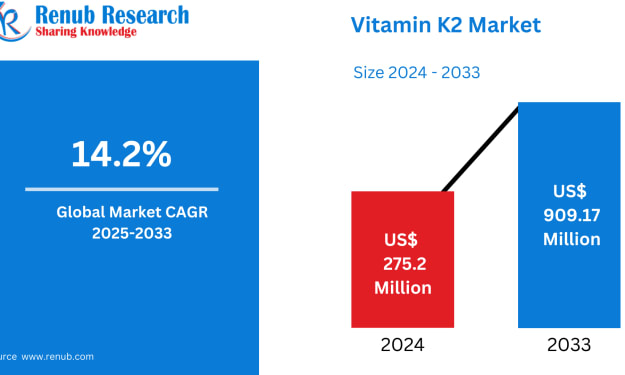
Global Vitamin K2 Market Outlook The Global Vitamin K2 Market is undergoing a significant transformation as consumers increasingly shift toward preventive healthcare, functional nutrition, and scientifically backed dietary supplements. According to Renub Research, the global vitamin K2 market is expected to grow from US$ 275.2 million in 2024 to US$ 909.17 million by 2033, registering an impressive CAGR of 14.2% from 2025 to 2033.
By Janine Root 25 days ago in Longevity
Day 4 of Quitting
If this is how sobriety feels, maybe it’s better to go through life a little buzzed… this, along with other hits like, I want to kill myself, I wish I was dead, and I’m going to throw myself off a bridge have been the only thoughts on rotation these past few days. I promise myself that if, in a month, I still feel like this (‘this’ meaning despondent, full of rage, and simultaneously numb) I can go back to smoking. Until mid-February though? Nicotine is off the table.
By sleepy drafts5 days ago in Longevity
Global Nepheline Market Size and Forecast 2025–2033
Introduction The global nepheline market is steadily gaining attention as industries seek more efficient, sustainable, and cost-effective raw materials. According to Renub Research, the global nepheline market is expected to grow from US$ 179.25 million in 2024 to US$ 230.63 million by 2033, registering a compound annual growth rate (CAGR) of 2.84% from 2025 to 2033. This growth reflects the increasing use of nepheline in glass, ceramics, and refractory applications, as well as a broader industrial shift toward energy-efficient and environmentally responsible production processes.
By Aaina Oberoiabout 11 hours ago in Longevity


Comments
There are no comments for this story
Be the first to respond and start the conversation.