
Narcolepsy Drugs Market Trends & Summary
Rising Awareness, Advancements in Drug Development & Growing Sleep Disorder Prevalence Shape a Rapidly Expanding Global Market


The Narcolepsy Drugs Market is projected to reach US$ 7,504.60 million by 2033, rising from US$ 3,749.40 million in 2024, according to Renub Research. The market will grow at a CAGR of 8.02% from 2025 to 2033, driven by a rising global incidence of sleep disorders, advancements in pharmaceutical therapies, deeper clinical understanding of narcolepsy, and a supportive regulatory environment encouraging innovative drug development.
Narcolepsy—characterized by excessive daytime sleepiness (EDS), cataplexy, hallucinations, and sleep paralysis—requires lifelong management. As public awareness and diagnosis rates increase, more individuals are receiving effective treatments earlier, fueling global demand for narcolepsy-focused therapeutics.
Global Narcolepsy Drugs Industry Overview
The global narcolepsy drugs industry is witnessing strong momentum due to better diagnosis, increased treatment options, and expanded research into this chronic neurological disorder. Historically underdiagnosed, narcolepsy is now receiving greater clinical attention thanks to advanced sleep laboratories, digital screening tools, and public health initiatives.
Traditional medications—largely central nervous system stimulants such as modafinil, armodafinil, and amphetamines—continue to dominate treatment. These drugs significantly improve daytime alertness and remain the first-line therapy in several markets.
However, the landscape has evolved with sodium oxybate, the gold-standard therapy for narcolepsy with cataplexy. Recognized for its ability to improve nighttime sleep architecture and reduce cataplexy episodes, sodium oxybate has reshaped patient care and remains one of the strongest revenue drivers in the market.
More recently, innovation has accelerated in the direction of orexin-based therapies, targeting the underlying molecular mechanisms of narcolepsy rather than simply treating symptoms. These advancements reflect a new era where narcolepsy management will be increasingly personalized, effective, and biologically targeted.
Although market growth remains strong, the industry continues to face challenges such as high treatment costs, limited specialist access in developing regions, and patient underdiagnosis. Nonetheless, with rising awareness, improved healthcare infrastructure, and deeper R&D investments, the sector is expected to maintain substantial expansion through 2033.
Key Growth Drivers for the Narcolepsy Drugs Market
1. Rising Global Healthcare Expenditure
Increasing healthcare spending worldwide is significantly improving the diagnosis and treatment of sleep disorders, including narcolepsy. Higher investments in health systems translate to better access to sleep diagnostics, neurologists, and advanced medications.
For example, according to the Centers for Medicare & Medicaid Services, U.S. healthcare spending increased by 4.1% in 2022, reaching US$ 4.5 trillion—about US$ 13,493 per person—representing 17.3% of national GDP.
These rising expenditures allow for broader insurance coverage, improved clinical infrastructure, and earlier intervention, all of which support market growth for narcolepsy drug manufacturers.
2. Increase in Clinical Trials & R&D Initiatives
Drug makers are investing heavily in developing new therapeutics that can better manage symptoms or address the root causes of narcolepsy.
A notable example is Alkermes’ Phase II Vibrance-2 trial, launched in August 2024 for:
ALKS 2680, an investigational oral medicine
Targeting narcolepsy type 2 (NT2)
Designed for once-daily administration
Functioning via OX2R (orexin 2 receptor) stimulation
The rise in such advanced clinical programs signals a growing shift toward orexin pathway solutions—widely considered the most promising therapy area for future narcolepsy treatments.
Strong R&D activity not only expands treatment options but also strengthens pharmaceutical pipelines, improving competition and market expansion.
3. Growing Prevalence of Sleep Disorders
Sleep disorders—including narcolepsy, sleep apnea, and chronic insomnia—are rising due to lifestyle changes, rising stress levels, obesity, and extensive nighttime screen use.
According to Narcolepsy Network:
Approximately 1 in 2,000 Americans lives with narcolepsy
This equals 200,000 individuals in the U.S.
Globally, around 3 million people are estimated to be affected
Yet, as many as 50% of cases remain undiagnosed, signaling enormous untapped potential for future market growth.
Better screening technologies and public awareness campaigns are helping more individuals seek treatment, directly contributing to increasing global demand for narcolepsy therapeutics.
Major Challenges in the Narcolepsy Drugs Market
1. High Treatment Costs
Cost remains the single largest barrier to narcolepsy treatment. Medications such as sodium oxybate are prohibitively expensive, placing financial pressure on patients—especially in countries lacking robust reimbursement systems.
For low-income populations and uninsured individuals, the cost of lifelong treatment often results in:
Delayed or skipped therapy
Use of less effective generic stimulants
Reduced adherence
Declining quality of life
The market urgently needs more accessible pricing models, improved insurance coverage, patient assistance programs, and greater availability of cost-effective alternatives.
2. Underdiagnosis & Limited Awareness
Despite improved healthcare systems, narcolepsy remains widely underdiagnosed, often mistaken for:
Depression
Epilepsy
Sleep deprivation
Chronic fatigue syndrome
Sleep apnea
Even trained clinicians may overlook narcolepsy due to overlapping symptoms, low awareness, and limited access to sleep specialists—particularly in developing countries.
Underdiagnosis reduces the eligible patient pool for narcolepsy drugs, slowing market uptake. Supporting medical education, public awareness, and early screening initiatives will be critical for future growth.
Country-Level Insights
United States Narcolepsy Drugs Market
The U.S. represents one of the most advanced and lucrative markets globally due to:
High disease awareness
Extensive insurance coverage
Access to top-tier sleep clinics
Strong presence of leading drug manufacturers
Frequently used therapies include modafinil, armodafinil, dextroamphetamine, and sodium oxybate.
However, high costs—particularly for sodium oxybate—limit adherence for uninsured or underinsured patients.
Despite these challenges, the market is set for continued growth driven by rising diagnosis rates, expanding orexin-based drug pipelines, and strong R&D activity.
Germany Narcolepsy Drugs Market
Germany’s narcolepsy drugs market is growing steadily due to:
Comprehensive health insurance
Strong reimbursement policies
Advanced neurological and sleep disorder research infrastructure
The availability of sodium oxybate and CNS stimulants ensures widespread clinical acceptance. However, treatment costs still pose difficulties for some patients, and underdiagnosis remains a challenge.
Continued improvements in medical education and public awareness campaigns will help accelerate market momentum.
China Narcolepsy Drugs Market
China is emerging as a key growth market, with increasing diagnosis rates particularly in urban centers. Demand for sodium oxybate, modafinil, and armodafinil is rising.
However, major constraints include:
Low awareness in rural regions
Unequal healthcare access
High cost of imported medications
The Chinese government’s ongoing push for domestic drug manufacturing and expanded healthcare coverage is expected to boost growth over the next decade.
United Arab Emirates Narcolepsy Drugs Market
The UAE market is expanding due to:
Advanced hospital infrastructure
Growing awareness of neurological disorders
High adoption of innovative therapies
However, treatment costs—especially in private hospitals—remain a significant barrier. Underdiagnosis also persists due to limited specialist availability.
Strong investment in healthcare modernization positions the UAE as one of the fastest-growing narcolepsy drug markets in the Middle East.
Narcolepsy Drugs Market Segmentation
By Disease Type
Daytime Extreme Sleepiness
Cataplexia
Other Disease Types
By Therapeutic Type
Central Nervous System Stimulants
Tricyclic Antidepressants
Sodium Oxybate
Selective Serotonin Reuptake Inhibitors (SSRIs)
Others
By End User
Diagnostics Centers
Hospitals
Others
By Country (17 Viewpoints)
United States, Canada, Mexico, Brazil, United Kingdom, Germany, France, Italy, Spain, Netherlands, China, Japan, India, South Korea, Australia, South Africa, United Arab Emirates
Key Companies Covered
Jazz Pharmaceuticals
Ligand Pharmaceuticals
Novartis AG
Takeda Pharmaceutical
Teva Pharmaceutical
Hikma Pharmaceuticals Plc
Harmony Biosciences Holdings
Roche Holding AG
Johnson & Johnson
Each company is evaluated across:
Overview, Key Persons, Recent Developments & Strategies, and Financial Insights
Final Thoughts
The global narcolepsy drugs market is entering a transformative period where biological innovation, improved awareness, and widespread health infrastructure advancements are converging to reshape patient outcomes. With strong market projections—US$ 7.5 billion by 2033, growing at 8.02% CAGR—the industry is positioned for significant expansion.
While challenges like treatment costs and underdiagnosis persist, ongoing clinical research, orexin-focused drug pipelines, and greater healthcare spending will unlock new opportunities. As the world becomes more aware of sleep health and neurological disorders, the demand for effective narcolepsy therapies will continue to accelerate, shaping a more responsive and patient-centric global pharmaceutical landscape.
About the Creator
Sushant. Renub Research
I’m Sushanta Halder, Digital Marketing Manager at Renub Research with 15+ years in SEO, content, PPC & lead generation. Passionate about data-driven growth strategies.
Keep reading
More stories from Sushant. Renub Research and writers in Longevity and other communities.
Smart Hospitals Market Size & Forecast 2025–2033
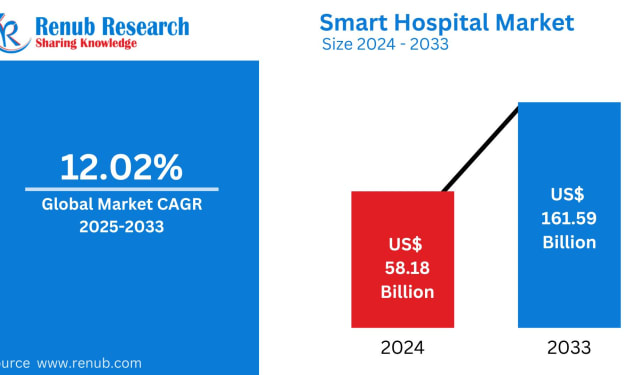
The global smart hospitals market, valued at USD 58.18 billion in 2024, is on track to surpass an impressive USD 161.59 billion by 2033, growing at a robust CAGR of 12.02% between 2025 and 2033. According to Renub Research, the surge is driven by rapid digital healthcare transformation, widespread adoption of AI-driven diagnostics, and growing reliance on IoT-enabled medical devices. Telemedicine infrastructure, remote patient monitoring, real-time clinical analytics, and the rise of next-generation hospital automation systems are collectively reshaping the global healthcare landscape.
By Sushant. Renub Research2 months ago in Longevity
Day 4 of Quitting
If this is how sobriety feels, maybe it’s better to go through life a little buzzed… this, along with other hits like, I want to kill myself, I wish I was dead, and I’m going to throw myself off a bridge have been the only thoughts on rotation these past few days. I promise myself that if, in a month, I still feel like this (‘this’ meaning despondent, full of rage, and simultaneously numb) I can go back to smoking. Until mid-February though? Nicotine is off the table.
By sleepy drafts4 days ago in Longevity
A Failed Artist, A Disillusioned Poet, An Underpaid Game Show Host
I took my son and niece to Gori, a small town in Georgia where Joseph Stalin was born. They talked me into visiting the Stalin's Museum, the largest in the post-Soviet space. I had resisted going there because I just can't stand the monster and know enough about him, or so I thought.
By Lana V Lynx6 days ago in FYI


Comments
There are no comments for this story
Be the first to respond and start the conversation.