
Moving Slowly: Reclaiming the Rhythm of Presence
How slowness invites us back into the body, the breath, and the truth of time

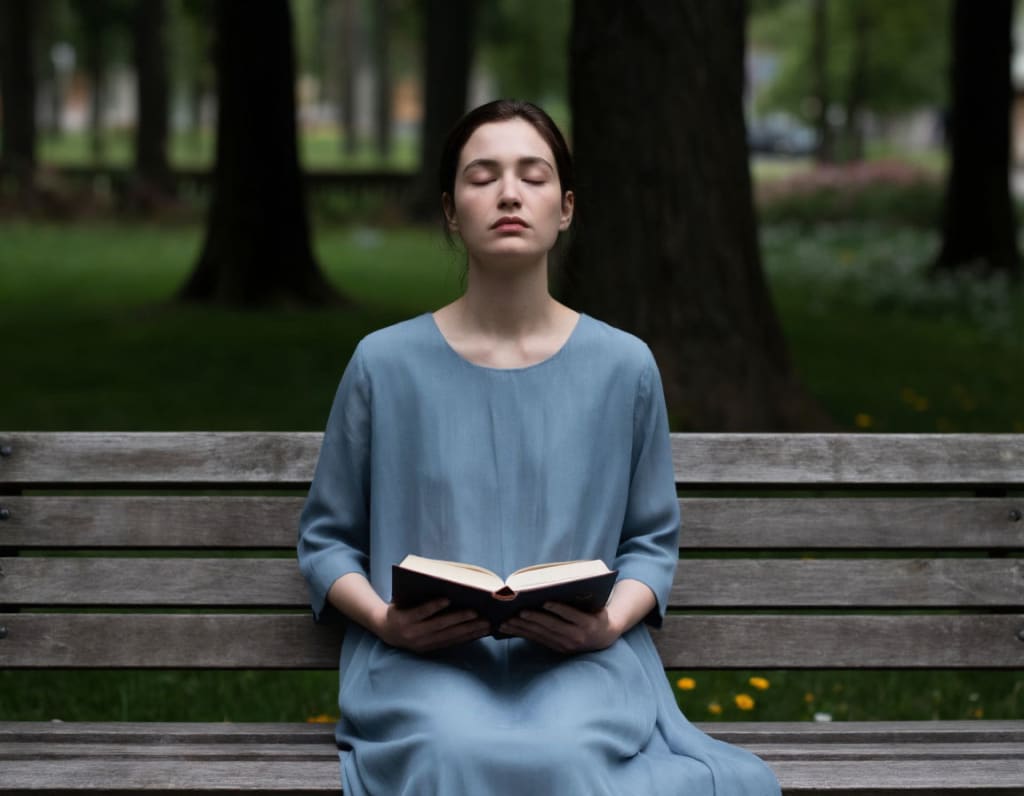
I used to believe that moving faster meant living more fully — that momentum was the measure of purpose, that the busier I was, the closer I must be to something meaningful. My days blurred together in a constant hum of tasks and thoughts, and somewhere in that rush, I forgot what it felt like to arrive anywhere. The mind was always leaning forward, chasing the next thing. Even in rest, I was rehearsing motion.
Then, one winter morning, something shifted. I had gone for a walk after days of rushing — my mind foggy, my breath shallow. The world was hushed beneath a layer of snow. Without meaning to, I began to slow my steps, matching them to my breath. Each sound — the crunch beneath my boots, the whisper of wind through bare branches — felt crisp and alive. The air was cold and clean in my lungs. For the first time in weeks, I felt time stretch open, wide and generous. Nothing demanded to be done. There was nowhere to get to. And in that slowness, I could feel the simple miracle of being here.
That’s when I began to understand: slowness is not the opposite of productivity. It’s the rediscovery of presence.
I once read a line on Meditation Life that said, “Slowness isn’t delay — it’s depth.” Those words have stayed with me. In slowing down, we don’t lose time; we fall back into it. We return to the rhythm that life itself keeps — the rhythm of breath, of seasons, of the beating heart.
The modern world trains us to move at a pace that the body and soul can’t sustain. We scroll, click, consume — always half a second ahead of where we are. Slowness, in this context, becomes radical. It’s an act of quiet rebellion, a way of saying: I refuse to hurry through my own life.
When we move slowly, attention has room to breathe. The smallest details — the texture of fabric against the skin, the way sunlight shifts through a window, the subtle flavor of a sip of tea — start to speak again. The body begins to soften. The mind, no longer dragged forward, starts to listen.
Slowness isn’t laziness; it’s intimacy. It’s how awareness learns to touch the world fully.
Meditation has been my greatest teacher in this. When I sit and let the breath move at its own pace, I notice how each inhale unfolds without effort and each exhale releases without instruction. The breath doesn’t rush. It doesn’t plan the next one. It simply is. The body, too, moves slowly by nature — stretching, adjusting, responding to gravity’s quiet pull. The more I attune to that rhythm, the more natural stillness becomes.
In a culture obsessed with speed, moving slowly can feel uncomfortable at first. There’s a kind of withdrawal that happens when we step out of acceleration. The mind protests: You’re wasting time. You’re falling behind. But with patience, that restlessness dissolves, and what emerges is a grounded kind of clarity — not the sharpness of urgency, but the softness of awareness.
Slowness brings honesty. When you move at the pace of your own breath, you can’t hide from what’s here. You feel the fatigue you’ve been ignoring, the emotions that speed kept buried, the quiet joy that was too subtle to notice before. It’s all there, waiting in the spaces we rush past.
Sometimes, I practice moving slowly in ordinary tasks — pouring a glass of water, folding clothes, walking to the mailbox. Each action becomes deliberate, precise, tender. It’s not about doing things perfectly; it’s about inhabiting them. The world meets you differently when you move like that — as if time itself bends to your attention.
There’s also something profoundly compassionate about slowing down. It invites gentleness — with yourself, with others, with the pace of your own becoming. You stop demanding that growth happen faster than it naturally can. You stop forcing the heart to heal on command. Slowness teaches patience not as endurance, but as presence — as the willingness to stay with life as it unfolds, breath by breath.
When I think of the word slow, I think of the ocean. No matter how far the waves travel, their rhythm never hurries. They move with a wisdom older than thought — powerful, yet unhurried. That same rhythm lives in us, beneath the noise of daily urgency. We just have to listen.
Sometimes, when I find myself caught in speed — mind racing, shoulders tight — I pause. I take one deep breath, feeling it move through the body like a tide. Then I ask quietly: What happens if I move more slowly? Almost always, the world opens. The noise thins. The heart remembers its own pace.
Slowness doesn’t take us away from life; it brings us closer. It’s how we begin to live inside time rather than against it.
So let the world rush if it must. Let the noise keep spinning. You can choose another rhythm — one that belongs to breath, to earth, to the patient unfolding of now.
Move slowly, not to get anywhere, but to finally arrive.
Because presence has its own tempo, and when you move in tune with it, you’ll find that time was never the enemy — it was always the invitation.
About the Creator
Keep reading
More stories from Marina Gomez and writers in Longevity and other communities.
The Space That Holds Us: Trusting What We Cannot Control
There are days when life feels like a series of small negotiations — trying to make things work, to keep them aligned, to hold it all together. The mind strategizes, adjusts, anticipates, clings. Underneath it all hums a single question: What will happen if I let go?
By Marina Gomez4 months ago in Longevity
The Importance of Mutual Aid in Community Building
Mutual aid plays a vital role in strengthening communities by fostering cooperation, shared responsibility, and collective care. At its core, mutual aid is the voluntary exchange of resources and services for the mutual benefit of those involved. Unlike traditional charity, which often operates through a top-down model where resources flow from donors to recipients, mutual aid emphasizes solidarity and collaboration. Everyone participates as both a giver and a receiver of support, creating stronger social bonds and more resilient communities.
By Wesley Oler IV2 days ago in Longevity


Comments
There are no comments for this story
Be the first to respond and start the conversation.