
Meditation for Anxiety: Grounding, Not Escaping
How mindfulness helps you stay present with your emotions—not run from them
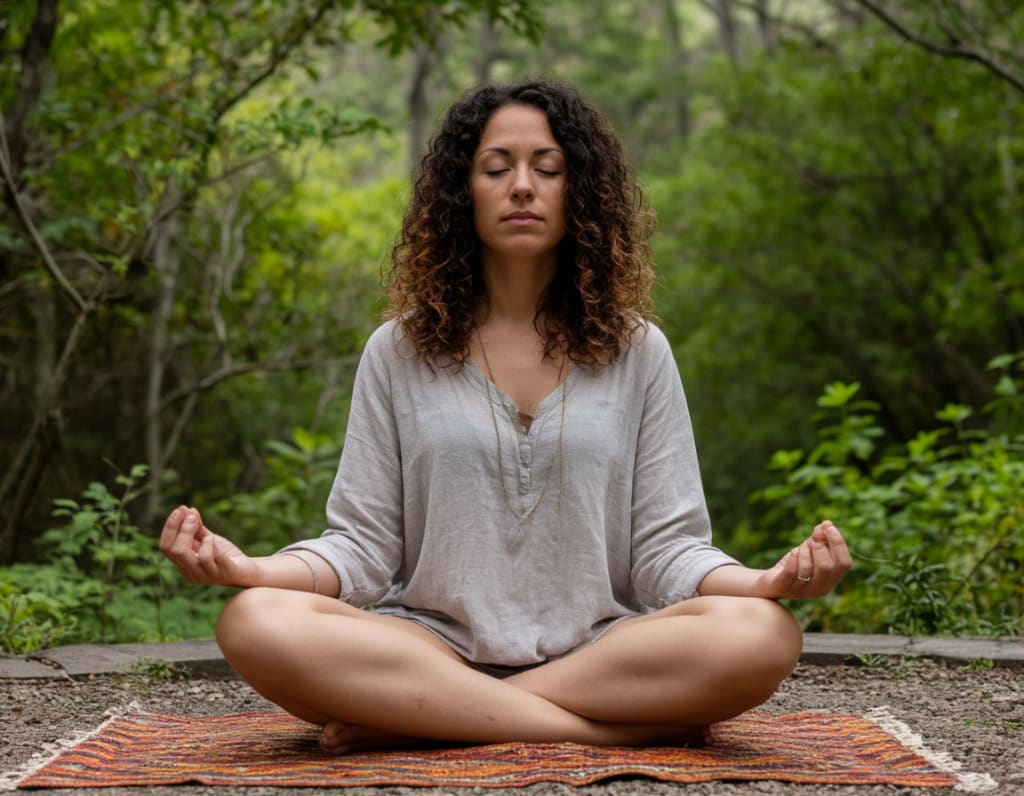
When anxiety hits, the instinct is often to run—from the sensation, from the thoughts, from the discomfort itself. We distract, suppress, scroll, or seek control. It’s completely human. But meditation offers something different—not an escape, but a way to stay.
Contrary to the myth, meditation isn’t about clearing your mind or achieving instant peace. Especially for anxiety, it’s not a numbing mechanism—it’s a grounding practice. One that gently helps you come back to your body, your breath, and your moment.
If you’ve ever tried to meditate while anxious and felt like it made things worse, this article is for you. Let’s explore how to meditate with anxiety, not in spite of it.
Why Anxiety Feels So Overwhelming
Anxiety pulls your attention into the future. It floods your system with what-ifs, looping scenarios, and urgent sensations. Your nervous system shifts into fight-or-flight mode, even when no threat is physically present.
The mind races. The breath shortens. The body tightens.
Trying to “calm down” in this state often backfires—unless you know how to approach it mindfully.
This is where meditation becomes powerful—not by removing the anxiety, but by helping you respond to it differently.
Meditation Isn’t About Escaping—It’s About Turning Toward
The key difference is intention.
Escaping anxiety means trying to distract, avoid, or force it away
Grounding through meditation means noticing anxiety as it is, with compassion
You don’t need to stop feeling anxious to meditate. In fact, noticing the physical and emotional sensations—without judgment—is itself the practice.
Meditation teaches us to say: “This is what anxiety feels like. I can stay with this.”
And with time, anxiety becomes less threatening—not because it disappears, but because you stop fighting it.
Grounding Techniques to Use During Anxiety
Here are some gentle, supportive ways to use meditation when anxiety strikes:
1. The 5-4-3-2-1 Grounding Practice
Name 5 things you can see
4 things you can touch
3 things you can hear
2 things you can smell
1 thing you can taste or are grateful for
This technique brings you into the present moment through your senses.
2. Anchor on the Breath (but Gently)
Instead of deep breathing (which can feel forced), simply observe your breath. Where do you feel it most—nostrils, chest, belly?
Say to yourself with each inhale: “Inhale”, and with each exhale: “Exhale.”
Let your breath be a place to return, not a tool to fix.
3. Name and Allow the Feeling
Use this simple formula:
“I notice anxiety. I allow anxiety. I am safe to feel this.”
By labeling your emotion and allowing it to be there, you deactivate the internal resistance that often intensifies it.
It’s Okay to Meditate With Your Eyes Open
For anxious states, eyes-open meditation can feel safer. Try focusing on a fixed object—like a candle flame or a tree outside the window—while breathing and observing sensations.
You don’t need to close your eyes or sit in silence for it to count.
Consistency Creates Safety
You may not feel relief right away—and that’s okay. Meditation for anxiety works over time by helping your body and mind learn new responses.
Each time you sit with anxiety instead of running from it, you create a new pattern: presence over panic.
If you’re looking for structured practices that meet you exactly where you are, this meditation guide offers tools specifically designed to support anxious minds—gently, gradually, and compassionately.
Final Thought: Anxiety Isn’t the Enemy—Avoidance Is
Meditation doesn’t erase anxiety. But it softens its grip.
By learning to stay, to breathe, and to listen without judgment, you transform anxiety from something to fear into something to tend to. Meditation becomes less about control—and more about connection with your own experience.
So next time anxiety shows up, invite it in. Sit with it. Feel your feet on the floor. Let your breath anchor you.
Stillness isn't always quiet. Sometimes it's simply choosing not to run.
About the Creator
Reader insights
Nice work
Very well written. Keep up the good work!
Top insights
Easy to read and follow
Well-structured & engaging content
Eye opening
Niche topic & fresh perspectives
On-point and relevant
Writing reflected the title & theme
Keep reading
More stories from Black Mark and writers in Longevity and other communities.
Music or Silence? How Sound Shapes Your Practice
Close your eyes. Take a breath. Now ask yourself—do you prefer silence or sound while meditating? For some, pure quiet is sacred. For others, gentle music or ambient sounds help soften the edges of a restless mind. There’s no one-size-fits-all when it comes to sound in meditation, but understanding how it affects your focus and mood can help you shape a more effective practice.
By Black Mark8 months ago in Longevity
Calling vs Income
There is a tension that never quite goes away once it has been seen clearly, and it sits at the intersection of calling and survival. Some forms of work feel unquestionably meaningful, even necessary, yet remain economically fragile or entirely unsupported. Other forms of work provide stability, predictability, and income, while feeling hollow or misaligned with who a person actually is. Once this divide becomes visible, it is difficult to unsee, and even harder to navigate honestly without resentment creeping in.
By Peter Thwing - Host of the FST Podcastabout 2 hours ago in Longevity
What Happens to Your Blood Sugar When You Skip Breakfast
Skipping breakfast may affect blood sugar regulation, especially in people with metabolic conditions. Some people experience higher glucose spikes and increased hunger later in the day. Meal timing that aligns with your natural rhythms may support steadier energy and metabolism.
By Good health to everyoneabout 21 hours ago in Longevity


Comments (1)
I had just read something about how people use meditation to escape, making it ineffective. This explains it so much better. Meditation helps you learn to face and deal with emotions and feelings, not escape from them. I see it as a way to strengthen ourselves emotionally and mentally to better handle the stress the world throws at us.