
Meditation and Emotional Flashbacks: Grounding Through the Past
How mindfulness helps you stay present when old wounds resurface

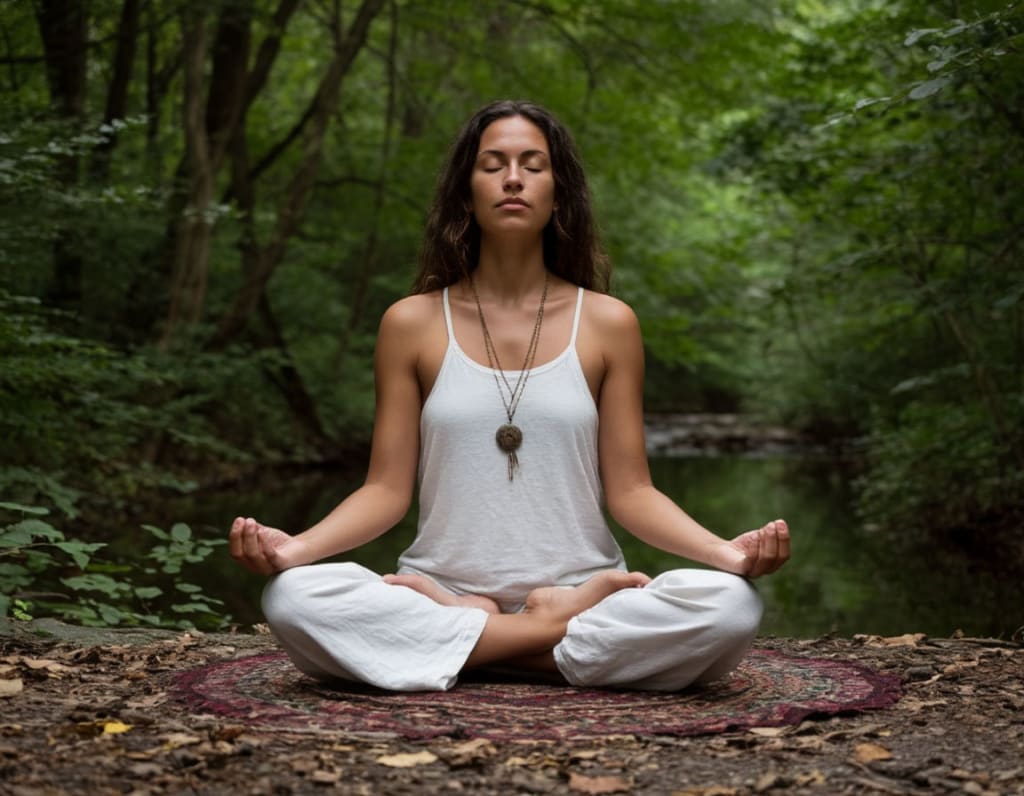
Have you ever felt an intense wave of emotion that seems disconnected from what’s happening around you? Maybe you suddenly feel panicked, ashamed, or enraged—without knowing exactly why.
That could be an emotional flashback.
Unlike visual flashbacks, emotional flashbacks are visceral relivings of past trauma—often from childhood—that show up in your body and mood, not as clear memories but as overwhelming feelings. They can last minutes or days and leave you feeling disoriented, helpless, or deeply triggered.
Meditation won’t erase the past, but it can teach you how to ground yourself when the past pulls you under.
What Is an Emotional Flashback?
Coined by trauma therapist Pete Walker, emotional flashbacks are sudden, often disproportionate emotional states linked to early life trauma, especially complex PTSD (C-PTSD).
These flashbacks might look like:
Intense shame or guilt
Feeling small, helpless, or terrified
Sudden rage or despair
Emotional shutdown or numbness
A need to run, hide, or people-please
The tricky part? You often don’t realize it’s a flashback—your nervous system believes it’s happening right now.
This is where mindfulness and meditation come in.
Meditation Isn’t About Escaping—It’s About Noticing
When you’re in an emotional flashback, the last thing you need is to spiritually bypass or “rise above” the feeling. What you do need is to ground. To return to your body. To remember: I’m here now.
Mindful meditation provides a nonjudgmental space to observe what’s happening—without collapsing into it or pushing it away.
You learn to say:
“This is a flashback. I am safe in this moment.”
“These feelings are valid, but they are not all of me.”
“I can breathe through this.”
Grounding Meditations for Emotional Flashbacks
Here are a few trauma-sensitive practices that can help when flashbacks arise:
1. 5-4-3-2-1 Sensory Grounding
Name:
5 things you can see
4 things you can touch
3 things you can hear
2 things you can smell
1 thing you can taste
This helps anchor you back in the present moment and out of the emotional spiral.
2. Anchoring with the Breath
Place your hand on your chest or belly. Feel the breath move in and out. Say silently:
“Inhale, I know I am breathing in.”
“Exhale, I know I am breathing out.”
The goal is not control but contact—with your body, breath, and present reality.
3. Safe Place Visualization
Close your eyes and picture a place where you feel protected—real or imagined. Let it be rich in sensory detail: temperature, texture, scent. Go there when overwhelm creeps in.
A Gentle Reminder: Meditation Is a Practice, Not a Cure
It’s okay if you can’t “meditate it away.” You’re not failing.
Sometimes, the best you can do is sit for 30 seconds and feel your feet on the floor. Or breathe one conscious breath. That’s still practice. That’s still progress.
If emotional flashbacks are a regular part of your life, pairing meditation with therapy—especially trauma-informed modalities—can be especially powerful.
To explore gentle, guided practices created with emotional safety in mind, visit this meditation resource. You’ll find tools designed to support presence without pressure.
Final Thought: You Are Not Your Flashback
Flashbacks are experiences, not identities. They are echoes—not definitions.
Meditation helps you create space between what you feel and who you are. With practice, you begin to recognize the difference between a past wound and a present truth.
You are here.
You are safe.
You are healing—one breath at a time.
About the Creator
Keep reading
More stories from Marina Gomez and writers in Longevity and other communities.
How to Use Meditation for Creative Burnout Recovery
Creative burnout doesn’t just drain your energy—it can make you question your identity. When your ideas dry up, your motivation disappears, and your passion feels like a distant memory, it’s more than just being tired. It’s a kind of emotional exhaustion that touches the soul.
By Marina Gomez8 months ago in Longevity
Best Artwork Styles for Contemporary Living Spaces
Contemporary living spaces are defined by simplicity, clean lines, and intentional design choices. Unlike traditional interiors that rely heavily on ornamentation, contemporary homes often embrace openness, neutral palettes, and functional layouts. Because of this minimal foundation, artwork plays an essential role in adding personality, warmth, and visual depth.
By CEO A&S Developers5 days ago in Longevity
Cassie and Johnny
I’m the kind of dame you notice. I’m no femme fatale, but you can’t ignore me, at least not until I warn you about what’s coming, then everybody ignores me. Hell, they usually blame me afterwards and give Johnny all the credit for saving the day, but my Johnny couldn’t save a seat at the movies without my help. Sure, he’s brawny, but brainy? Not so much. Like that time I asked him to spot me five bucks, and he said he didn’t see it anywhere on me, and believe you me, he looked but good.
By Harper Lewis7 days ago in Critique



Comments
There are no comments for this story
Be the first to respond and start the conversation.