
Meal Portion Control Tips
If people could just learn to control their meal portions, they could stop cycling through the diet de jours.

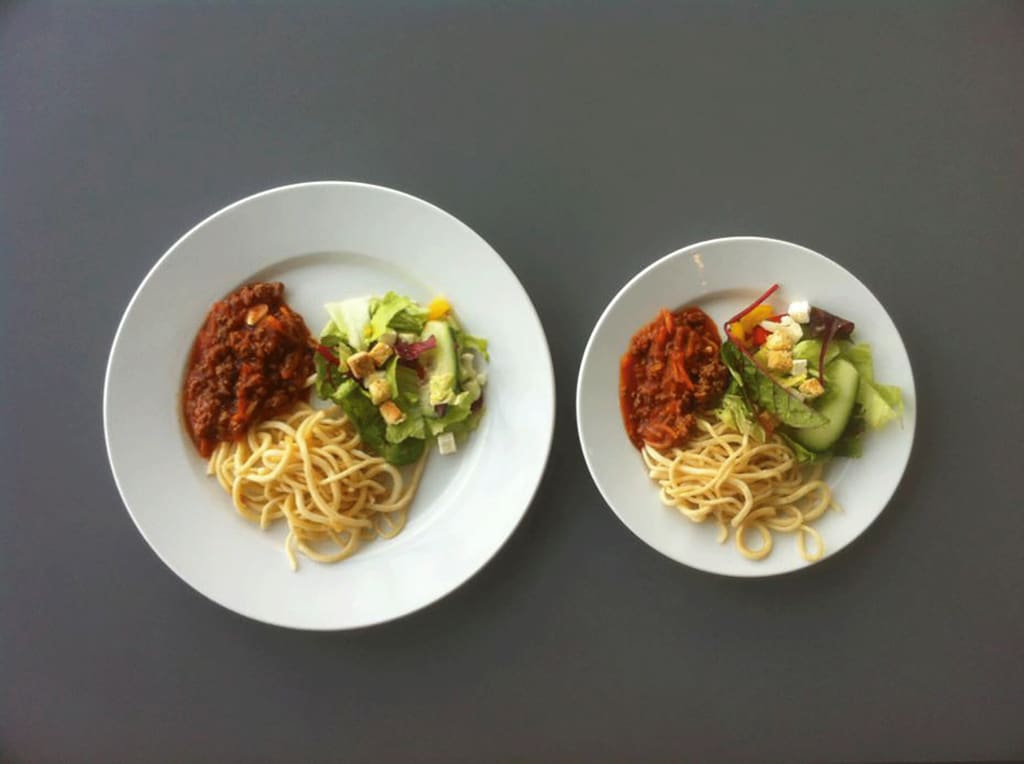
Most weight-conscious Americans know the hazards of overeating: Too-fat bodies age faster and are at higher risk for life-threatening diseases. But calorie-counters who focus more on what they take in with their eyes may have to worry less about what they put into their mouths. Visual cues, or the way food is presented, can actually decrease appetite and leave us feeling satisfied with less food or spur us to stuff ourselves, says Maria Simonson, Ph.D., professor emeritus of Johns Hopkins Medical Institution. She's referring to plate sizes, patterns and other table-setting details, and Calculates that smart choices can save you about 250 calories a day—the equivalent of losing a pound every two weeks.
Just as kids gulp down milk to get to the bunny design at the bottom of the cup, adults often eat up to uncover the decoration on dinner plates, according to Simonson. Plain plates, therefore, are a safer bet, provided they come in the right color. Pastels and white tend to tame the appetite; bright colors have been proven to trigger it.
"If you use a small bowl, you may even end up eating less," says Simonson. "Eating from a bowl that's almost overflowing, no matter what its size, is more likely to leave you feeling satisfied than eating from one that is half empty."
The slower we eat, the more likely we are to hear—and heed—our stomach's "I'm full" signals. Hence the case for several plates: They make a meal last longer. Plus, when meals are served as a series of courses, or even just on a number of plates all at once, it seems like there's more of it, even if there really isn't. Simonson's suggestion: Serve main courses on salad-size plates (the small-bowl theory again) and side dishes on even smaller bread plates.
Place mats should be standard table dress-ups for dieters, Simonson says, because they create a border that sets “mental limitations" on what's there for the eating. Tablecloths suggest everything on the table is fair game. Silverware sets up a similar boundary. The more formal the place setting (i.e., the more knives, forks and spoons expanding out from the plate), the more strategically defined— and portion-controlled—the eating area. Finally, save romantic candlelight for special occasions. Says Simonson: "People eat more in a dimly lit room."
About the Creator
James Porterson
Former obese teen turned nutritionist. Enjoys writing about staying active and proper nutrition.
Keep reading
More stories from James Porterson and writers in Longevity and other communities.
Plaque is Wack
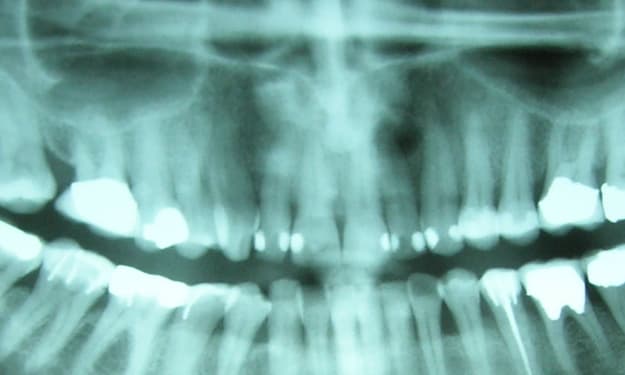
Dental plaque doesn't seem like the stuff controversies are made of. No one says anything good about it, and everyone agrees that the gum disease and tooth loss connected with the plaque buildup that tends to occur as we grow older are avoidable. “There's no reason you have to face the loss of teeth at any age," says Peter Robinson, D.D.S., professor of periodontics. "Aging does not mean you have to have periodontal disease."
By James Porterson9 years ago in Longevity



Comments
There are no comments for this story
Be the first to respond and start the conversation.